The Evidence, Graded by Condition
Each grade below (Strong, Moderate, Limited or Insufficient) is a summary of how many controlled human trials exist for that condition and whether their doses match a home panel; see how this site grades evidence for the hierarchy and a worked example at each level.
Every clinical claim carries a PMID. Grades reflect trial quality and replication, not marketing.
How the grades work
Each condition page opens with one of four grades. Strong means more than one controlled trial points the same way at doses a home panel can deliver. Moderate means controlled trials exist but are few, small, or used clinic devices whose parameters differ from home panels. Limited means the support is pilot studies, single trials, or trials at parameters a panel cannot match. Insufficient means no credible trial evidence was found for the claim, whatever the marketing says. Every study named on a condition page carries its PubMed ID, the ID is verified against PubMed before the page is published, and the page states the wavelength, dose and session count the trial used so it can be compared with a real panel through the dose calculator.
Reading a condition page
The order is the same on every page: the grade and why, the studies, what was not studied, a practical section linking the calculator and the wavelength guide, then cautions. A grade is a statement about the trials, not a promise about a device; a Strong grade with a device whose irradiance is unlabeled still leaves the dose unknown, which is why the device picks on these pages come from the ranked database rather than from the trials themselves.
Latest evidence articles
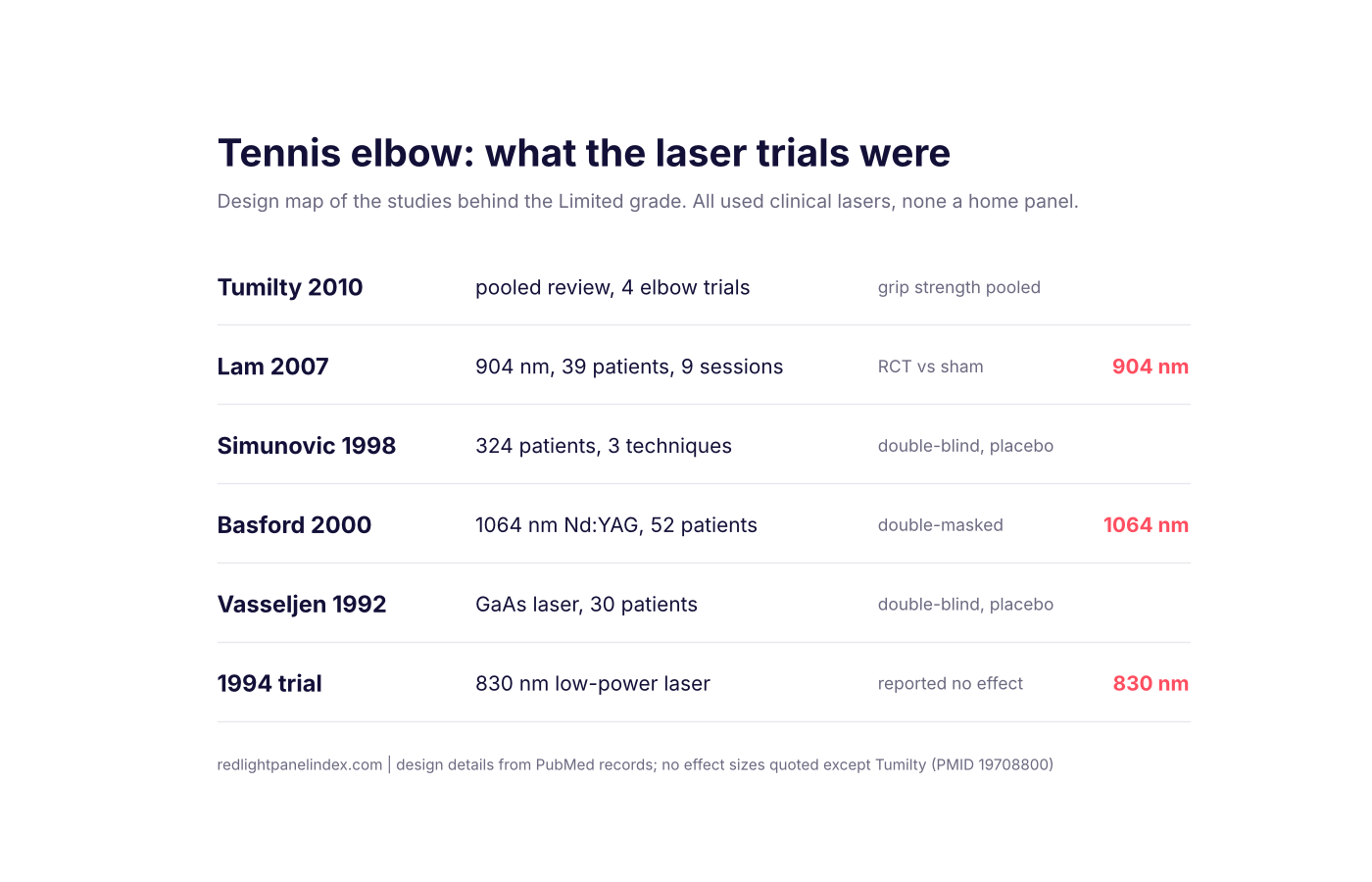
Red Light Therapy for Tennis Elbow: The Evidence
Tennis elbow and red light therapy graded Limited: one pooled grip strength result, mixed small laser trials, and no panel studies. Doses and gaps.
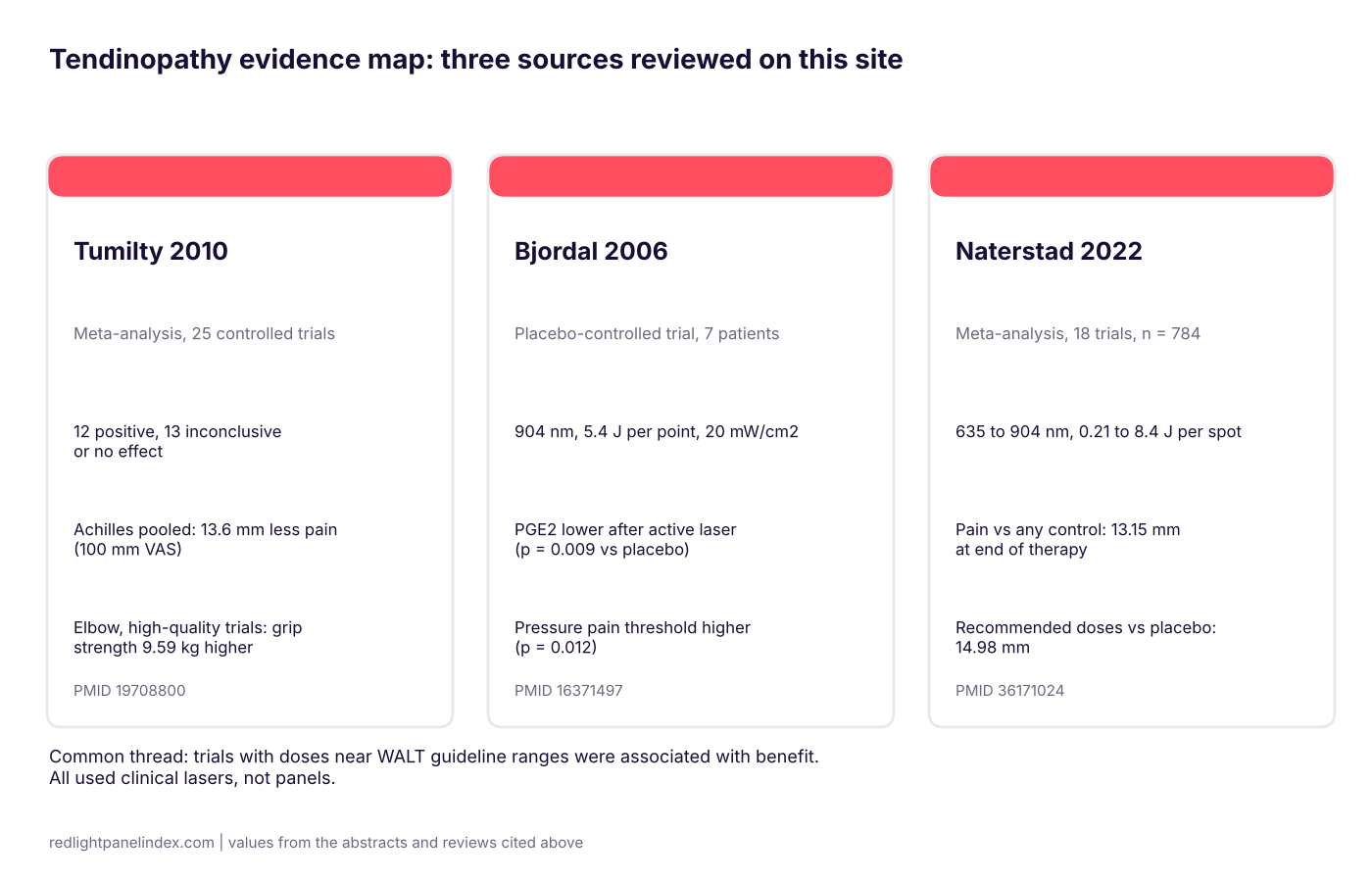
Red Light Therapy for Tendinopathy: The Dose Evidence
Evidence grade Moderate for laser in tendinopathy, with the meta-analyses and trials behind it, what was not studied, and what it means for a home panel.
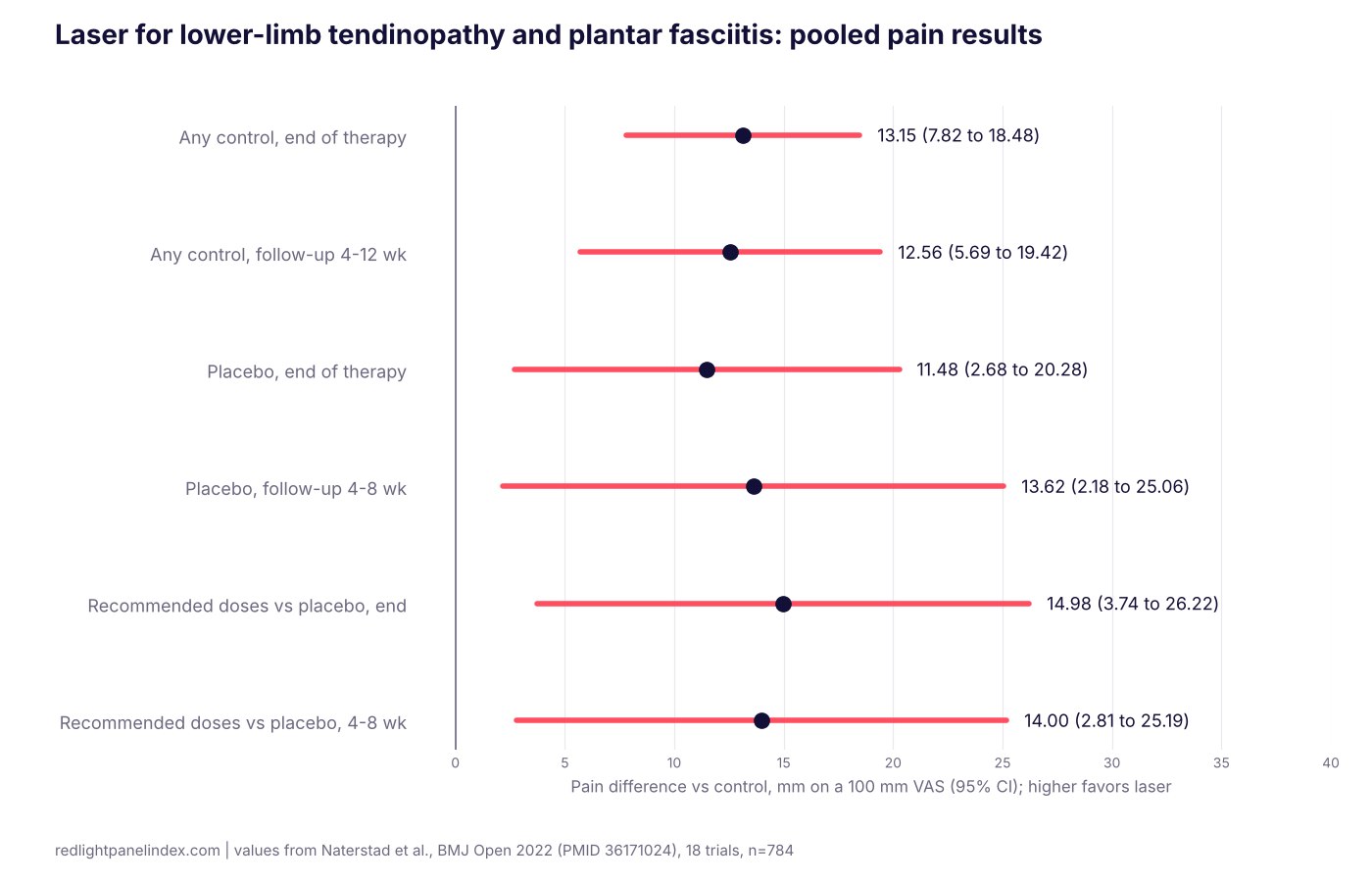
Study Review: Laser for Plantar Fasciitis and Tendons (2022)
A 2022 BMJ Open meta-analysis of 18 trials on laser for lower-limb tendinopathy and plantar fasciitis, with its dose findings and what they mean for a panel.
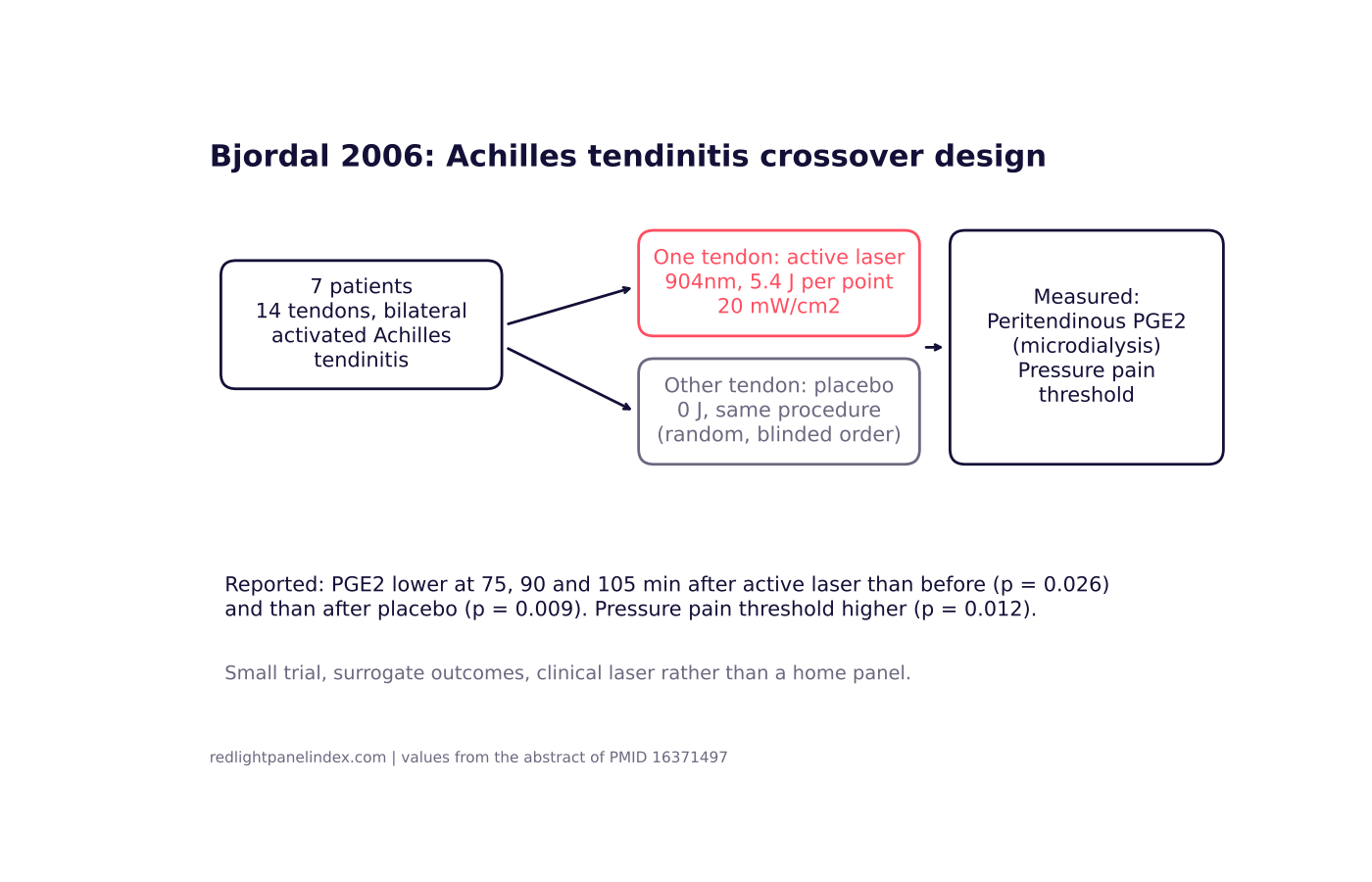
Study Review: Laser Therapy for Achilles Tendinitis (2006)
A small placebo-controlled crossover trial that measured prostaglandin E2 in the tendon after 904nm laser. What it found, and what it cannot say about a home panel.
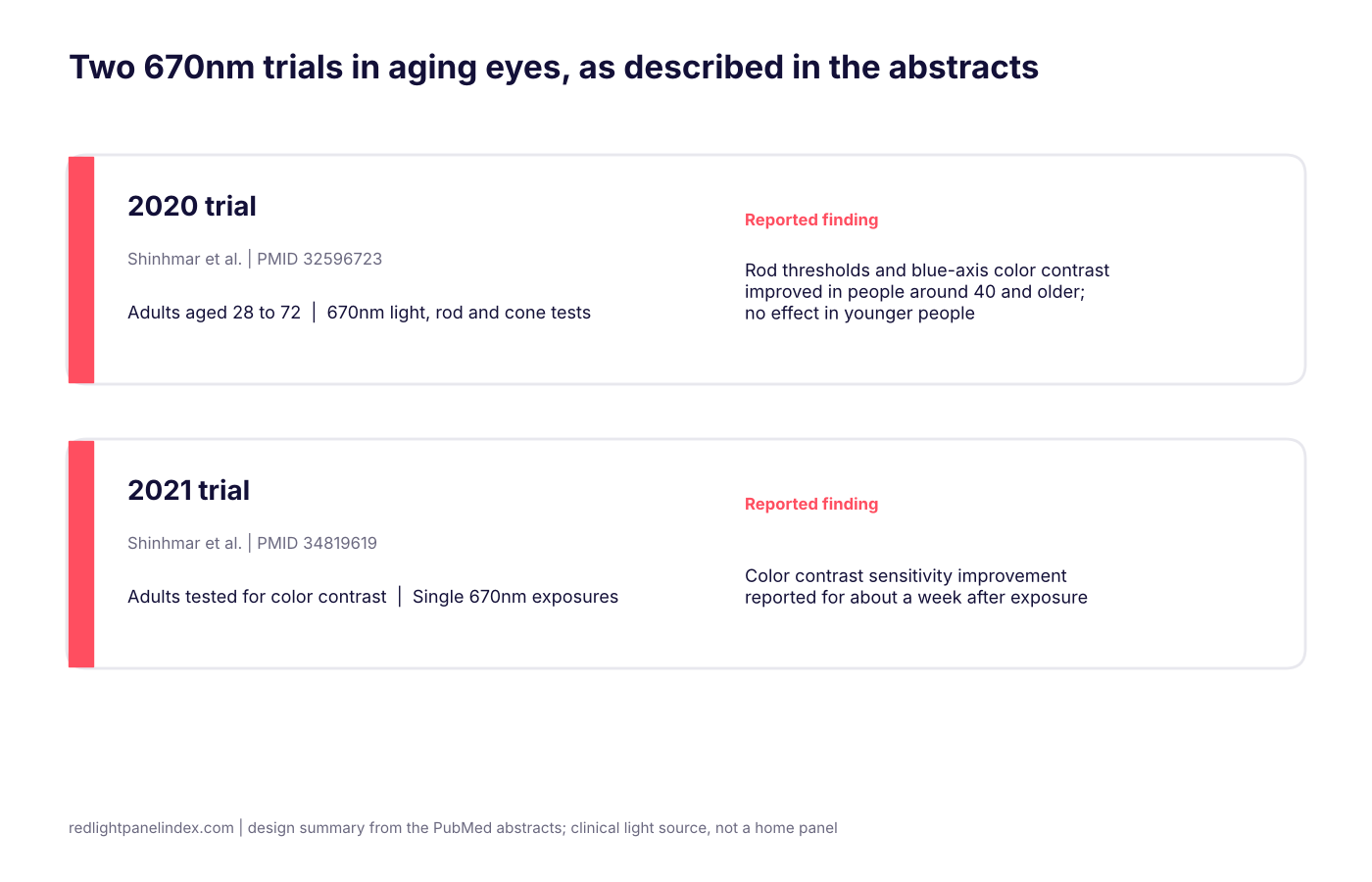
Study Review: 670nm Light and Aging Vision (2020, 2021)
Two small 670nm trials from one lab reported better color contrast and rod function in adults around 40 and older. Design, limits, and the eye-safety gap to a panel.
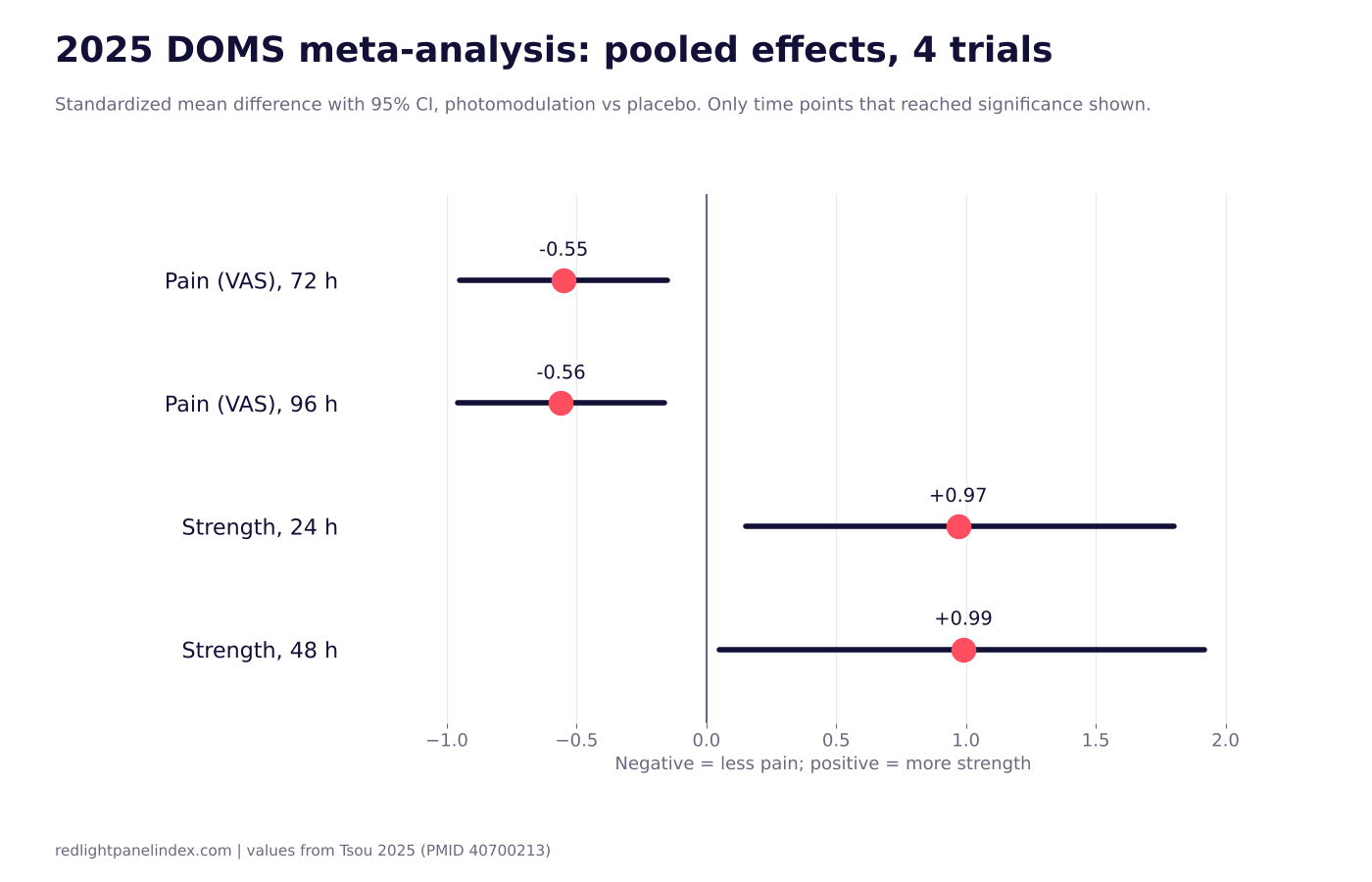
Red Light Therapy for Delayed Onset Muscle Soreness
Evidence grade Limited: two meta-analyses, 2016 and 2025, reached different conclusions on soreness. Trials, wavelengths, what was not studied.
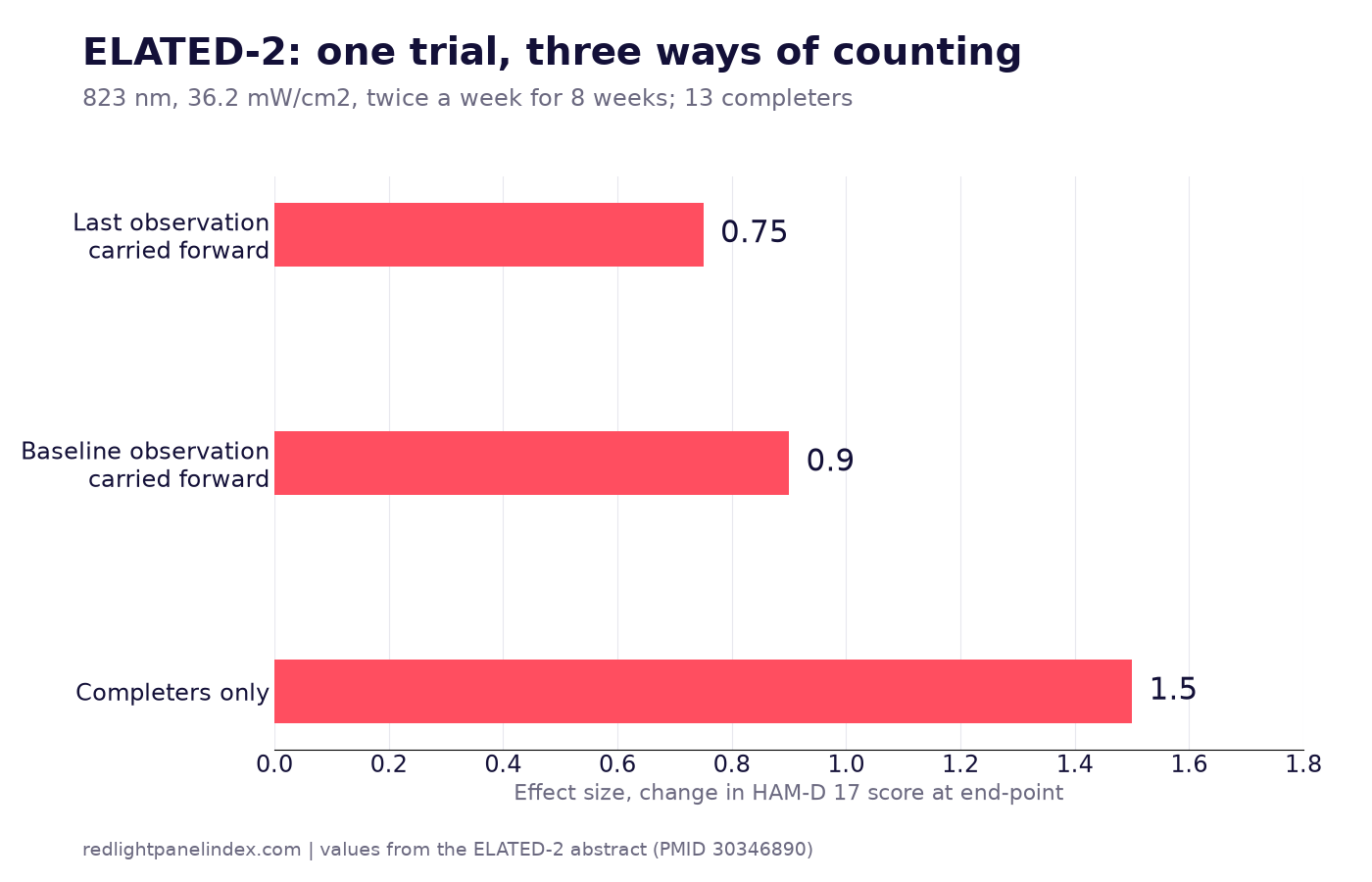
Study Review: ELATED-2, Transcranial NIR for Depression
A sham-controlled pilot of 823nm light on the forehead for major depression: design, dose, the three effect sizes it reported and its caveats.
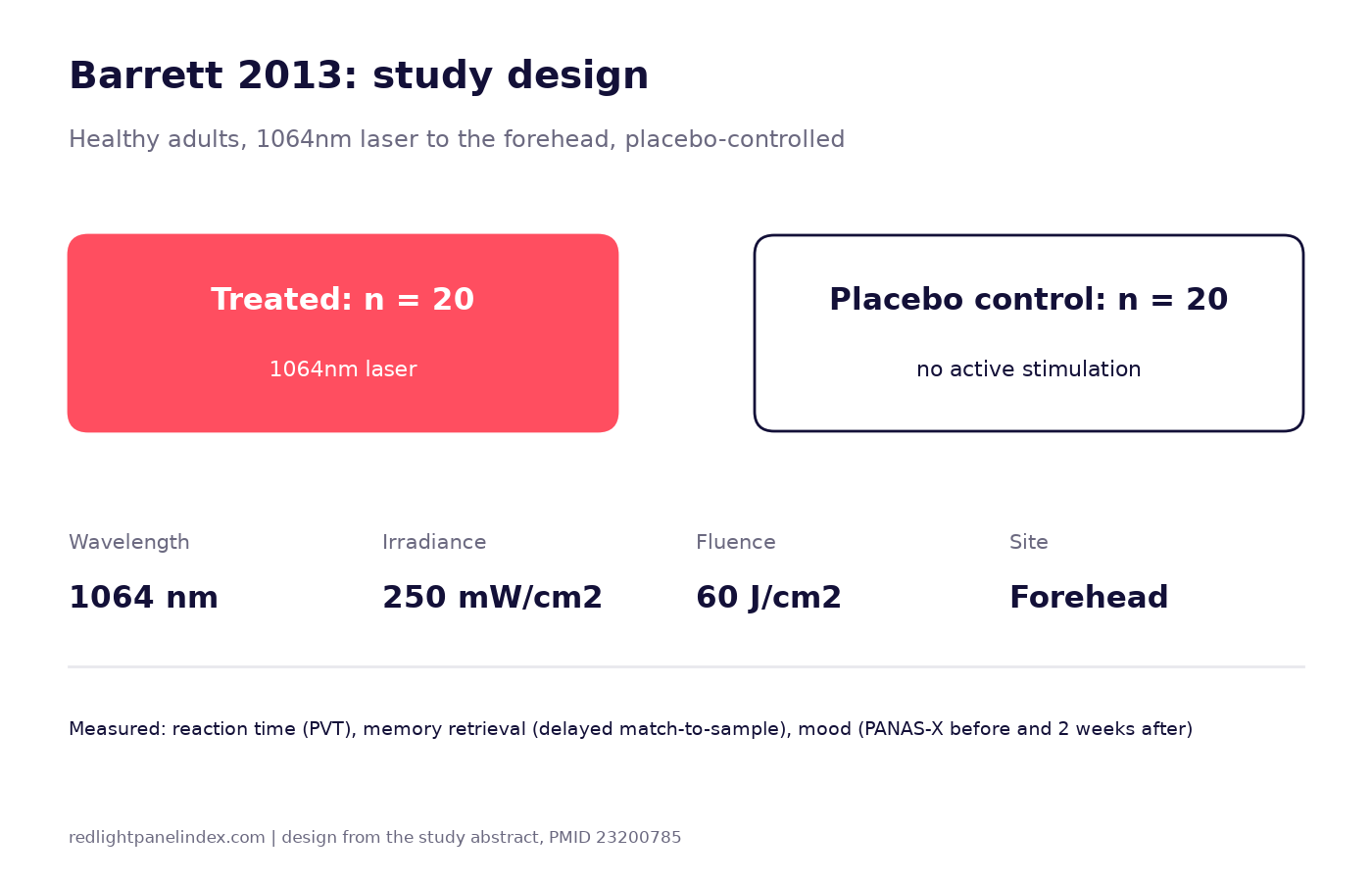
Study Review: 1064nm Transcranial Laser and Cognition (2013)
A placebo-controlled study of a 1064nm laser on the forehead of healthy adults: who was studied, the dose, what was measured, and the gap to a home panel.
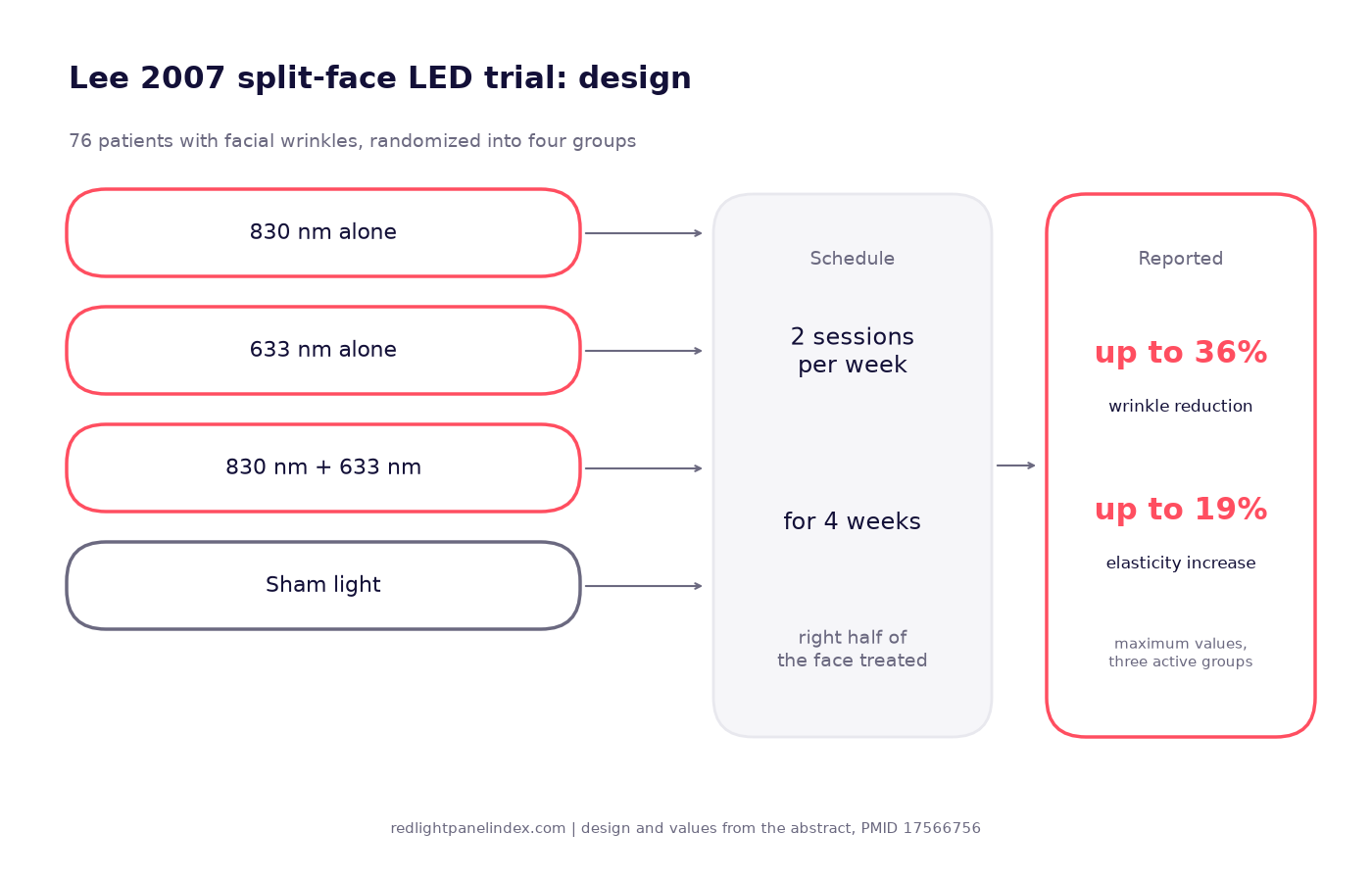
Study Review: Split-Face LED Photorejuvenation Trial (2007)
A 2007 split-face trial gave 76 patients 830nm, 633nm, both or a sham light twice a week for four weeks. Design, findings, limits and what a panel can match.
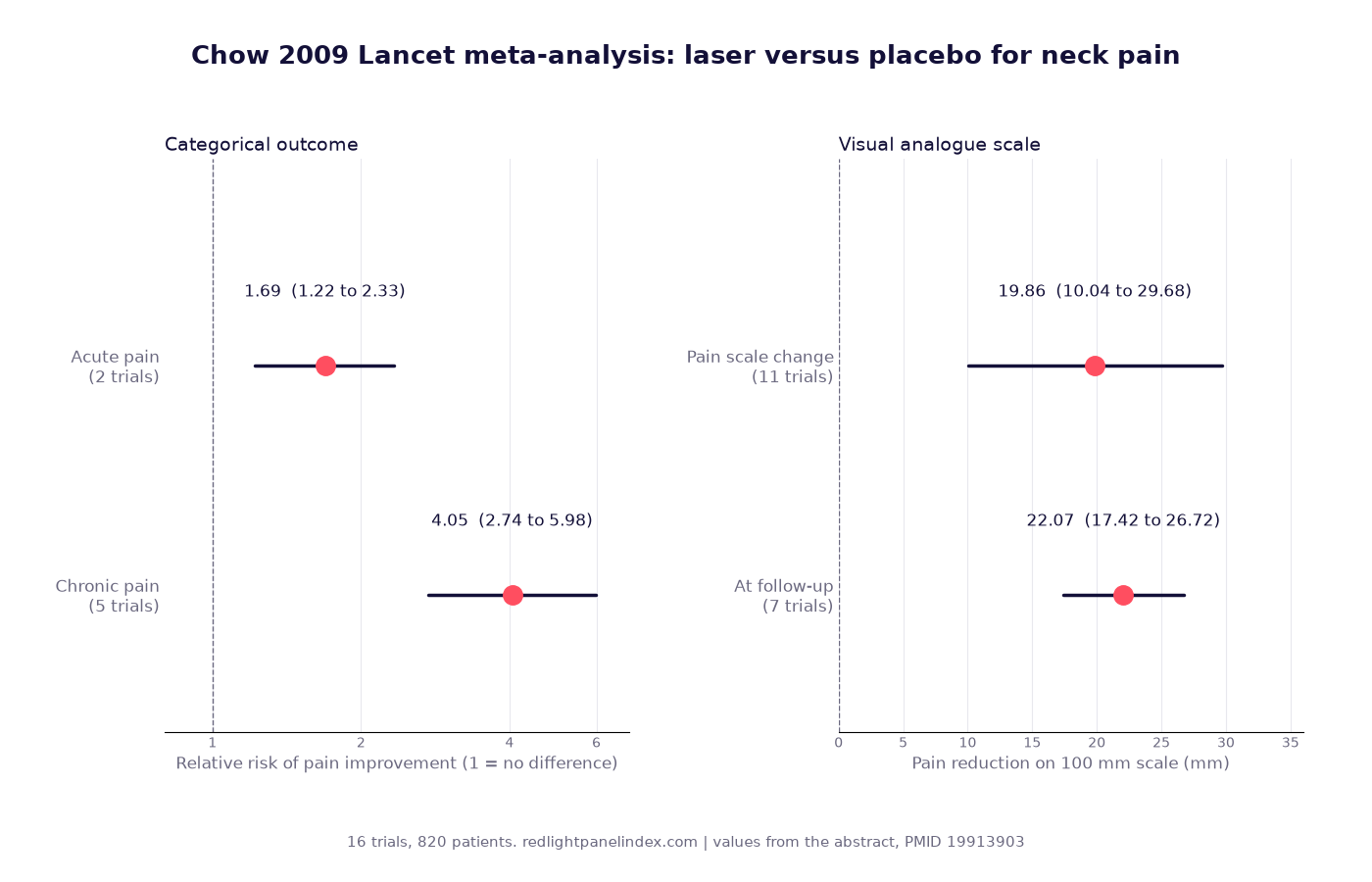
Study Review: Lancet Meta-Analysis of Laser for Neck Pain
A 2009 Lancet meta-analysis pooled 16 laser trials in 820 patients with neck pain. What it measured, what it found, and what a home panel cannot copy.
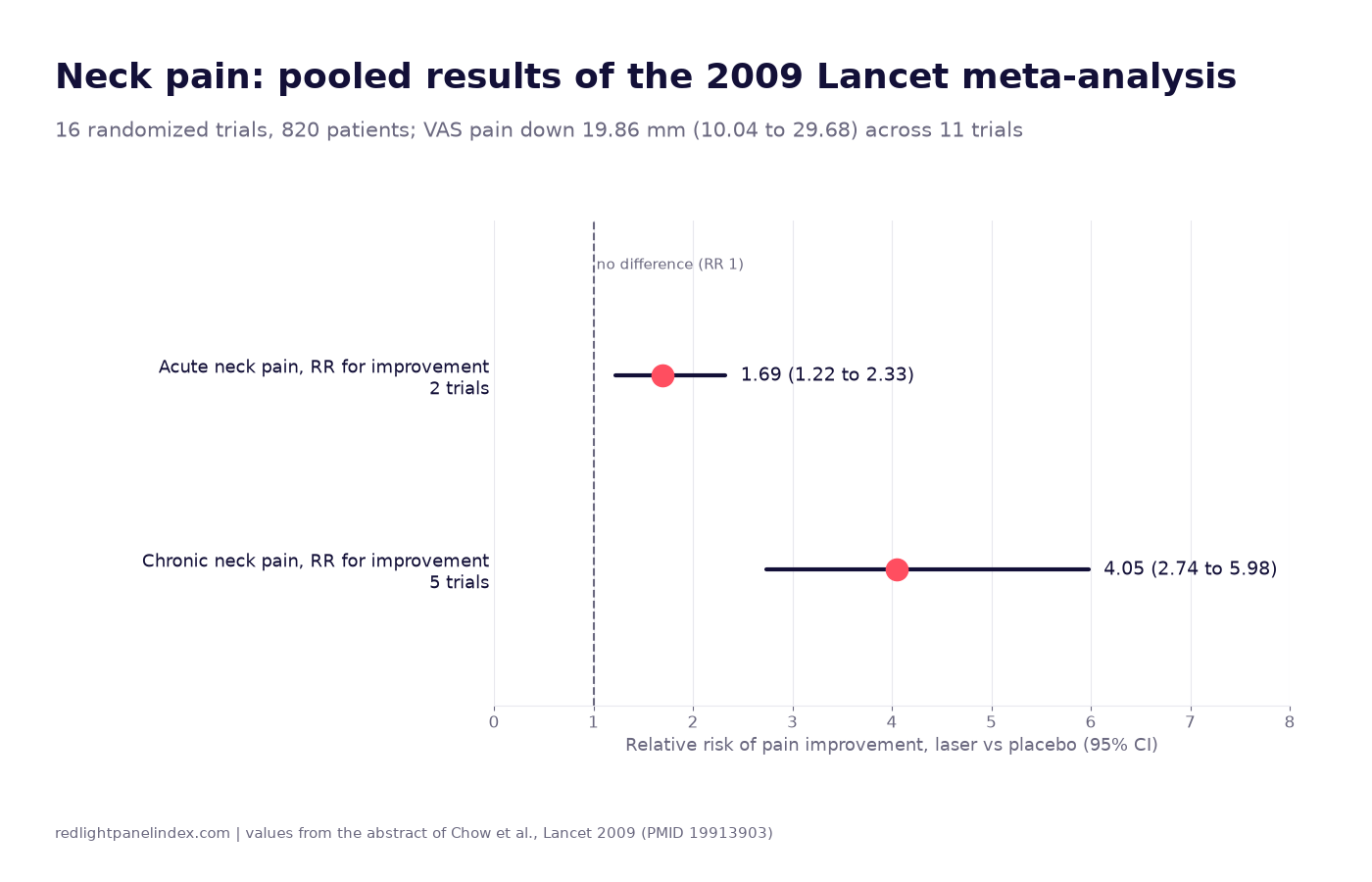
Red Light Therapy for Neck Pain: The Lancet Meta-Analysis
Grade Moderate. One 2009 Lancet meta-analysis of 16 laser trials and 820 patients, what it found, and what a home panel cannot copy from it.
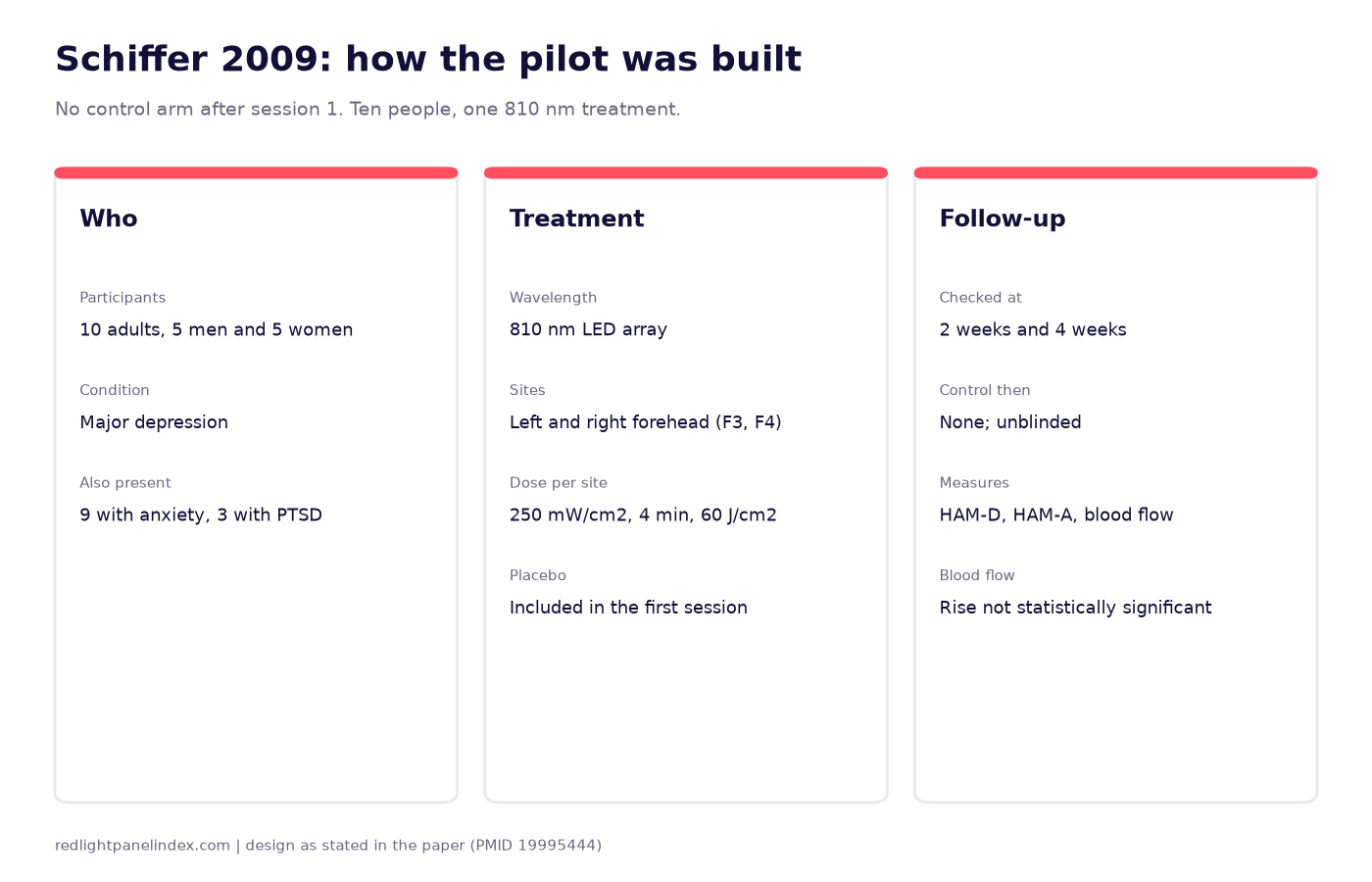
Study Review: Single NIR Forehead Session, Depression (2009)
A 10-patient pilot gave one 810nm forehead session and tracked depression and anxiety scores for 4 weeks. What it showed and what it could not.
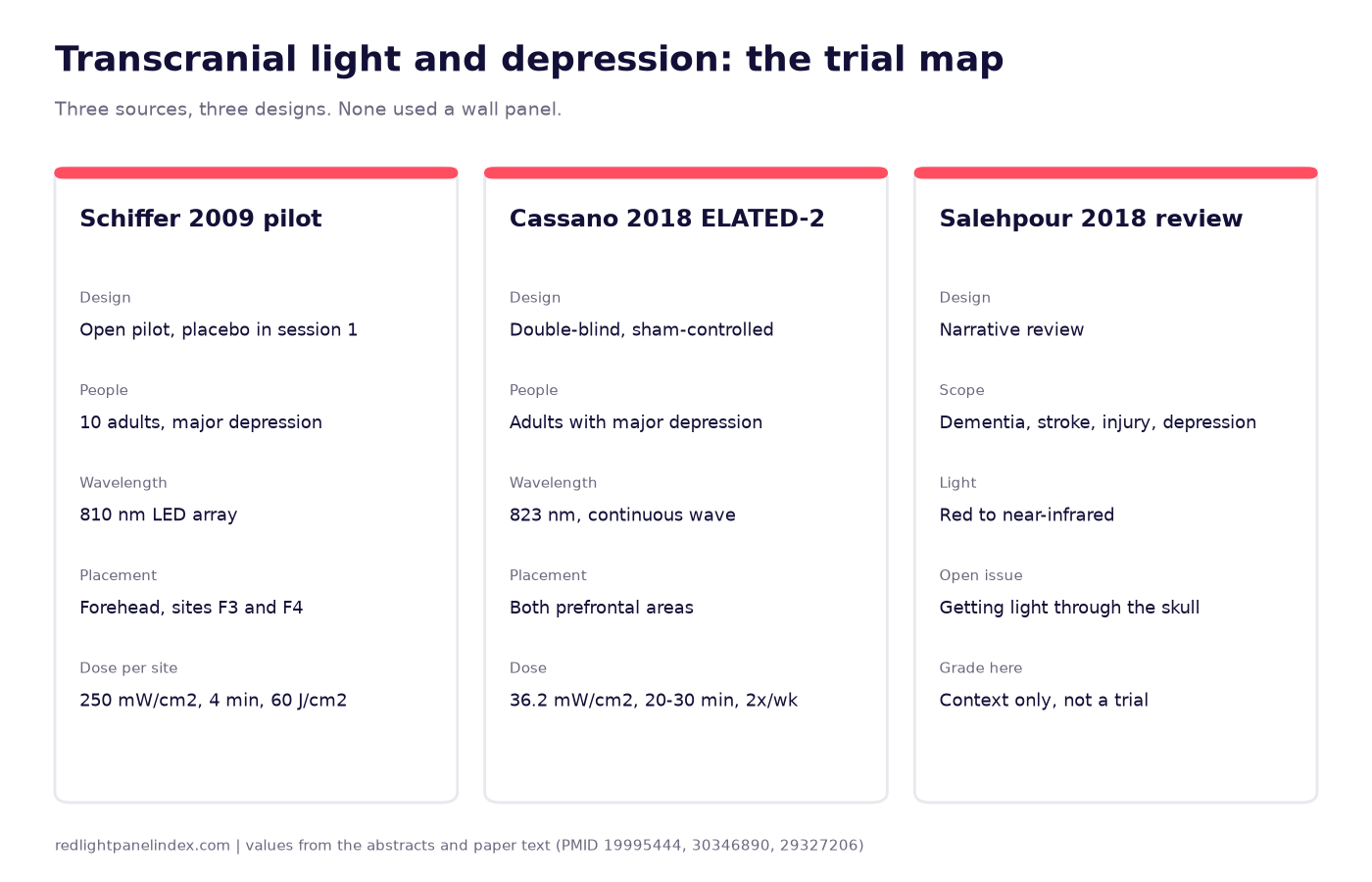
Transcranial Red and NIR Light for Depression
Grade Limited: a 10-person pilot and a small sham-controlled trial, both using forehead devices at defined doses, not wall panels.
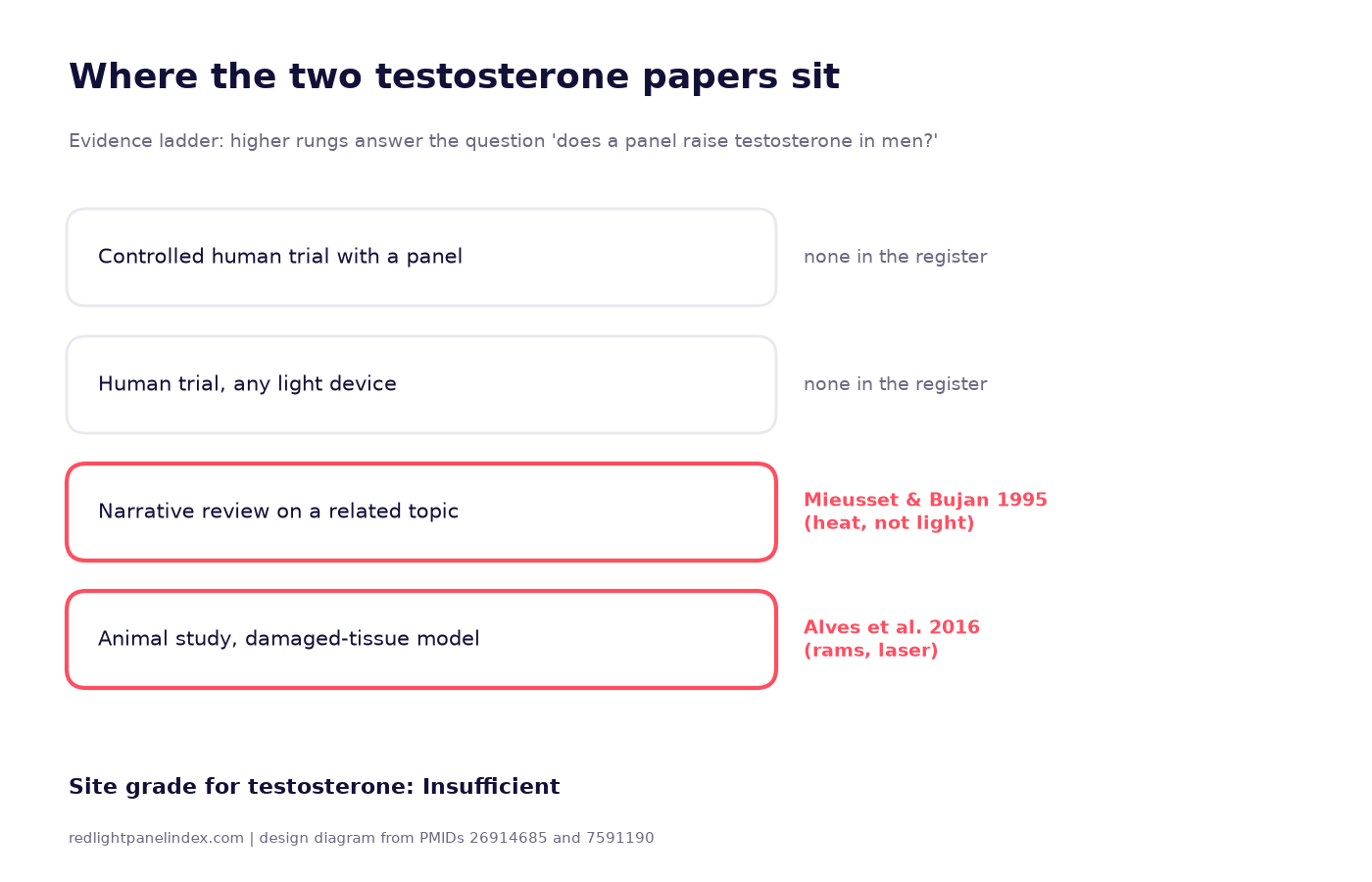
Study Review: The Testosterone Evidence Is a Ram Study and a Heat Review
The only testosterone papers in the register are a ram study and a review of testicular heating. What each covers and why the grade is Insufficient.
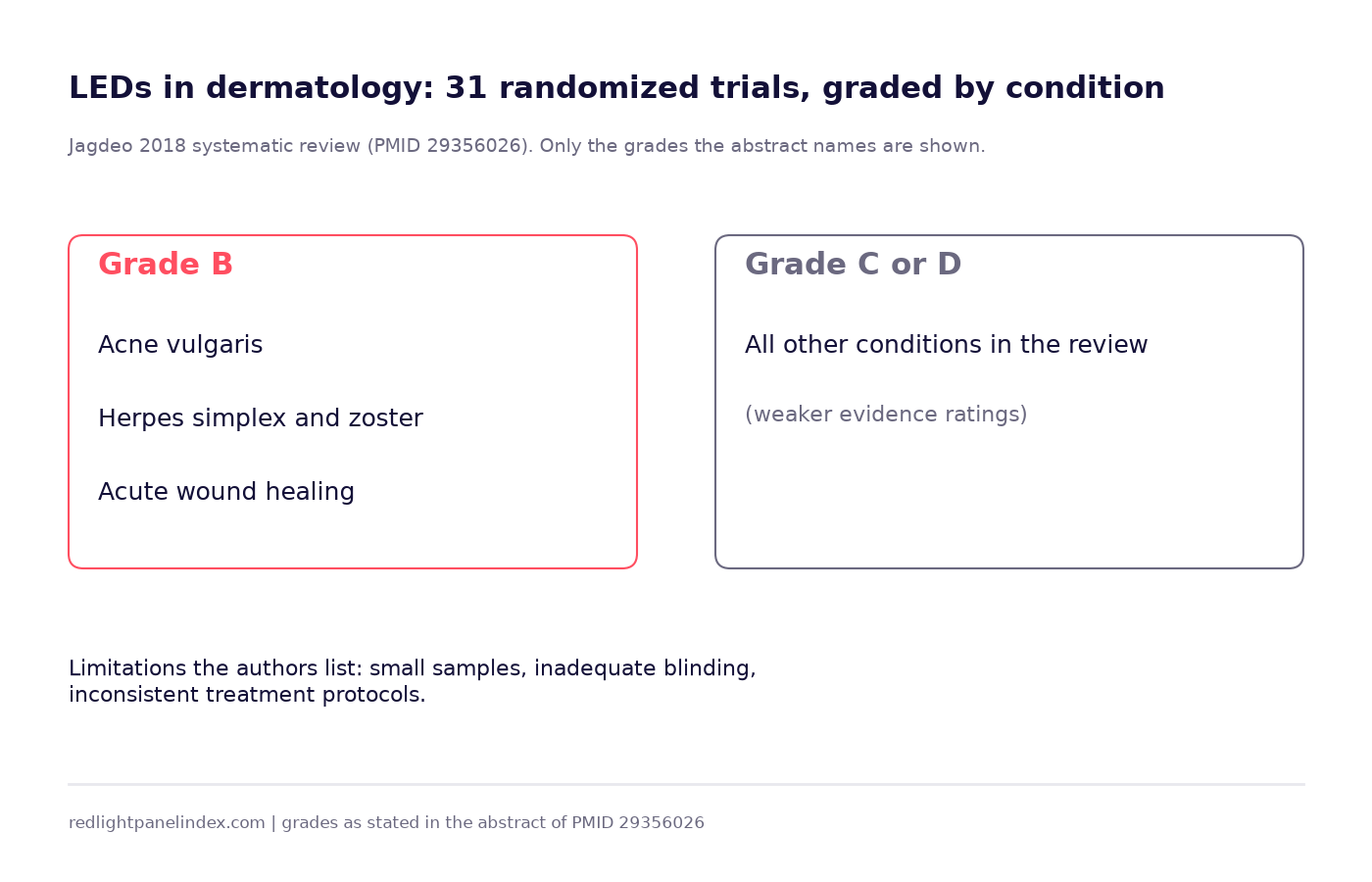
Study Review: LEDs in Dermatology, 31 Trials
A systematic review of 31 randomized trials graded LED light for acne, herpes and acute wounds higher than other skin conditions. What that means for a panel.
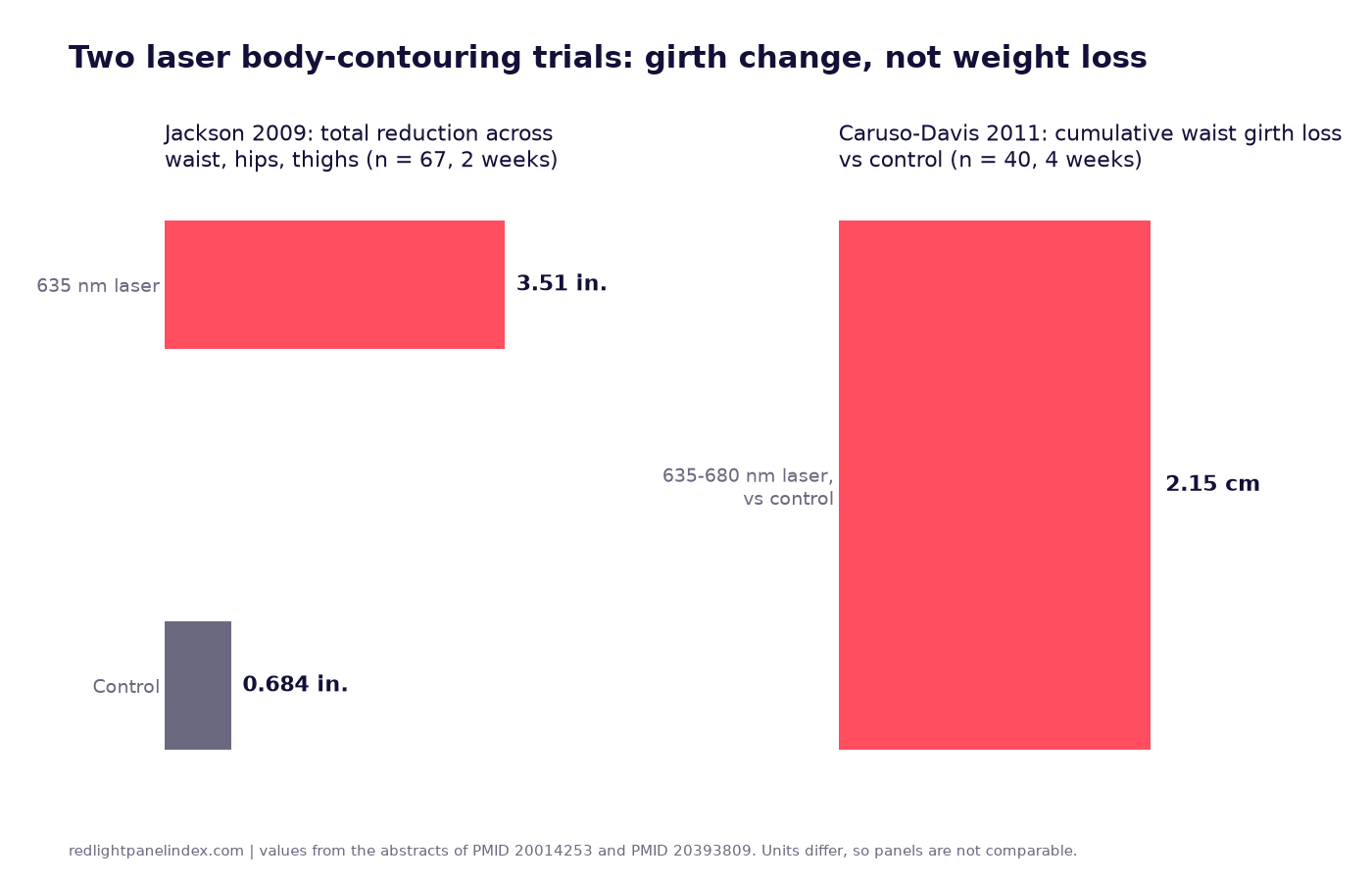
Study Review: Two Laser Body-Contouring Trials
Jackson 2009 and Caruso-Davis 2011 measured girth after 635nm-range laser sessions. What they found, what they skipped, and why it is not weight loss.
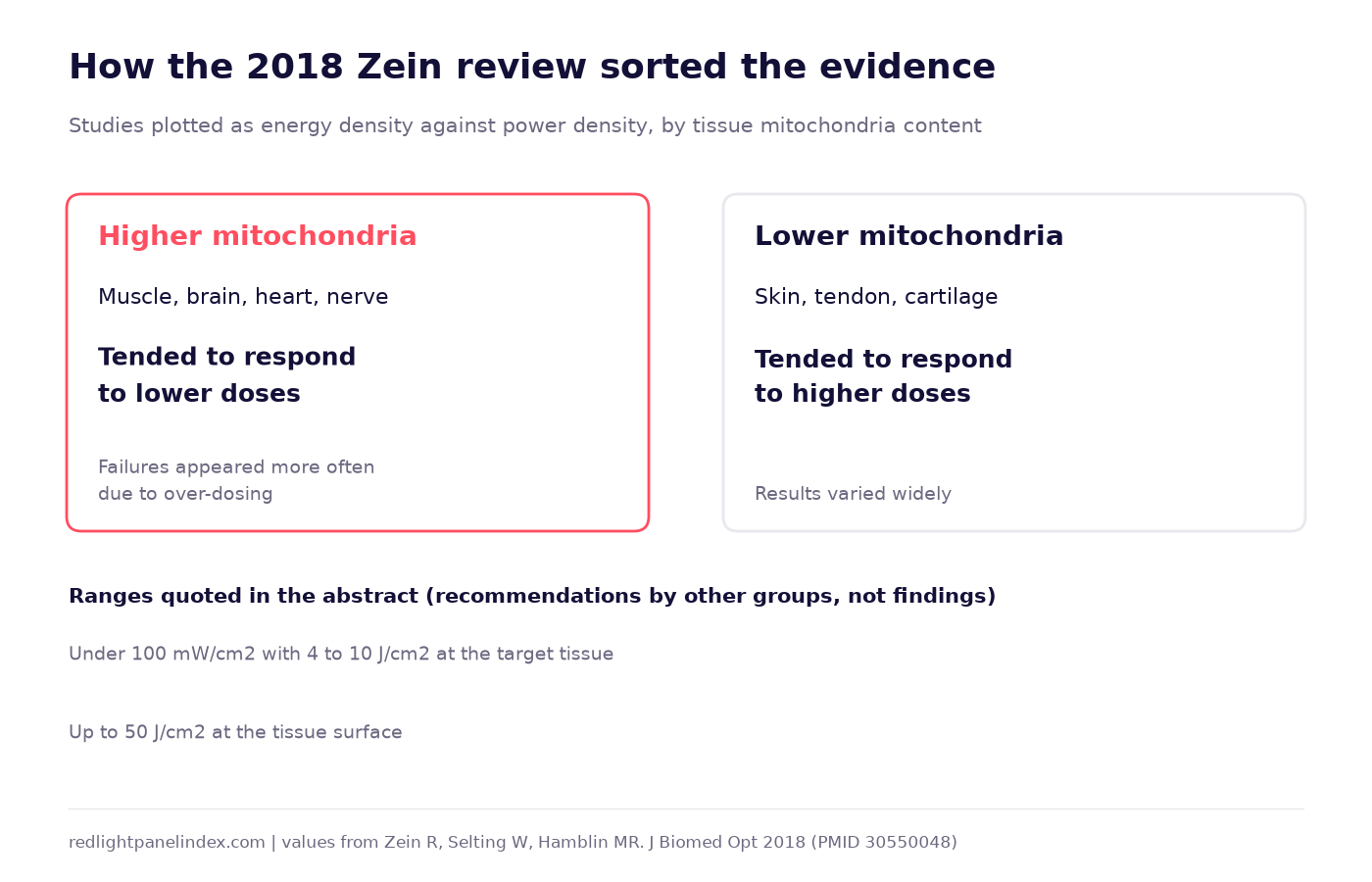
Study Review: Why Light Parameters Decide Outcomes (2018)
A 2018 review of photobiomodulation parameters found tissues rich in mitochondria responded to lower doses, and that over-dosing explained many failures.
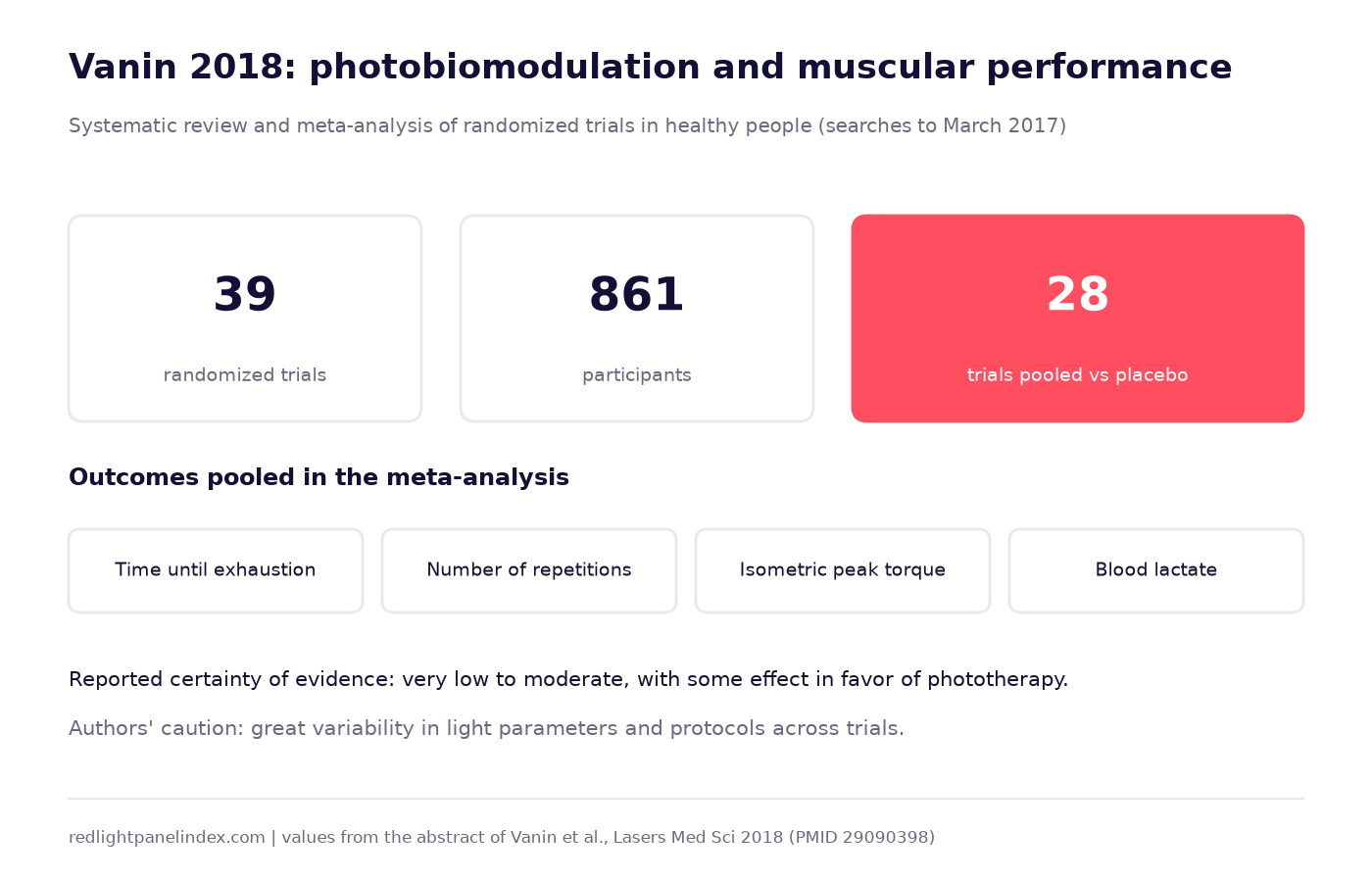
Study Review: Vanin 2018 Muscle Performance Meta-Analysis
A 2018 review of 39 randomized trials on light therapy and muscle performance in healthy people, what it pooled, and what it means for a home panel.
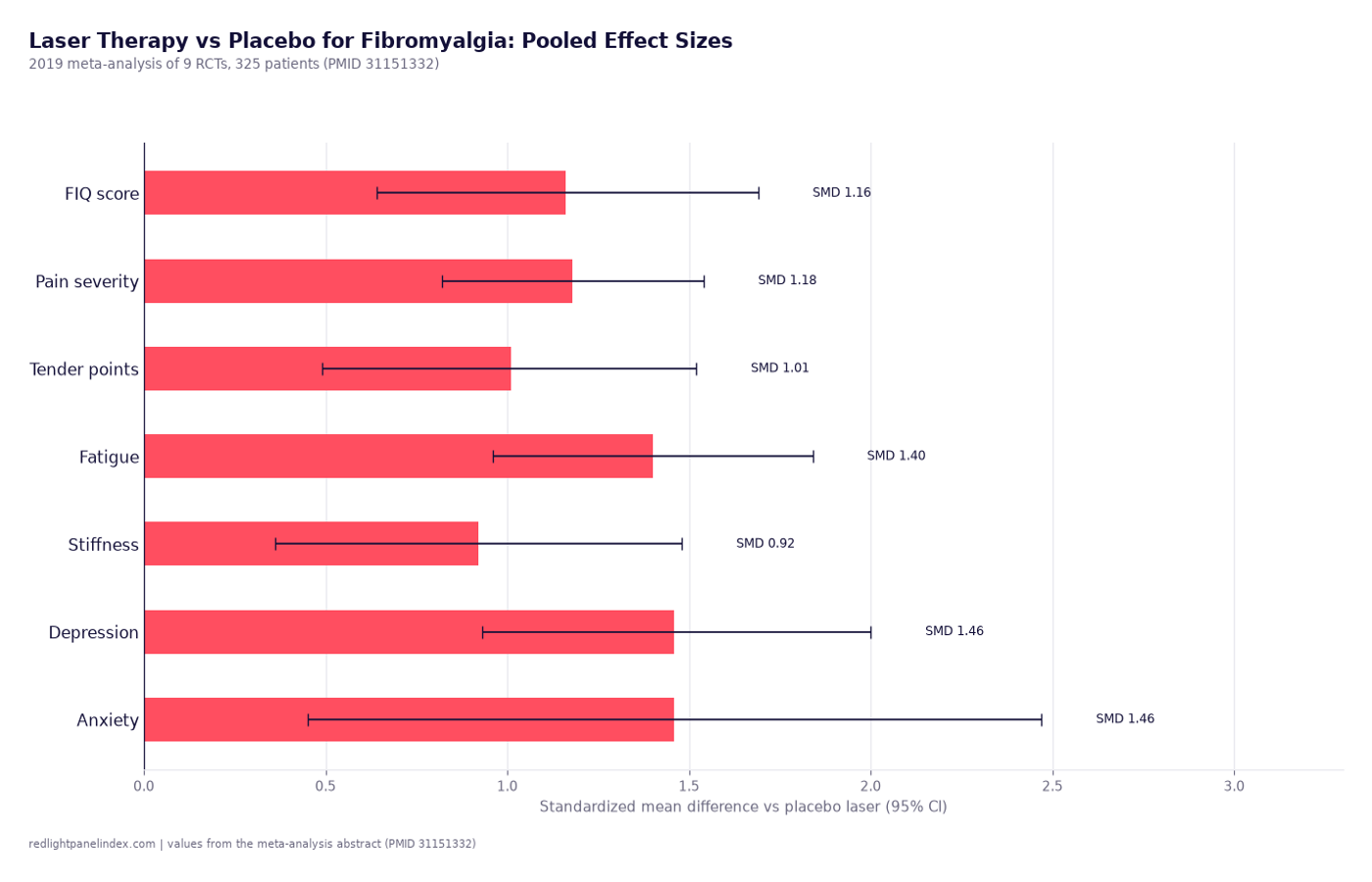
Study Review: Laser Therapy for Fibromyalgia
A 2014 placebo RCT and a 2019 nine-trial meta-analysis on laser therapy for fibromyalgia, and why tender-point dosing is not a panel session.
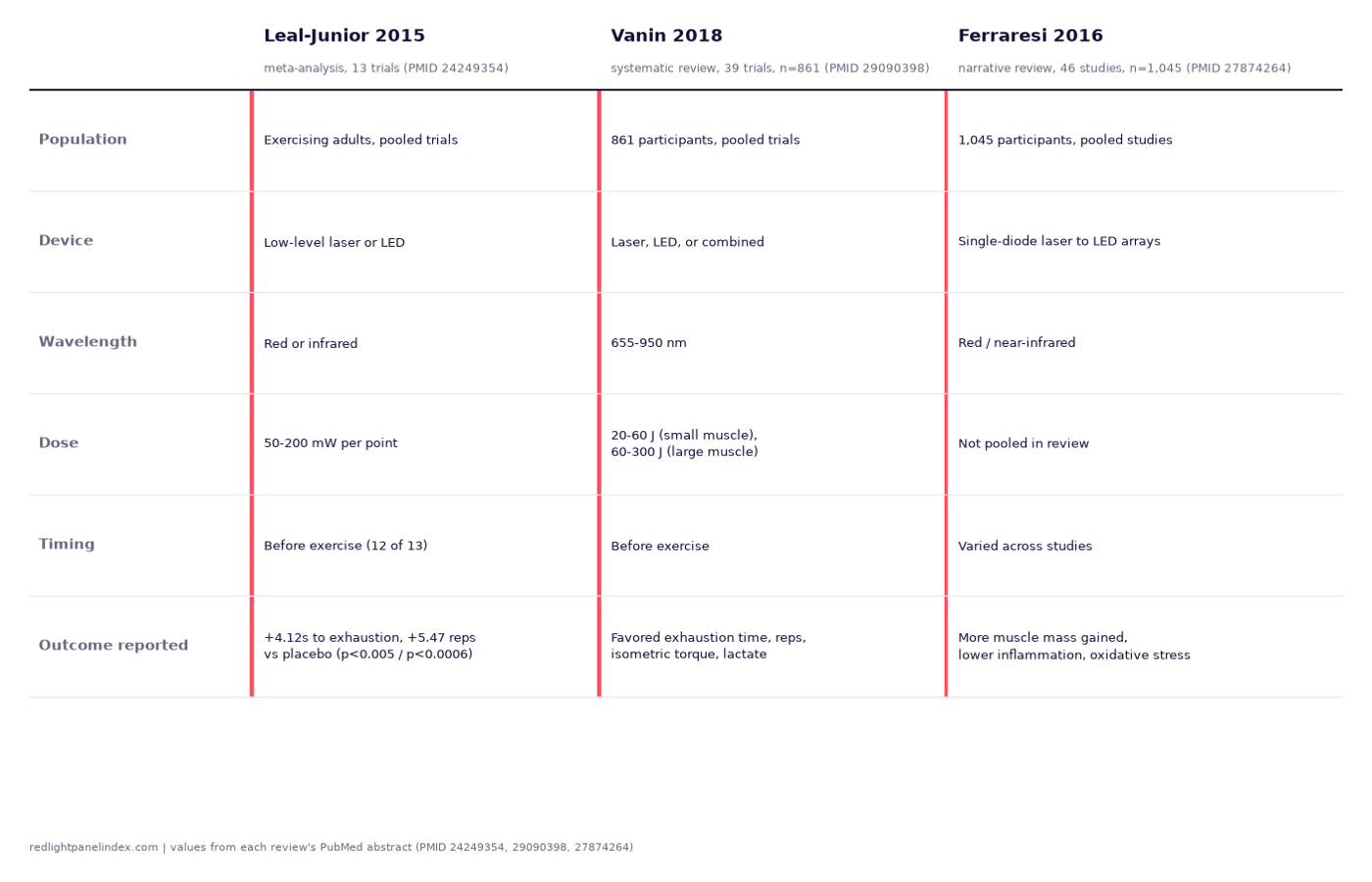
Red Light Therapy and Sports Performance
Two meta-analyses and one review on phototherapy and exercise performance, graded Moderate, with pre-workout timing and dosing a home panel can copy.
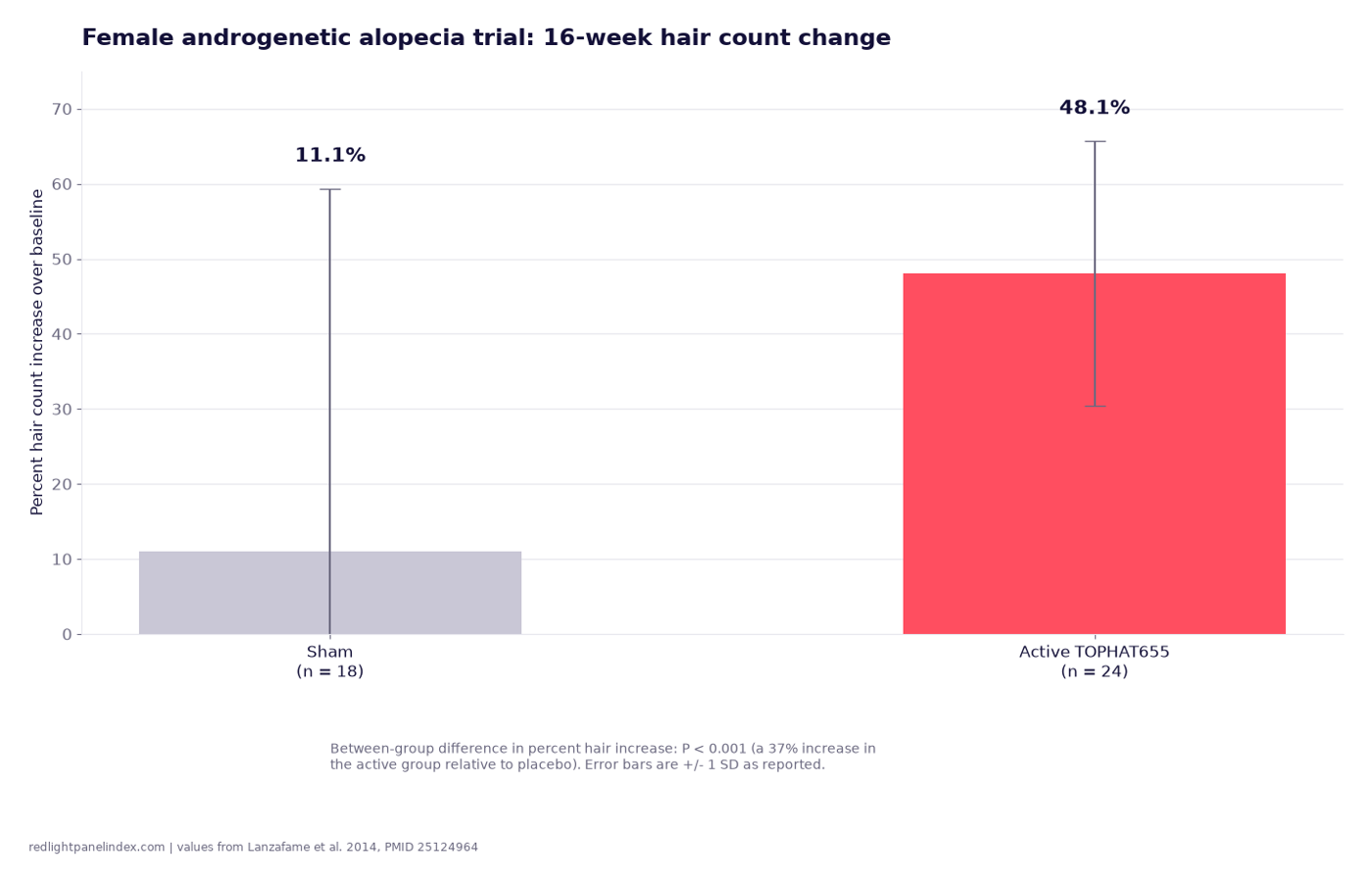
Study Review: The Lanzafame Female Hair Growth Trial (2014)
The companion trial to the 2013 male study, same helmet device, in 47 women. A 37% hair count increase versus sham, and what differed.
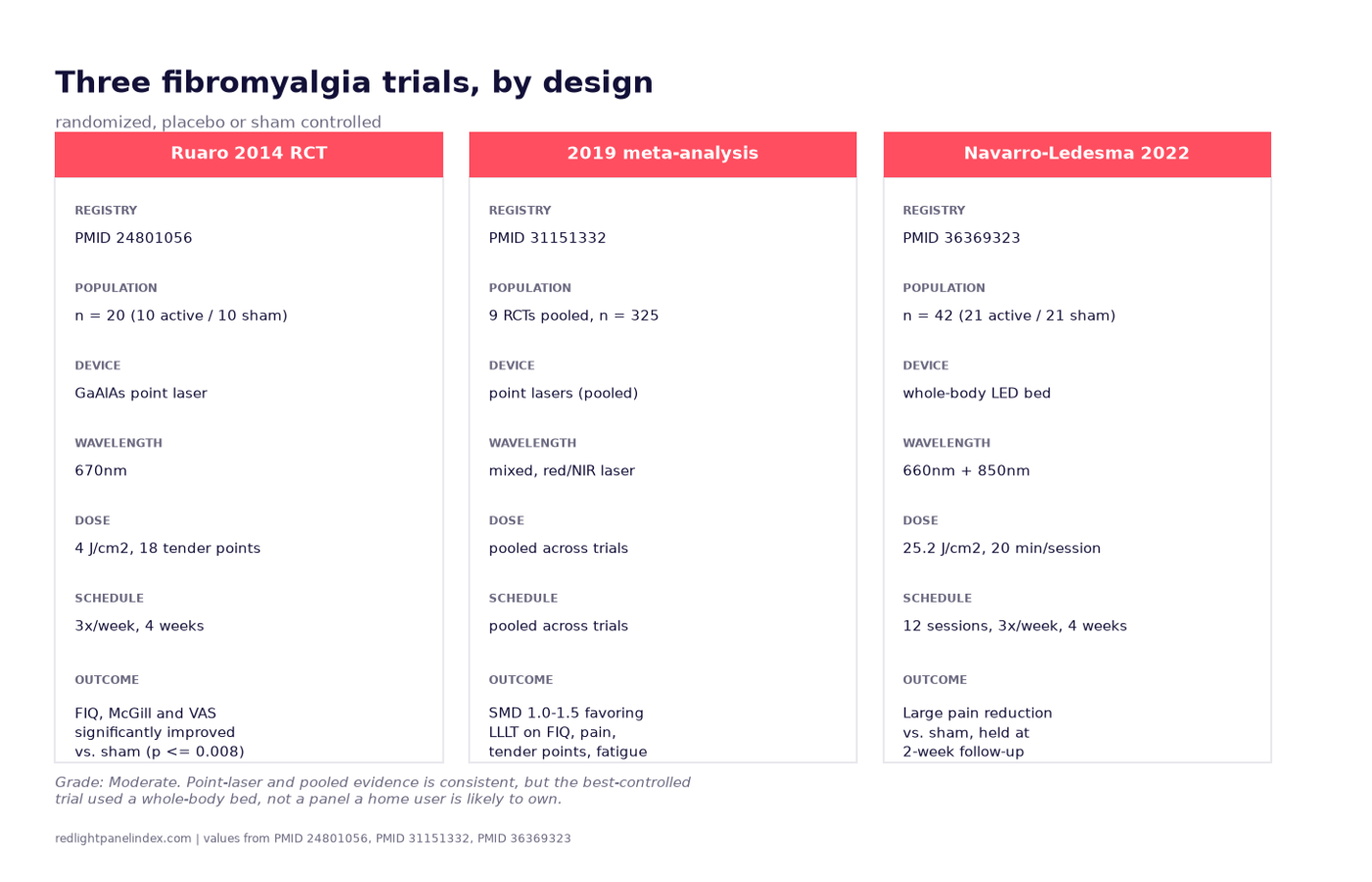
Red Light Therapy for Fibromyalgia: What the Trials Tested
A point-laser RCT, a 9-trial meta-analysis and a whole-body LED bed trial. Grade Moderate, and what home panels cannot copy.
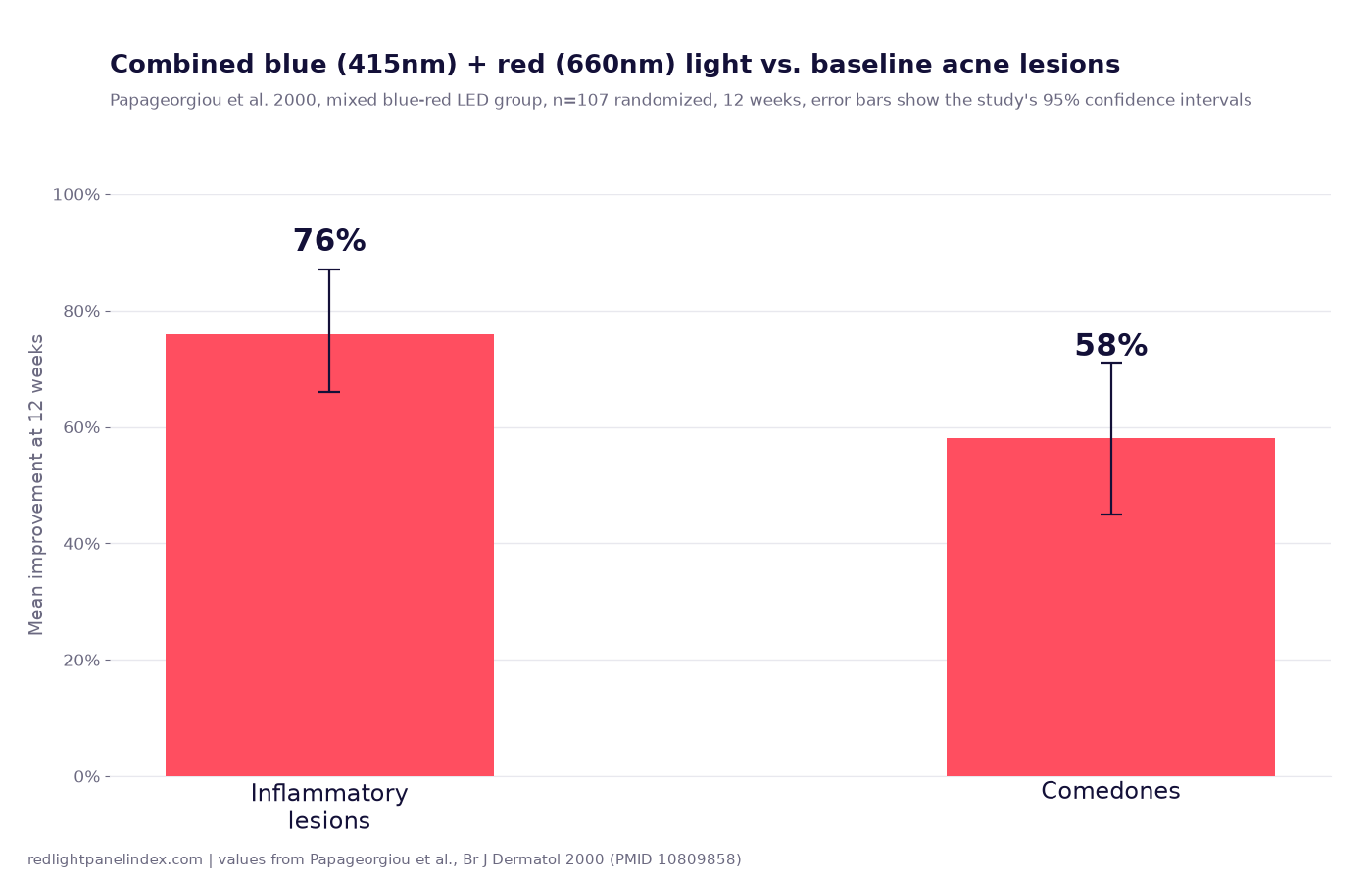
Study Review: Blue 415nm + Red 660nm Light for Acne (2000)
The foundational four-arm acne trial behind the blue-plus-red case, and why a red-only panel is not the device it tested.
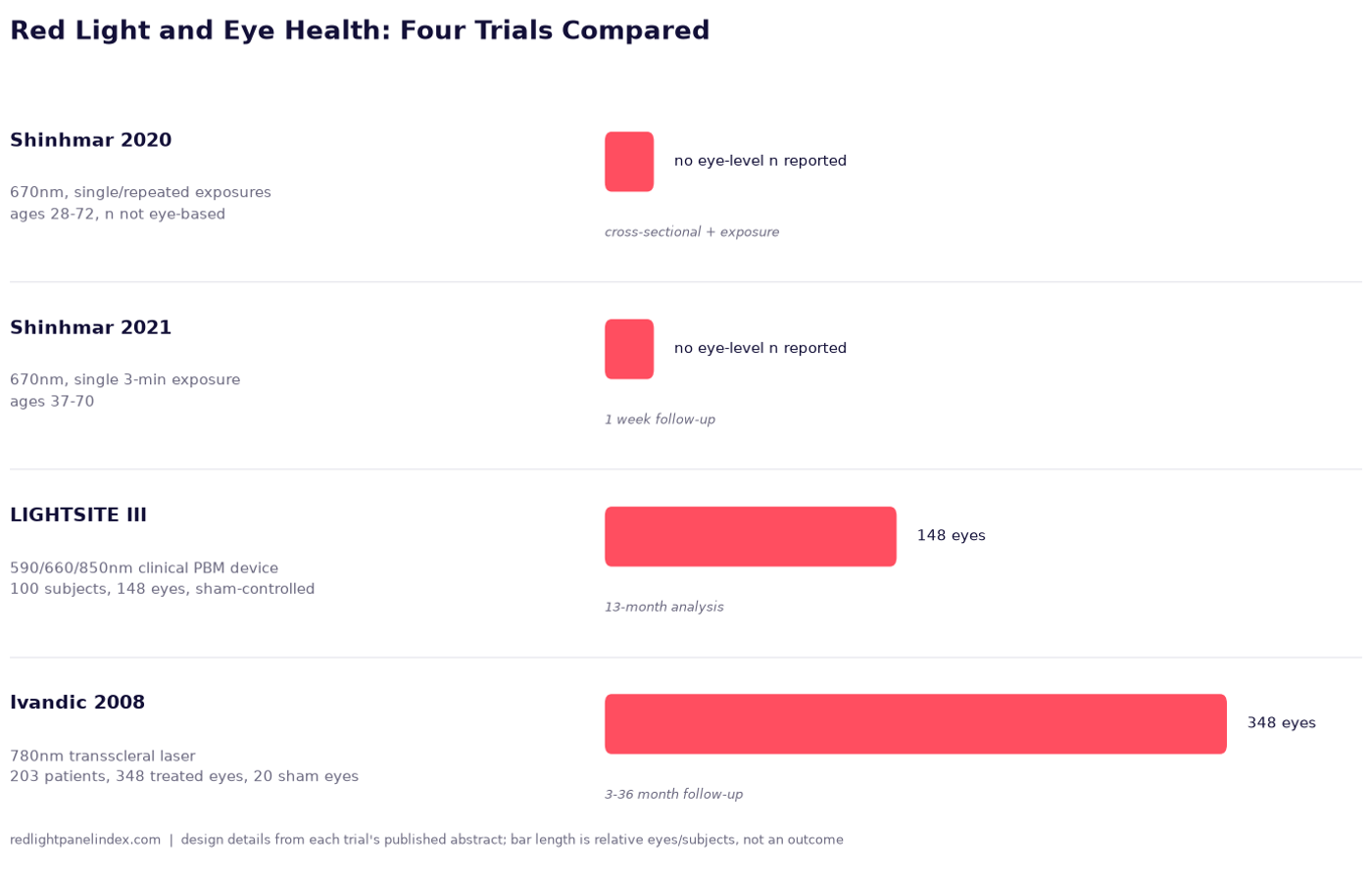
Red Light and Eye Health: The 670nm Research, Carefully
Limited evidence from small 670nm vision trials and older AMD studies, all using controlled clinical light sources, not home panels.
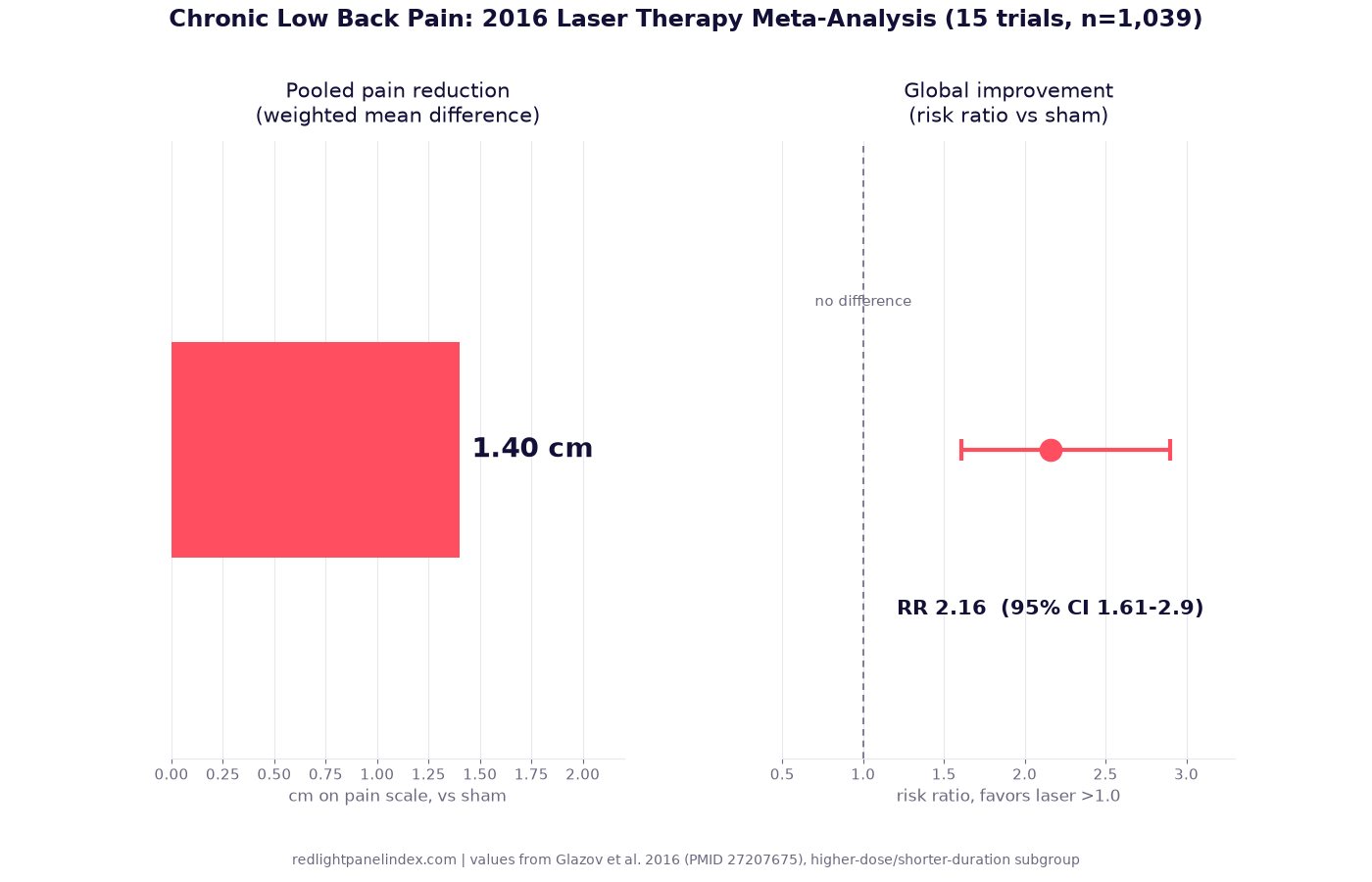
Study Review: Laser Therapy for Chronic Low Back Pain, 2016 Meta-Analysis
A 2016 meta-analysis pooled 15 trials and 1,039 patients on low-level laser for chronic back pain. What the dose and duration subgroups actually showed.
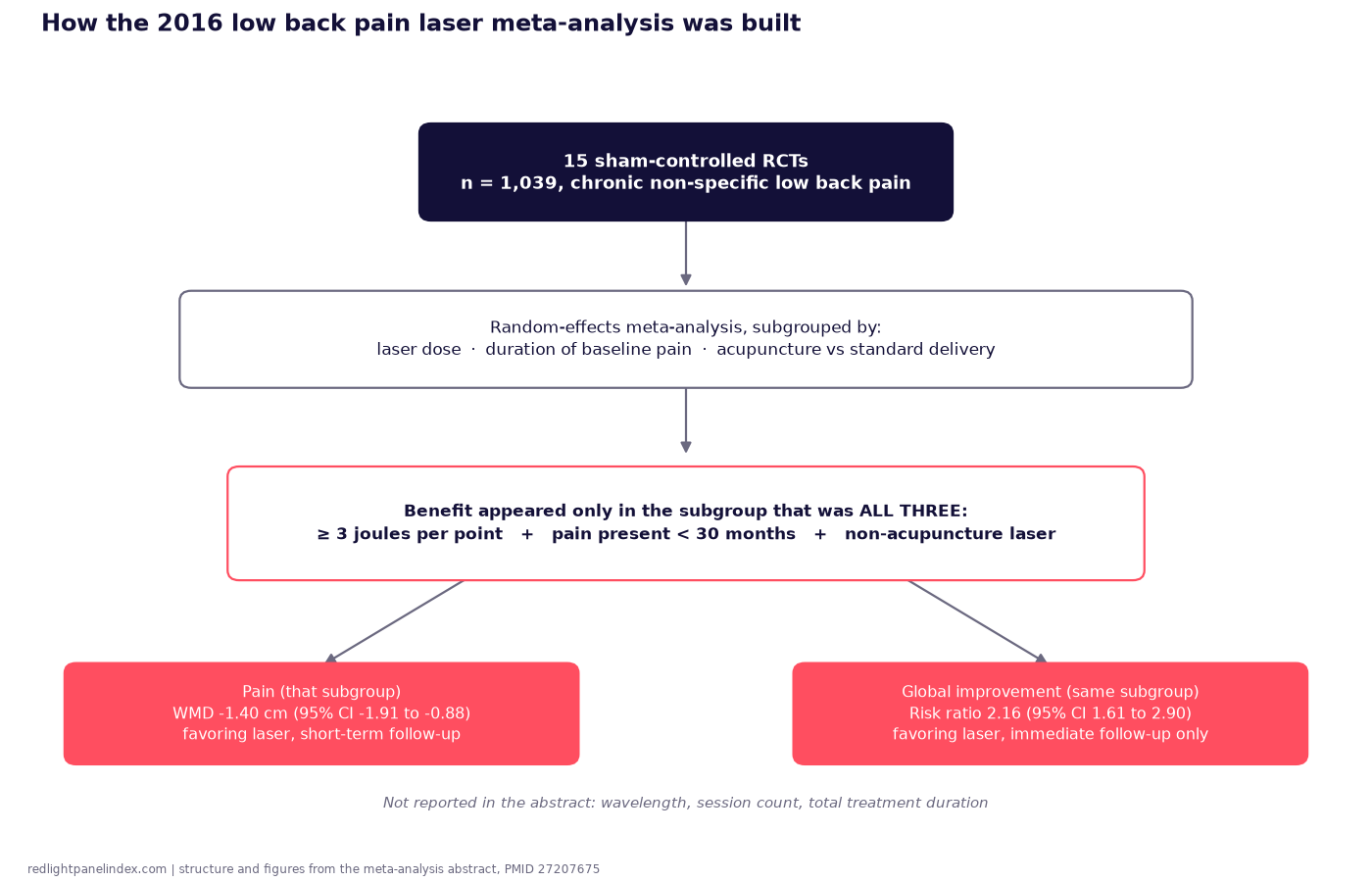
Red Light Therapy for Back Pain: What the Laser Trials Found
A 2016 meta-analysis of 15 trials found moderate-quality evidence for short-term back pain relief, but only above a laser dose threshold.
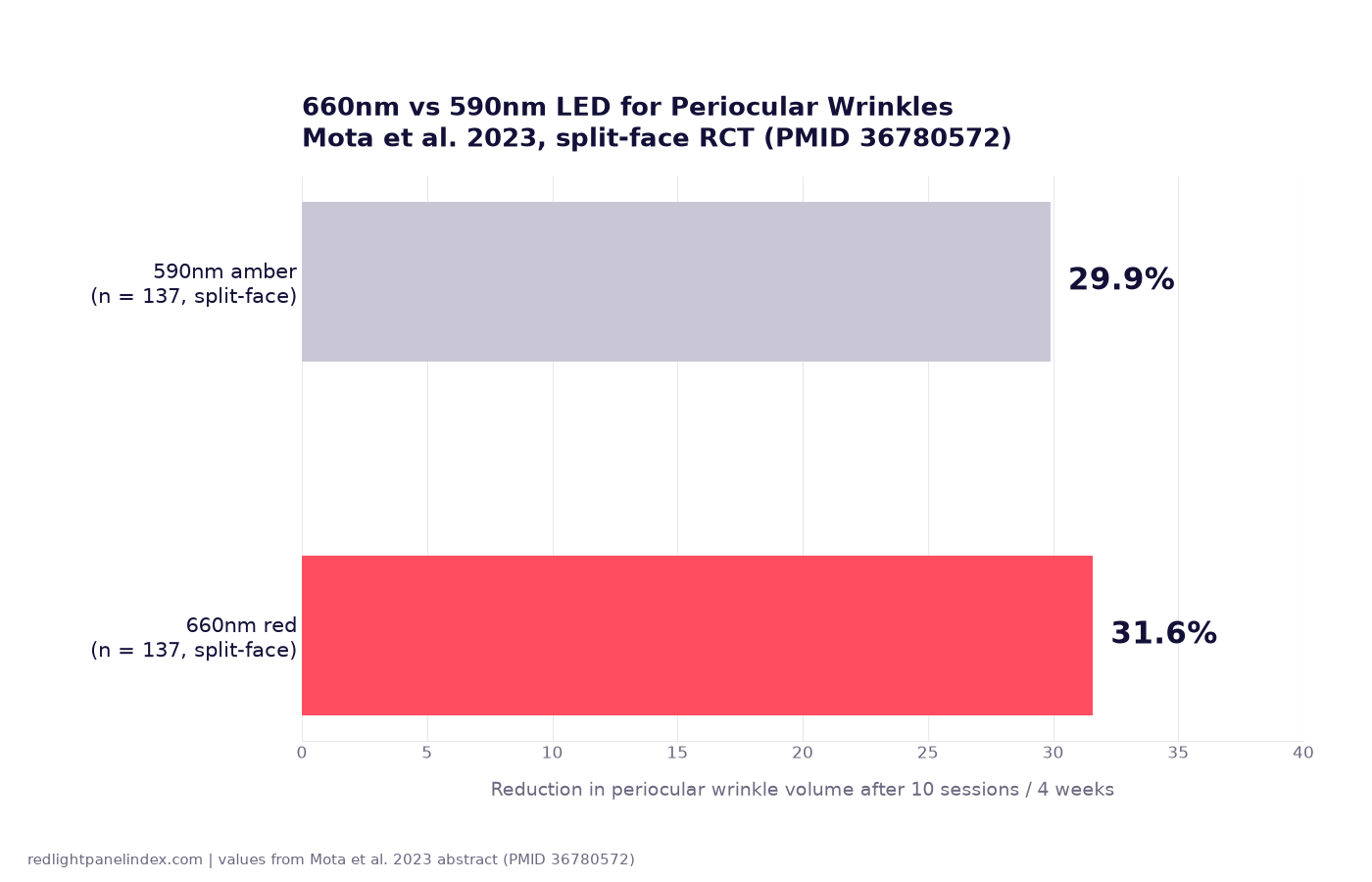
Study Review: 660nm LED for Periocular Wrinkles (2023)
A 137-woman split-face RCT compared 660nm red and 590nm amber LEDs at a matched 3.8 J/cm2 dose. What it found, and what it left out.
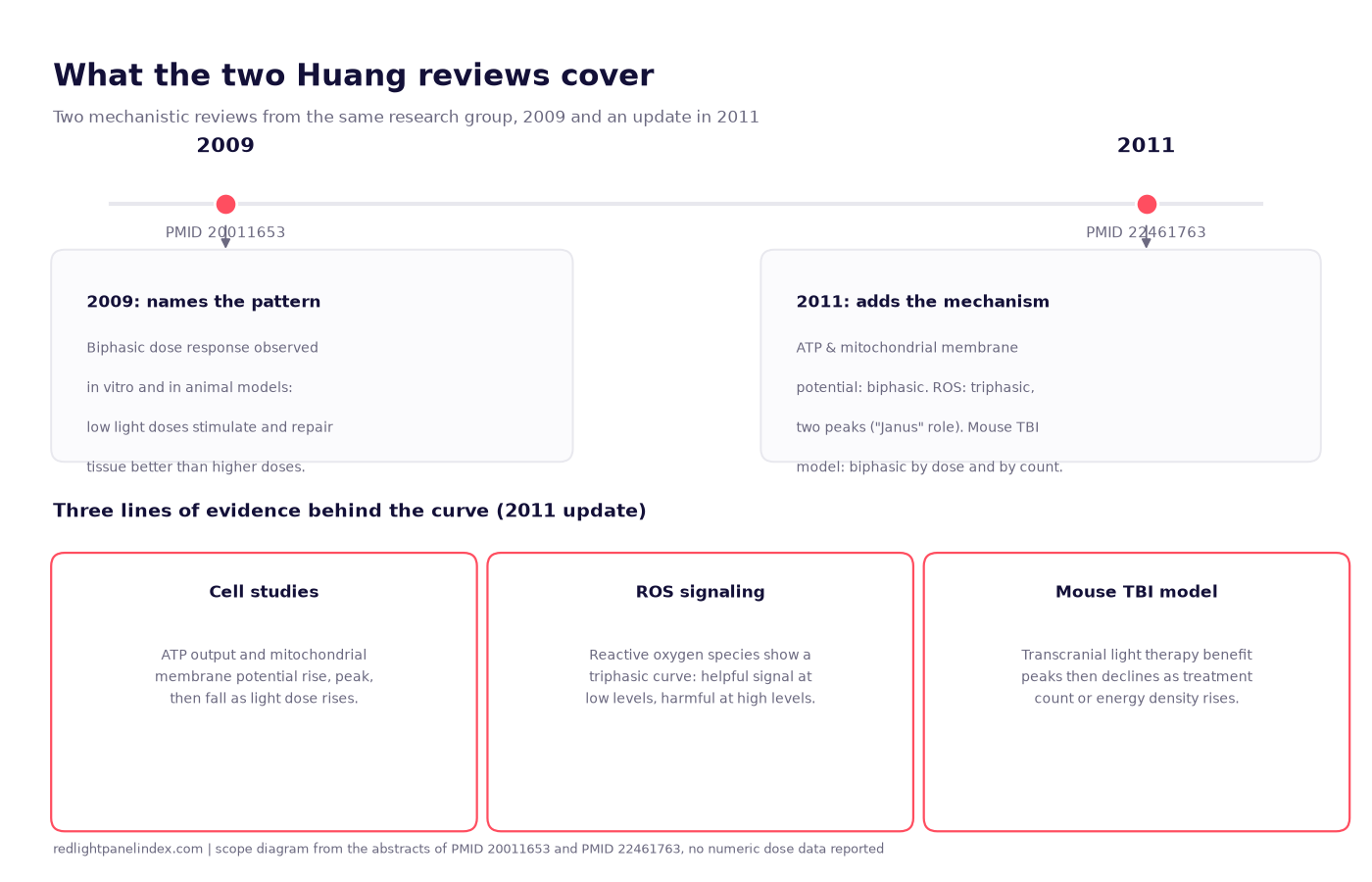
Study Review: The Biphasic Dose Response Papers
Two mechanistic reviews describe why more light does not mean a better result. What each paper covers, and what it leaves unanswered for a home panel.
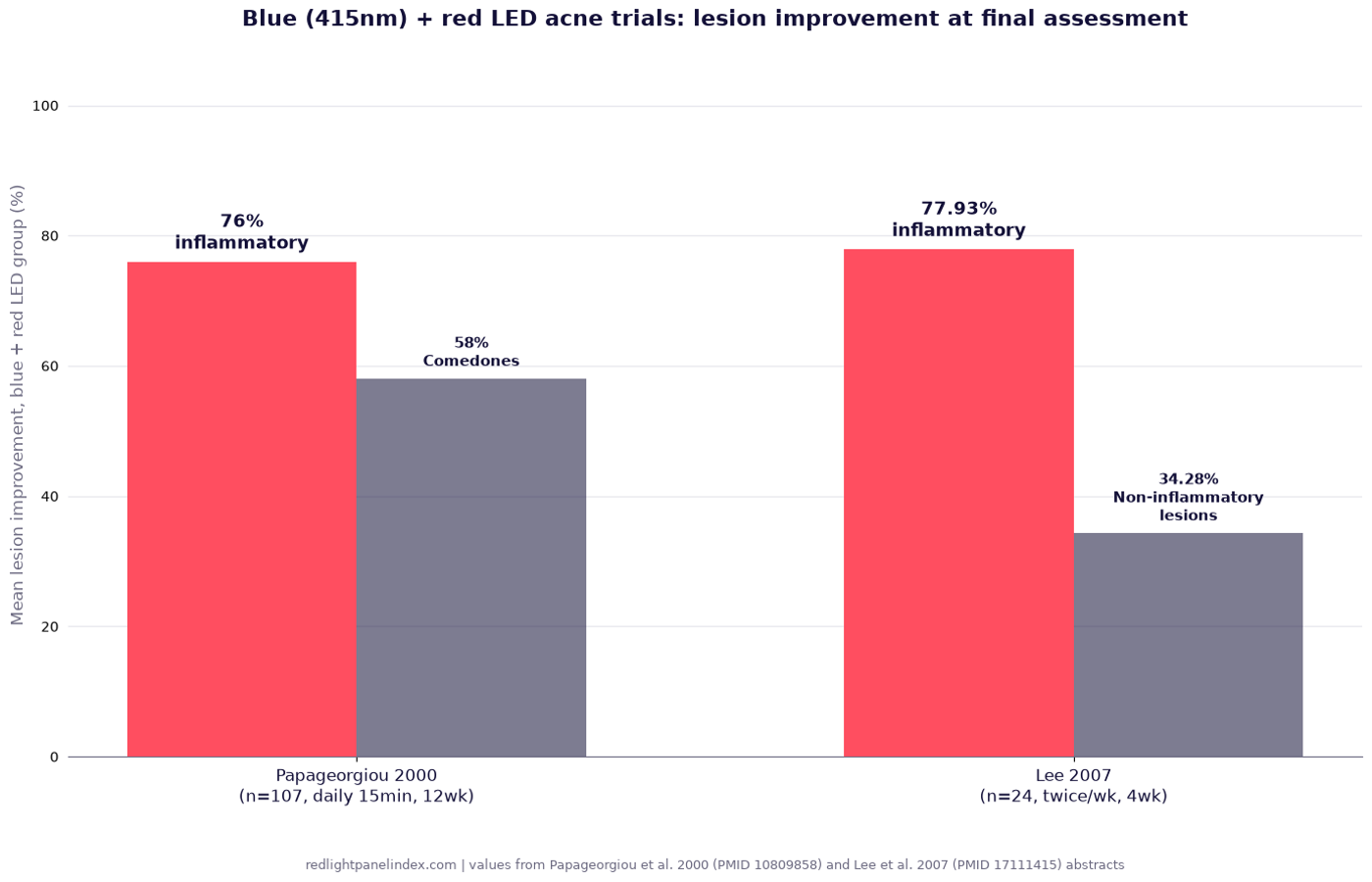
Red Light Therapy for Acne: What the Combination Trials Show
What two randomized trials on blue-plus-red LED light found for acne, why most home panels lack the blue channel they used, and what has not been tested.
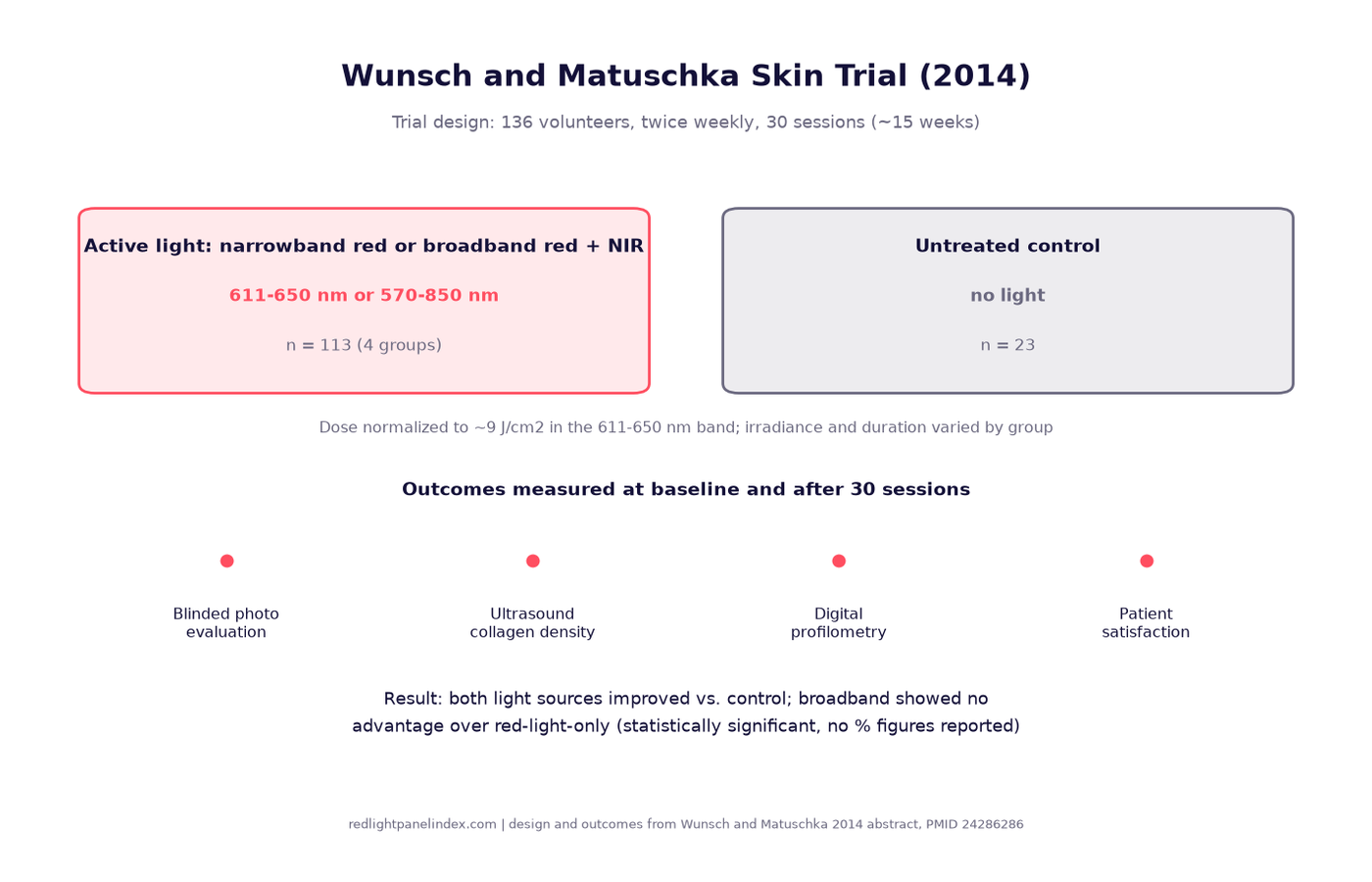
Study Review: The Wunsch Red and Near-Infrared Skin Trial
A 2014 trial treated 113 people twice weekly for 15 weeks with red and red-plus-near-infrared light and measured collagen density and skin roughness.
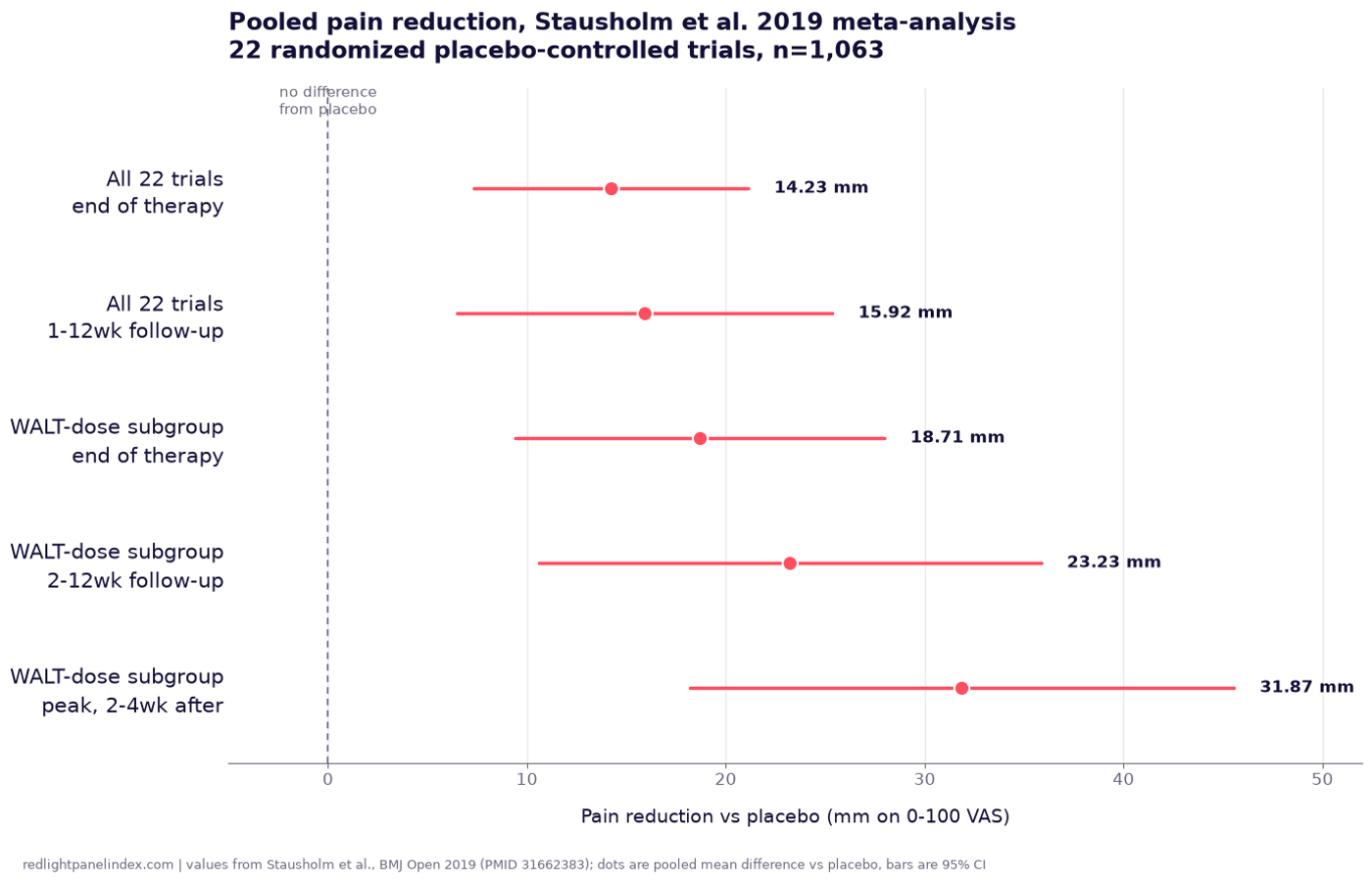
Study Review: The Stausholm Knee OA Meta-Analysis
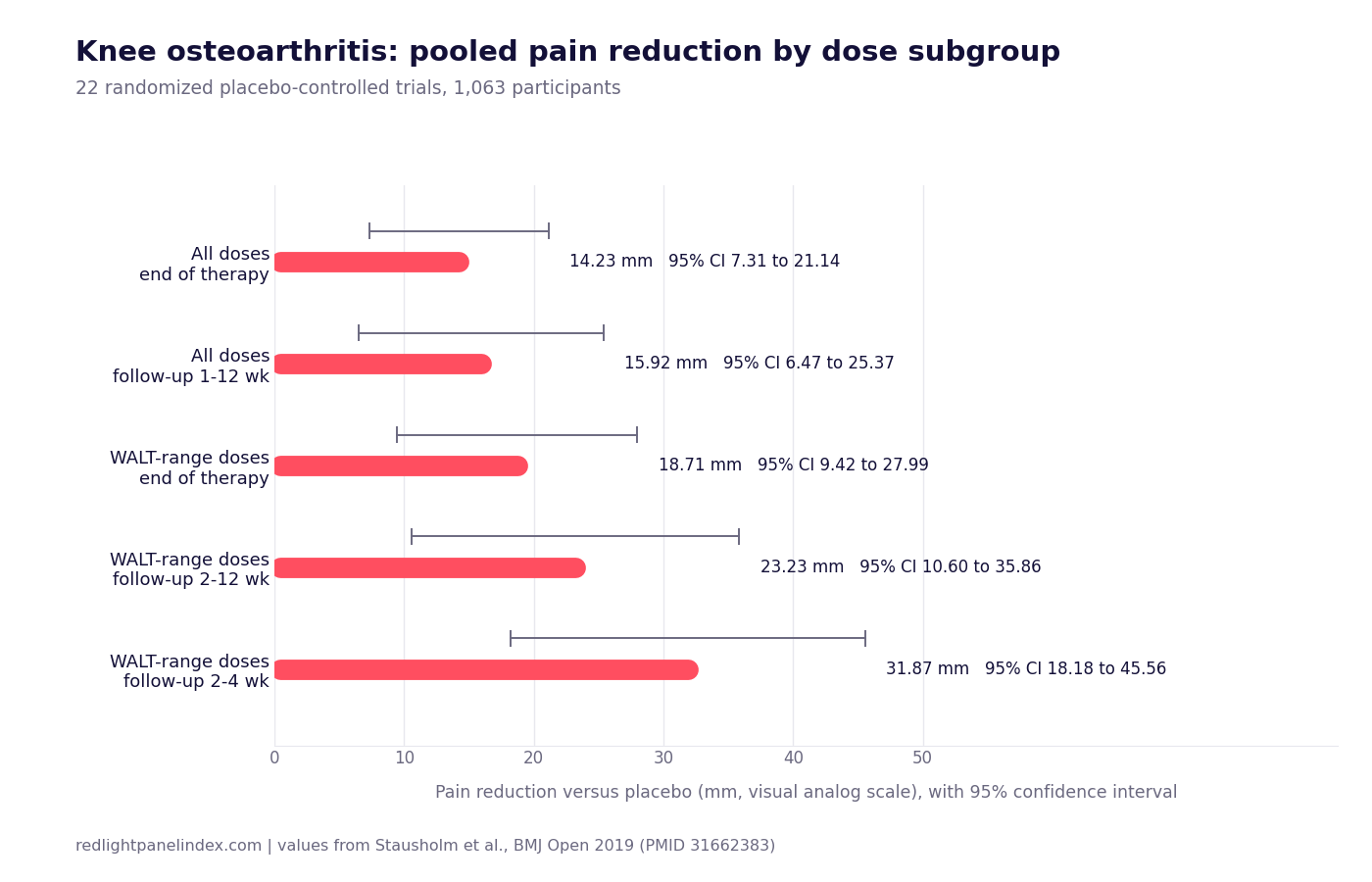
A 2019 pooled analysis of 22 trials and 1,063 patients is the single biggest input to this site's knee osteoarthritis grade. What it pooled and found.
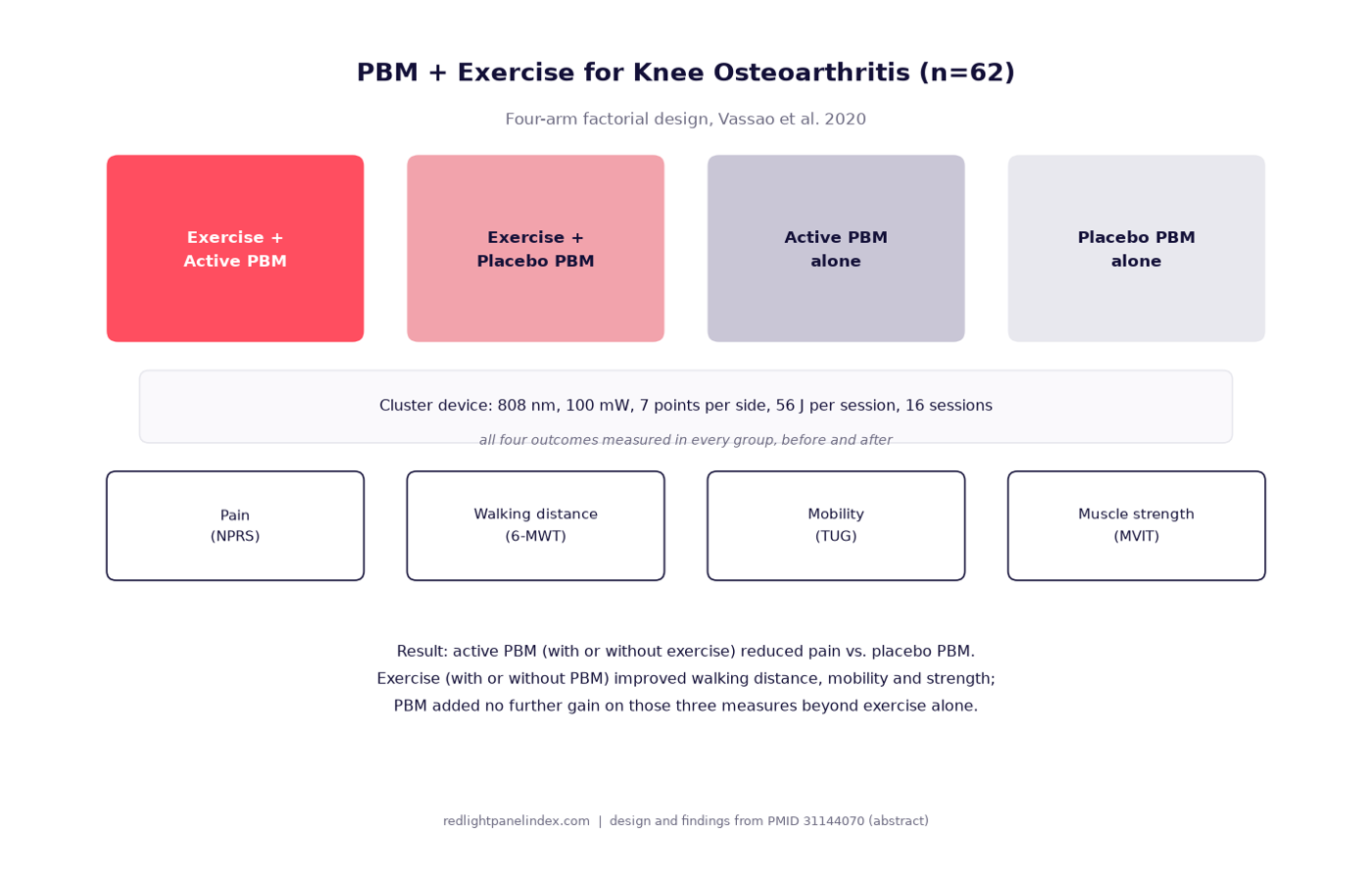
Study Review: PBM Plus Exercise for Knee Osteoarthritis
A four-arm trial tested light plus leg exercise against exercise alone in women with knee osteoarthritis. What it found, and what it did not.
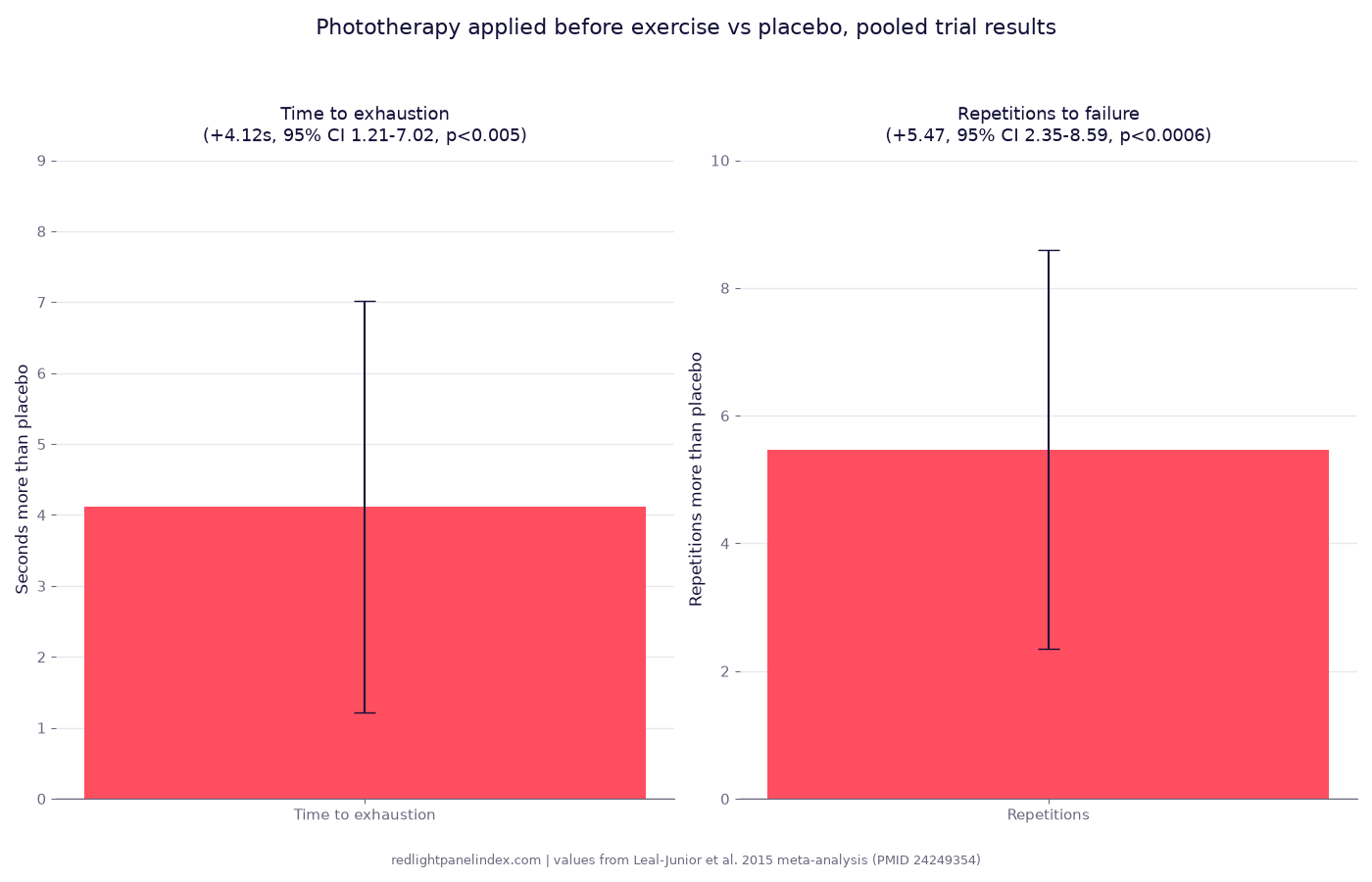
Study Review: Phototherapy Before Exercise (2015)
A 2015 meta-analysis pooled 13 higher-quality trials on phototherapy timed around exercise, covering time to exhaustion, repetitions and muscle damage.
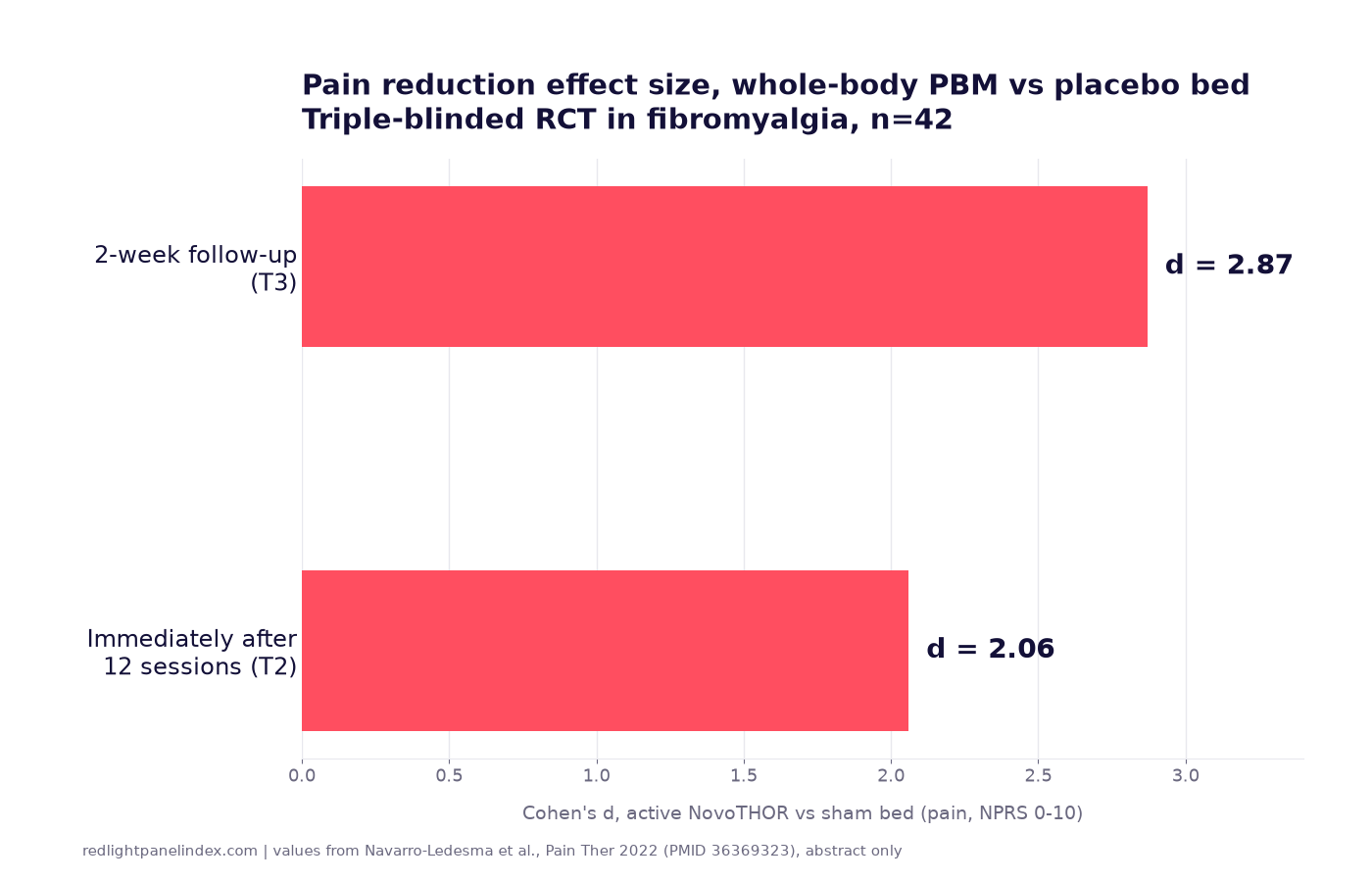
Study Review: Whole-Body LED Bed for Fibromyalgia
A triple-blinded RCT put 42 women with fibromyalgia in a 660/850nm LED bed for 12 sessions. What the pain scores showed, and the gap to a panel.
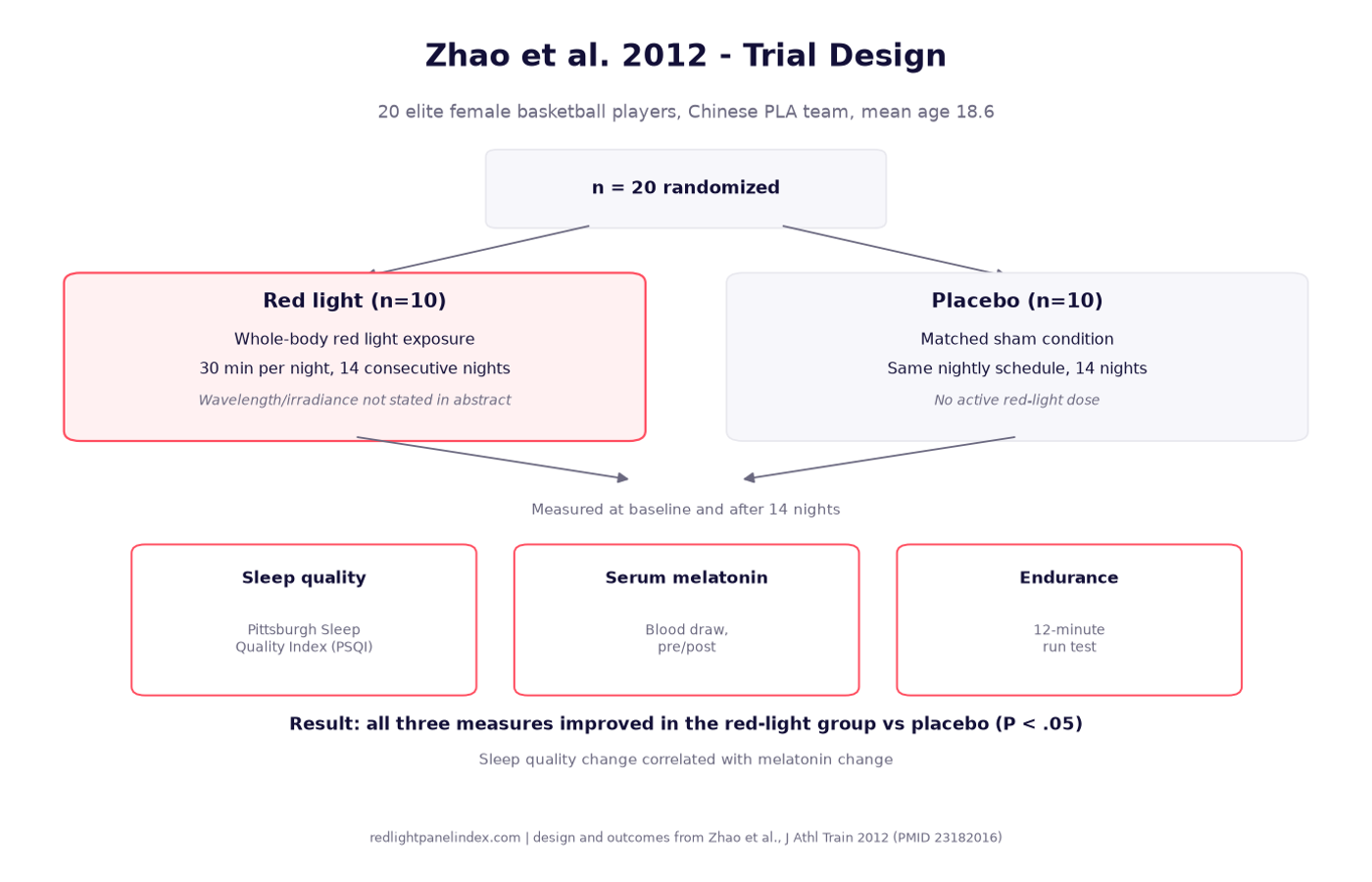
Study Review: Red Light, Sleep and Melatonin (2012)
A 14-night, whole-body red-light trial in 20 elite athletes reported better sleep and higher melatonin than placebo. The design, gaps and panel gap.
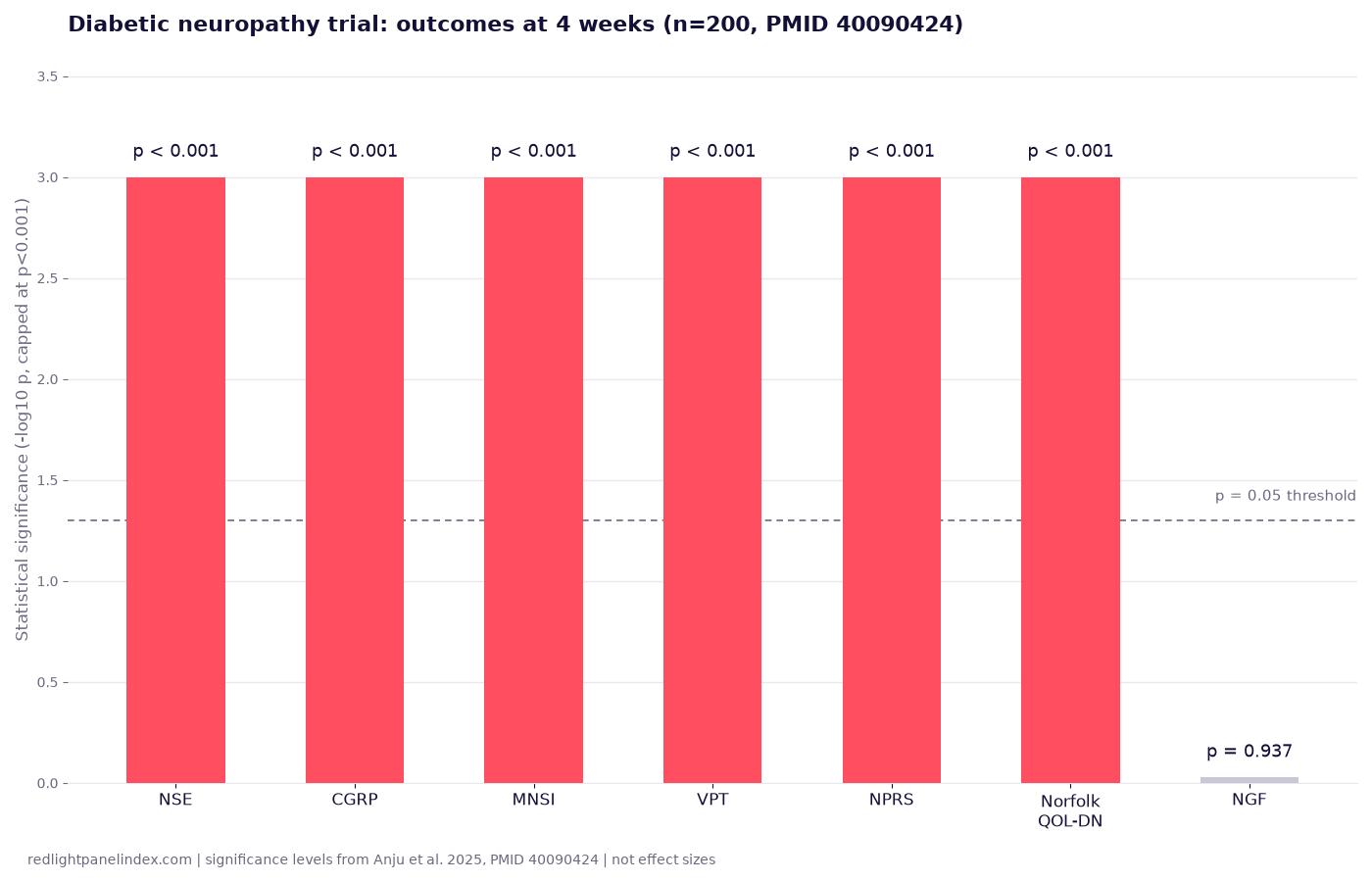
Study Review: PBM for Diabetic Neuropathy in 200 Patients
A 200-patient trial tested a helium-neon laser on diabetic neuropathy for ten days. What the biomarkers and pain scores showed, and the gap to a home panel.
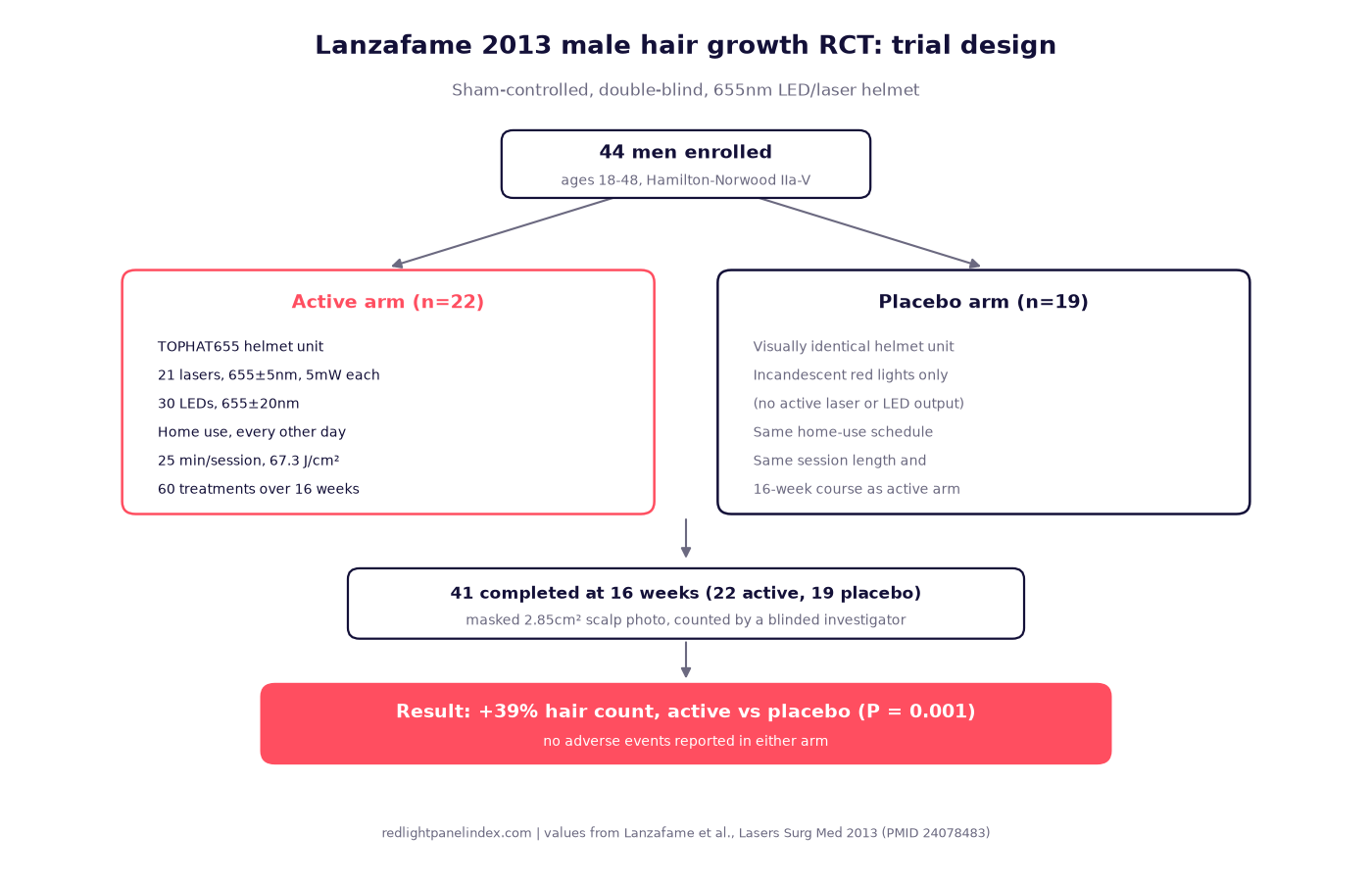
Study Review: The Lanzafame Male Hair Growth Trial (2013)
A sham-controlled 655nm helmet trial in 44 men found a 39% hair count increase versus sham. The design, the numbers and the panel gap explained.
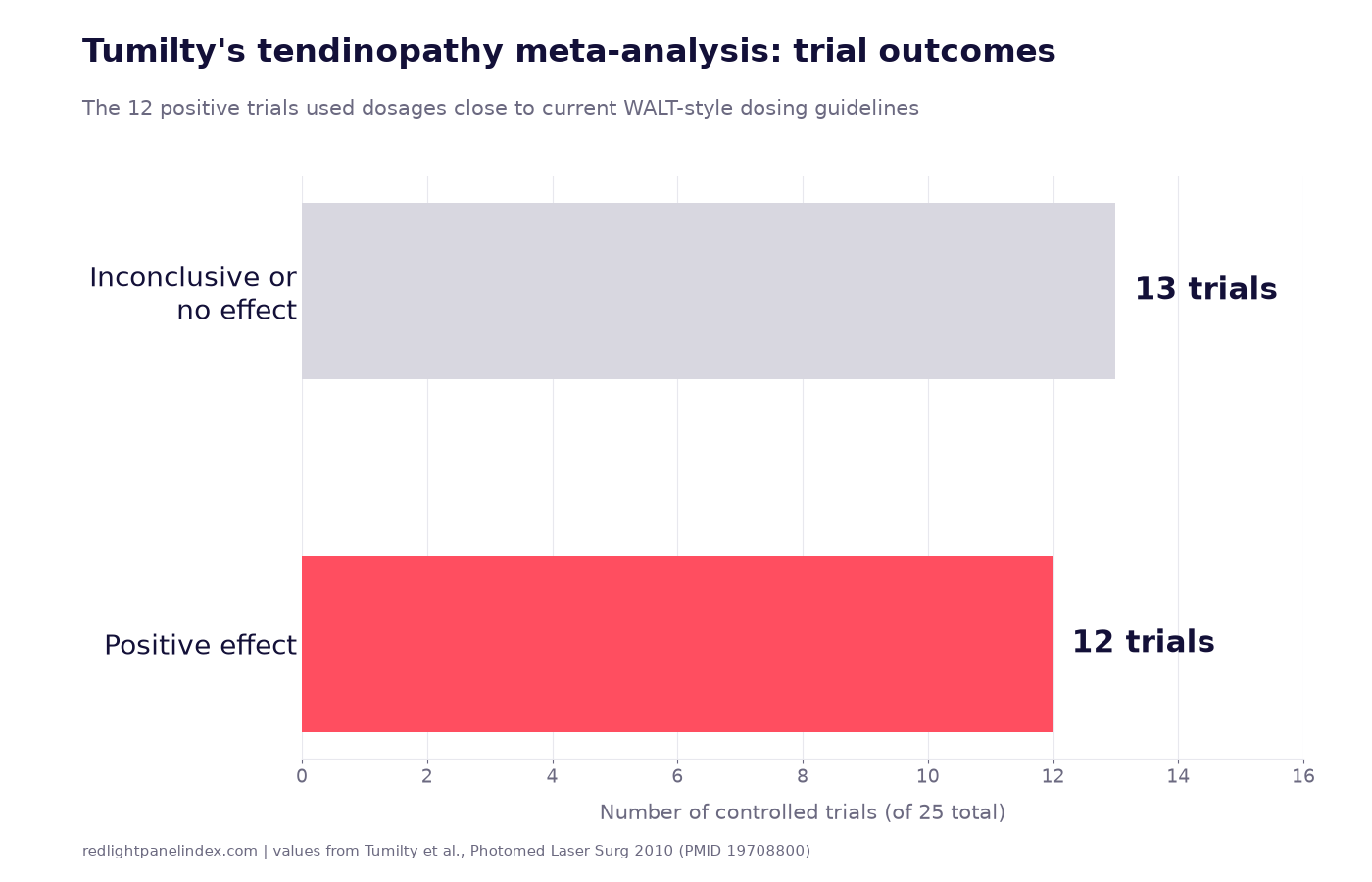
Study Review: Tumilty's Tendinopathy Meta-Analysis
A 2010 meta-analysis of 25 tendon trials found positive results tracked with dosages close to WALT guidelines. Here is what it actually found.
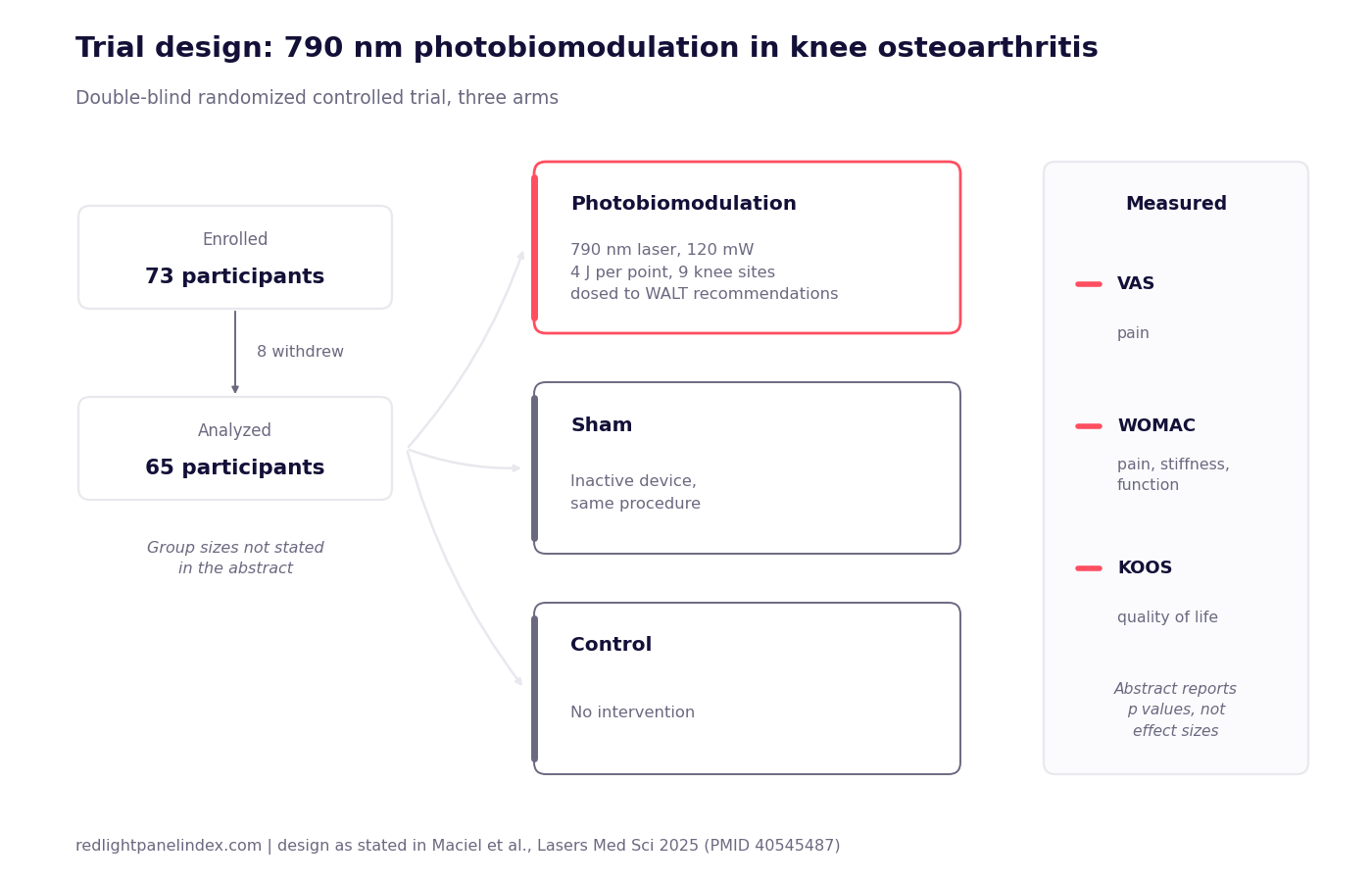
Study Review: 790nm Light for Knee Osteoarthritis, WALT Dose
A three-arm randomized trial used 790nm at 4 J per point across nine knee sites. What it reported, what it left out, and what it means for a panel.
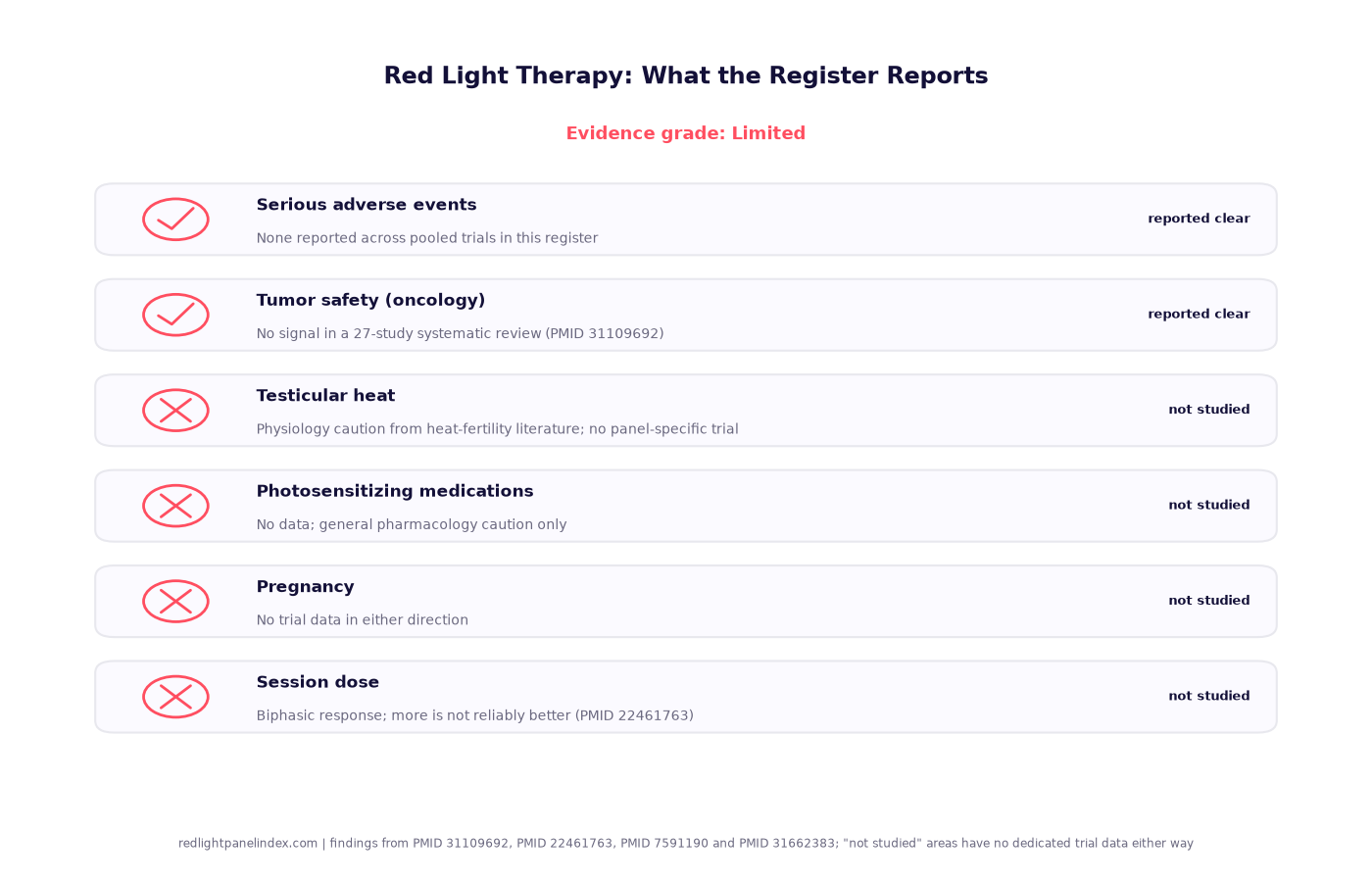
Is Red Light Therapy Safe? What the Evidence Shows
Reported side effects across red light therapy trials, the tumor-safety review in oncology patients, heat and eye cautions, and what has not been studied.
Red Light for Knee Osteoarthritis: Trials and Meta-Analysis
A meta-analysis of 22 placebo-controlled trials and two randomized trials on knee osteoarthritis, the doses that worked, and what they mean for a home panel.
For a faster route through the most common questions about specific conditions, safety and buying a panel, this site's 40-question FAQ answers each one in a few sentences and links back to the fuller evidence page behind it.