Red Light Therapy for Muscle Recovery: What the Evidence Shows
Evidence grade: Moderate
How red light therapy acts on muscle recovery
Exercise-induced muscle damage produces a wave of local inflammation and oxidative stress that shows up as delayed-onset muscle soreness (DOMS) and a temporary drop in force output. Photobiomodulation targets that wave. As characterized in Hamblin's mechanism review (PMC5523874), near-infrared light absorbed by cytochrome c oxidase raises mitochondrial ATP production and modulates reactive oxygen species, which are the same signaling molecules that, in excess, drive post-exercise damage.
The practical result is a tissue environment that clears the inflammatory load faster: lower oxidative stress, better microcirculation, and quicker restoration of contractile function. Because the effect is on the recovery process rather than on pain perception, it is cumulative and shows up across weeks of training rather than as an instant fix after one session.
What the studies show
| Study | Design | Finding |
|---|---|---|
| PMID 31144070 (Lasers Med Sci) | RCT, ~808nm + exercise in knee osteoarthritis | Greater pain reduction and strength gains than placebo plus exercise |
| PMID 24801056 (Lasers Med Sci, 2014) | Placebo-controlled RCT, 670nm laser on tender points, fibromyalgia | Significant improvement in FIQ, McGill, and VAS pain scores vs sham |
| PMID 40545487 (Lasers Med Sci, 2025) | RCT, 790nm, WALT dosing, knee OA | Significant VAS pain reduction and improved WOMAC/KOOS function vs sham |
Near-infrared plus exercise (PMID 31144070, Lasers in Medical Science)
This randomized controlled trial combined roughly 808nm light with an exercise program and found greater strength gains and pain reduction than exercise plus placebo light. For recovery, the relevant lesson is that PBM amplified the adaptation to training rather than replacing the training itself.
Muscle-level pain, fibromyalgia PBM (PMID 24801056, Lasers in Medical Science, 2014)
A placebo-controlled randomized trial of low-level laser therapy in fibromyalgia (670nm, 4 J/cm² on tender points, four weeks) reported significant improvements in pain and symptom scores versus sham. It is cited here because it shows light acting on muscle-level pain in a controlled design, with the caveat that it used point-applied lasers rather than a panel.
WALT-dosed near-infrared, knee OA (PMID 40545487, 2025)
Although this 790nm trial targeted knee osteoarthritis, its careful dosing (about 4 J per point) is a useful reference for how much light deep tissue actually needs, which translates directly to setting distance and session length for muscle work.
Which wavelengths do the work
Muscle bellies and connective tissue sit centimeters below the skin, so recovery is a near-infrared job: 810nm and 830nm for muscle and fascia, with 1064nm-class deep infrared for the largest muscle groups and joints they cross. Surface reds at 630 and 660nm barely reach muscle and are a skin protocol, not a recovery one. On a panel spec sheet, look for meaningful per-wavelength density in the 810 to 850nm range, not just the presence of those numbers in a list.
Dosing: distance, time, and frequency
Position the target muscle 6 to 12 inches from the panel, treat 10 to 20 minutes, and run 3 to 5 sessions per week. Both pre-exercise and post-exercise timing appear in the literature; consistency across weeks matters more than the exact timing, so anchor sessions to a routine you will actually keep. Respect the biphasic response: stacking very long sessions can blunt the benefit rather than add to it. Use the dose calculator to keep each session inside a sensible joules range.
How it compares with conventional options
Compared with the usual recovery tools, PBM occupies a low-risk niche: no systemic load like NSAIDs, no equipment beyond the panel, and it can be stacked with sleep, nutrition, and progressive loading, which remain the foundation of recovery. It is not a substitute for those fundamentals, and the effect size is modest; treat it as a marginal gain layered on top of good training hygiene rather than the thing that makes or breaks recovery.
Which panel features matter for muscle recovery
Recovery targets sit under centimeters of tissue, so the near-infrared bands matter most: 810nm and 830nm for muscle bellies and connective tissue, and 1064nm-class deep infrared for joints and fascia. Surface reds (630/660nm) alone are a skin protocol, not a recovery protocol.
Device picks from the database
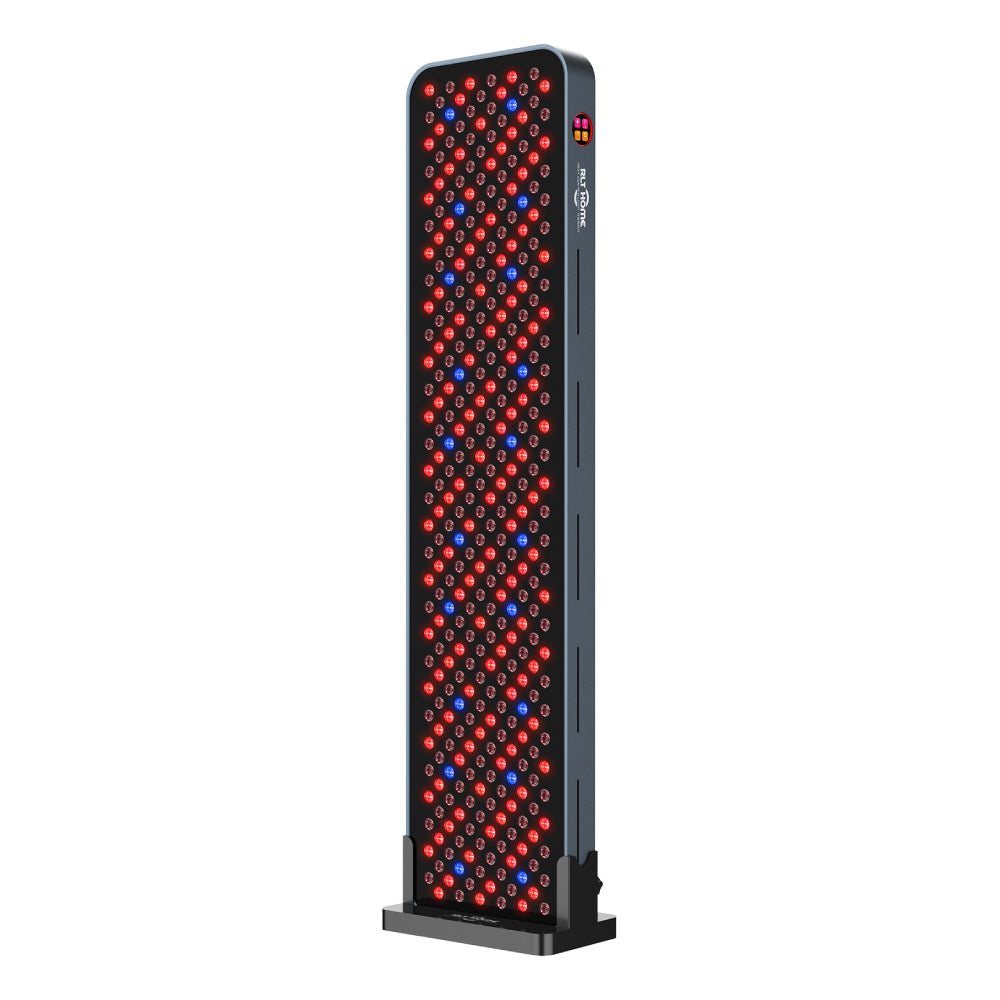
RLT Home Total Spectrum MAX
Deep-band density where it matters: 19% 810nm, 14% 830nm, 14% 1064nm.
Full specs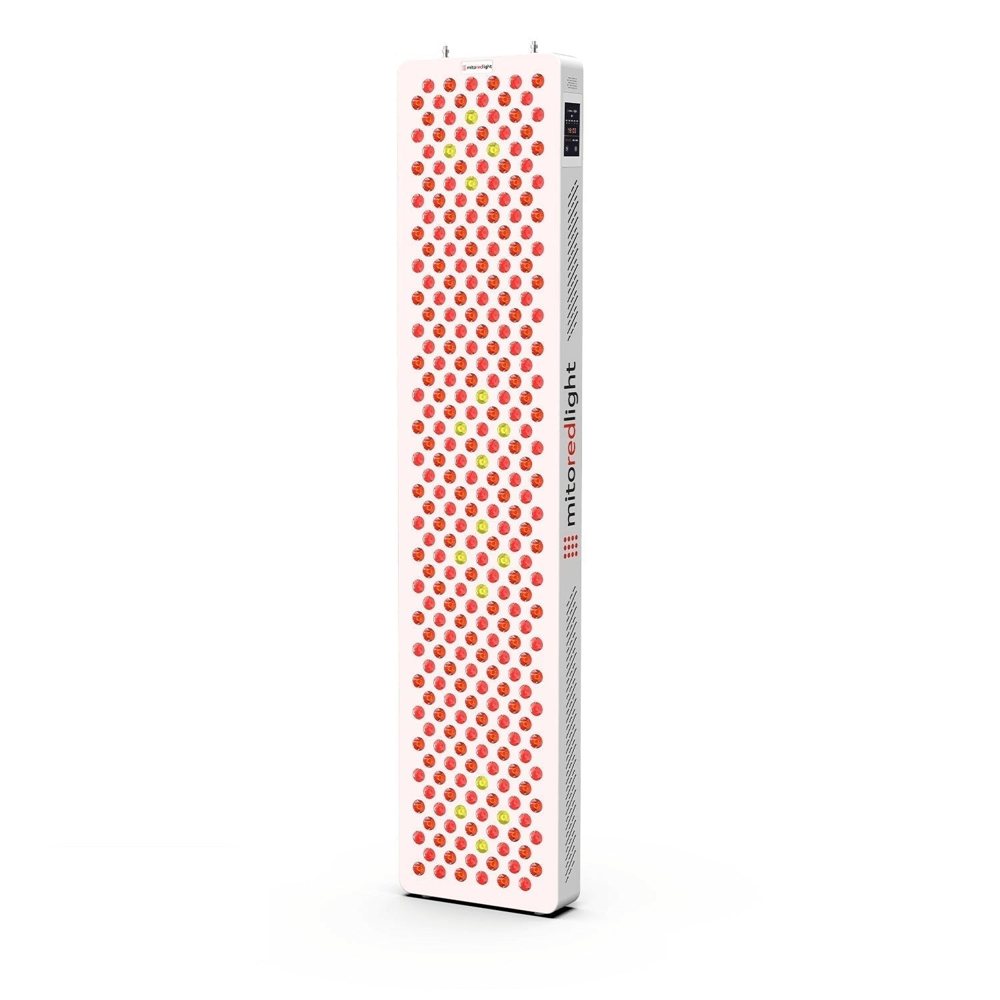
What the evidence does not support
The strongest muscle-relevant trials pair PBM with exercise, so isolating a clean recovery effect from the training effect is genuinely hard, and results vary with dose and device. Light therapy does not build muscle on its own, does not replace rest, and will not rescue a program that lacks progressive overload. The honest claim is a possible reduction in soreness and a faster return of force for some people, not a performance shortcut.
Safety and contraindications
Well tolerated in general, with transient warmth the usual report. Use eye protection with high-output panels, avoid treating over active malignancy, and be cautious with photosensitizing medication. None of this replaces medical advice for an actual injury, which should be assessed by a clinician.
Frequently asked questions
How soon does it help soreness?
Trials and user reports point to two to six weeks of consistent use rather than immediate effects.
Before or after training?
Both appear in the literature. Consistency matters more than timing; many users anchor sessions to their post-training routine.
Should I use red light before or after a workout?
Both are supported. Consistency matters more than timing; many people treat after training as part of a cooldown routine.
How soon will soreness improve?
Expect a gradual effect over two to six weeks of consistent use rather than an overnight change after one session.
Does it help build muscle?
No. It may support recovery and the adaptation to training, but the muscle-building work is still the training itself.
Most of the trials behind this grade look at recovery after exercise. A separate 2015 meta-analysis looked the other direction, at phototherapy applied before exercise: pooling 13 higher-quality trials, it found a small but significant increase in time to exhaustion and repetitions completed versus placebo, with the most consistent results coming from red or infrared light applied before the workout. See our review of that meta-analysis for the pooled figures and what they do and do not say about a home panel, or the sports performance evidence page for that trial alongside two other reviews on the same pre-exercise timing question.
For panel picks scored on published near-infrared density and method-labeled irradiance for a standing session, see the best panels for athletes and muscle recovery.
If you are deciding when to use the panel around a workout, see red light therapy before or after a workout. The two meta-analyses on soreness specifically, which reached different conclusions in 2016 and 2025, are graded on our delayed onset muscle soreness evidence page.
The "better microcirculation" idea in the mechanism section rests on a proposed nitric oxide step; nitric oxide and red light: the blood-flow idea explains what the reviews support and what no panel study has shown.
Methodology: rankings weigh measured or method-stated irradiance, wavelength coverage and published density, buyer terms (trial, restocking, stand, warranty), and value per LED. No brand pays for a position. Full methodology.