Best Panels for Deep Tissue: the 1064nm Shortlist
The 1064nm picks, ranked
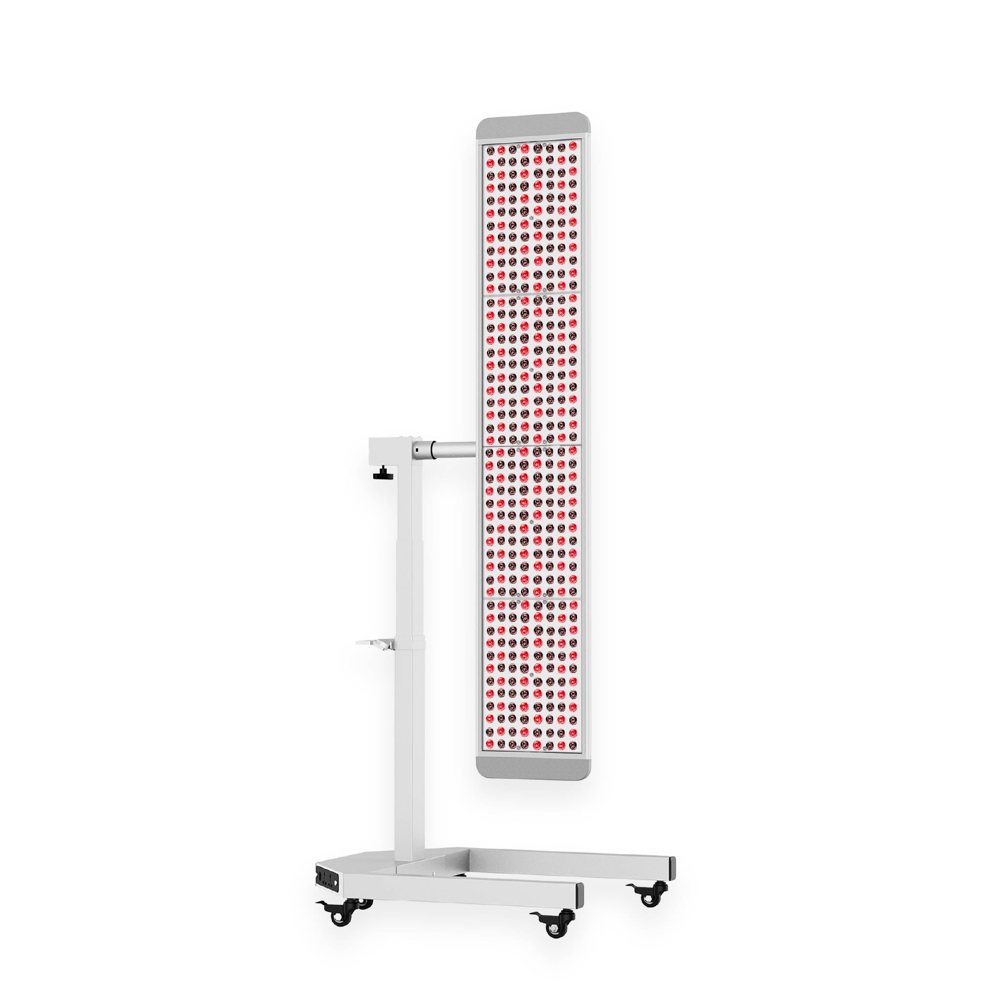
Helio Blaze
- The highest published 1064nm density in the database: 16.7% of LEDs on the Blaze and 19.4% on the Spark, Glow and Nova
- Allocation published per wavelength, with 810 and 830nm alongside, so the claim is checkable
- Irradiance is a catalog figure extrapolated from a LightLab test of the Glow; 60-day trial, 3-year warranty
How the shortlist was made
33 of the 188 panels in the database list a 1060 or 1064nm band, against 175 that list 850nm. Listing the band is the easy part; the shortlist asks how much of the panel's LED power sits in it, and only brands that publish per-wavelength density can answer. A panel with a handful of 1064nm diodes among hundreds of 660 and 850nm ones delivers little in that band at any distance, whatever the box says. The wavelength guide shows how common each band is across the database, and every device page lists the bands with the density figure where the brand publishes one.
How this list is ranked
Every pick is scored on database fields only, the same fields for every brand; see how rankings work.
| Criterion | What counts |
|---|---|
| 1064nm density | Published share of LED power at 1060 to 1064nm; a listed band without a density figure does not qualify |
| Supporting NIR bands | Density at 810 and 830nm, the bands the joint and muscle trials most often used |
| Irradiance with method | Spectrometer figure at a stated distance; figures at 12 inches are not compared with 6-inch figures |
| Buyer terms and price | Trial, warranty, stand, and verified price |
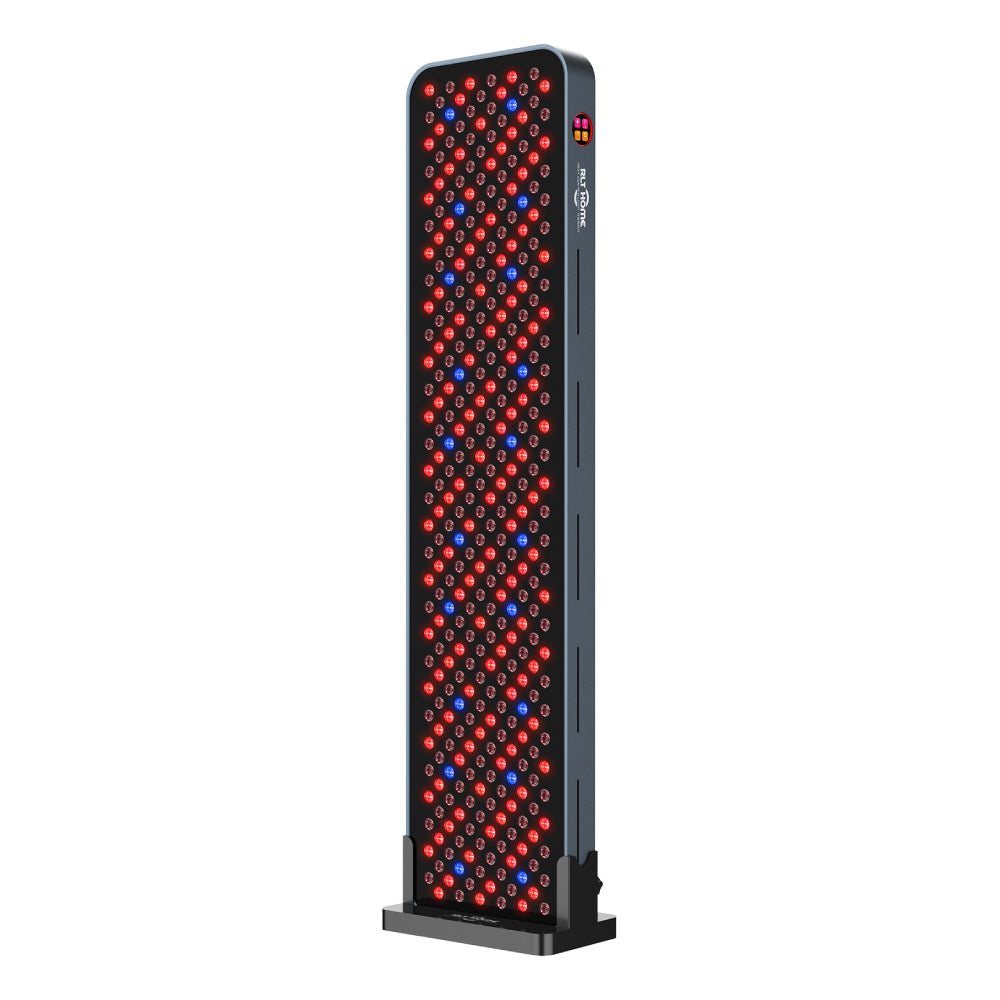
RLT Home Total Spectrum MAX
- 14% of LEDs at 1064nm, plus 19% at 810nm and 14% at 830nm, the deep-joint trio at real density
- Density published per wavelength, so the claim is checkable
- Lab-tested output (Electropossible spectrometer, commissioned by the brand); 60-day trial
Frequently asked questions
Does 1064nm reach deeper than 850nm?
Tissue optics support deeper penetration for longer near-infrared wavelengths. Clinical trials at exactly 1064nm are fewer than at 800-850nm; the physics case is solid, the trial base is still growing.
Deep-tissue reach is not the only reason to weigh 1064nm share: this site's ranking of panels for joint pain scores the same wavelength field, plus 810 to 850nm share and named-instrument irradiance, against the actual doses used in knee osteoarthritis trials, for readers whose priority is a specific joint rather than depth alone.
For what the 1064nm research actually used, and how its laser dose compares with panel output, see the 1064nm explainer and the review of the 2013 transcranial laser study.
Methodology: rankings weigh measured or method-stated irradiance, wavelength coverage and published density, buyer terms (trial, restocking, stand, warranty), and value per LED. No brand pays for a position. Full methodology.