Red Light Therapy for Brain and Mood: What the Evidence Shows
Evidence grade: Insufficient
How red light therapy acts on brain and mood
Transcranial photobiomodulation is the idea that near-infrared light applied to the head can reach cortical tissue and, through the same cytochrome c oxidase pathway (Hamblin, PMC5523874), raise neuronal energy metabolism and blood flow, with downstream effects on mood and cognition. The biological rationale is real, but the practical question is delivery: only a fraction of near-infrared light penetrates the scalp and skull, and a wall panel is not designed or dosed as a transcranial device.
What the studies show
| Study | Design | Finding |
|---|---|---|
| PMID 19995444 (Behav Brain Funct, 2009) | Single NIR forehead treatment, 10-patient open pilot | Depression and anxiety improvements reported at 2 and 4 weeks |
| PMC5523874 (Hamblin) | Mechanism review | Describes the proposed pathways for neural photobiomodulation |
Transcranial near-infrared, mood pilot (PMID 19995444, Behavioral and Brain Functions, 2009)
An open pilot study gave 10 patients with major depression, nine of them with anxiety, a single near-infrared treatment to the forehead and reported improvements in depression and anxiety measures at two and four weeks. As a small uncontrolled pilot, it is an early signal rather than established evidence, and it used a device positioned against the head at controlled parameters, not a panel used at a distance. It supports further research more than it supports a home protocol.
Which wavelengths do the work
If light is to reach the cortex at all it must be near-infrared, 810 to 830nm is the band most transcranial work uses, applied close to the scalp. This is the clearest case where a general wall panel is a poor proxy for the devices in the studies, which sit directly against the head.
Dosing: distance, time, and frequency
There is no validated home panel protocol for mood or cognition. The research devices are dedicated transcranial units at close range and specific doses. Using a panel at a normal distance for this purpose is extrapolation well beyond the evidence, and expectations should be set accordingly.
How it compares with conventional options
For diagnosed depression or anxiety, evidence-based care, therapy, medication, exercise, sleep, is the appropriate path. Transcranial light is experimental and should never replace treatment for a mental-health condition. If mood symptoms are significant, the right next step is a clinician, not a light panel.
Which panel features matter for brain and mood
Research devices target the forehead with 810nm-class light. Panels can deliver 810nm but dosing through hair and skull is poorly characterized. Grade your expectations accordingly: plausible mechanism, thin human data.
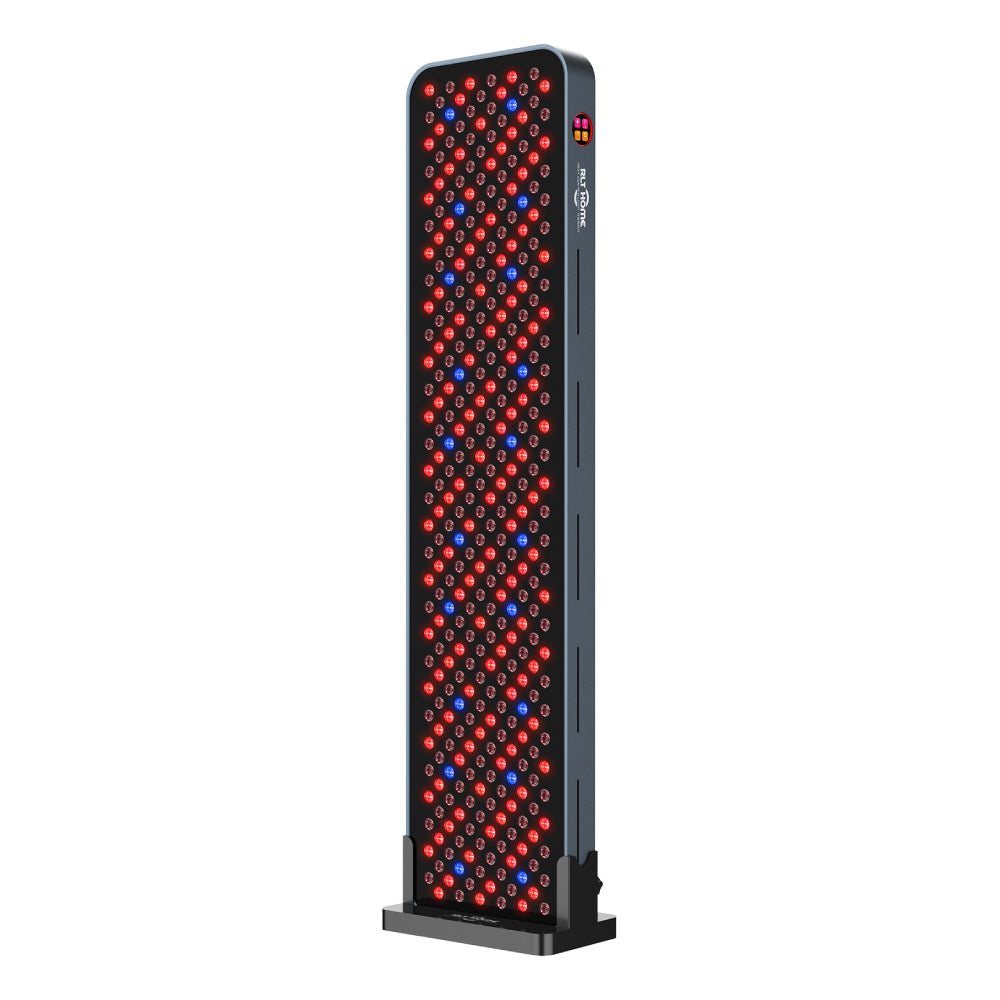
Device picks from the database
What the evidence does not support
This is among the weakest-evidenced uses in the category for home panels. The mechanism is plausible and pilot data exist, but a wall panel is not a transcranial device, penetration to the cortex is limited, and no home protocol is validated. Claims that a panel treats depression or boosts cognition go far beyond the evidence.
Safety and contraindications
Do not use light therapy as a substitute for mental-health treatment. Anyone experiencing significant low mood, anxiety, or thoughts of self-harm should reach out to a qualified professional. This is a sensitive area, and if you are struggling, support is available and worth seeking.
Frequently asked questions
Can a panel improve focus or memory?
No controlled trial supports cognitive enhancement from standing in front of a consumer panel. The trials that exist are small, use head-mounted devices, and measure mood, not cognition.
Can a red light panel treat depression?
No. The transcranial research uses dedicated head-worn devices, not wall panels, and even that evidence is early. For diagnosed depression, seek evidence-based care.
Does light reach the brain through the skull?
Only a small fraction of near-infrared light penetrates scalp and skull, and a panel used at a distance is not designed for it. Treat brain and mood claims for panels with heavy skepticism.
Depression studies in detail
The two human studies of near-infrared light on the forehead in depression, a 2009 pilot and the 2018 ELATED-2 trial, are compared on the transcranial light and depression page, and the pilot has its own study review.
Laser research at 1064nm is a separate strand, covered in a study review of the 2013 transcranial trial in healthy adults and the 1064nm explainer.
Methodology: rankings weigh measured or method-stated irradiance, wavelength coverage and published density, buyer terms (trial, restocking, stand, warranty), and value per LED. No brand pays for a position. Full methodology.