Red Light Therapy for Hair Growth: What the Evidence Shows
Evidence grade: Strong
How red light therapy acts on hair growth
In androgenetic alopecia the hair follicle miniaturizes and its growth cycle shortens. Low-level laser and LED light in the red band appear to stimulate the follicle, and the proposed mechanism is again the cytochrome c oxidase pathway (Hamblin, PMC5523874): increased cellular energy in the follicle and dermal papilla, improved local perfusion, and a shift of follicles back toward the active growth (anagen) phase.
Hair is one of the few red light applications with FDA-cleared devices and sham-controlled randomized trials, which raises the quality of evidence above most consumer claims. Importantly, the cleared trial devices are dedicated caps and helmets at around 650 to 655nm, positioned directly on the scalp, not full-body panels.
What the studies show
| Study | Design | Finding |
|---|---|---|
| PMID 24078483 (Lanzafame, men) | Sham-controlled RCT, 655nm, 16 weeks | 35% hair count increase vs sham (p=0.003) |
| PMID 25124964 (Lanzafame, women) | Sham-controlled RCT, 655nm, 16 weeks | Significant hair count increase, comparable to the male result |
Sham-controlled RCT in men (PMID 24078483, Lanzafame)
A randomized, sham-controlled trial using a 655nm device over 16 weeks reported a roughly 35 percent increase in hair count versus sham, a statistically significant result (p=0.003). The sham control is what makes this convincing: the comparison group used an identical-looking inactive device.
Sham-controlled RCT in women (PMID 25124964, Lanzafame)
A parallel trial in women, same 655nm wavelength and 16-week protocol, found a significant hair-count increase comparable to the male result, extending the finding across sexes.
Which wavelengths do the work
The trial-validated band is narrow: around 650 to 655nm delivered close to the scalp. This is a red-light application, not a near-infrared one, and depth is not the challenge because the follicles are shallow. The catch for panel buyers is delivery: a wall panel can put 660nm on a scalp, but the trials used head-worn devices that hold the light at a fixed short distance, so panel use for hair is an extrapolation from the evidence rather than a direct match to it.
Dosing: distance, time, and frequency
The positive trials ran multiple sessions per week over 16 weeks, and, crucially, the gains regressed when treatment stopped, so this is an ongoing commitment rather than a course with a finish line. With a panel, keep the scalp close and consistent, but set expectations against the fact that the evidence rests on caps and helmets, not panels.
How it compares with conventional options
Against minoxidil and finasteride, red light is non-pharmacological and avoids their side-effect profiles, and it can be combined with them. It is also more device-dependent and, for panels specifically, less directly evidenced. The reasonable framing is a low-risk addition to a hair plan, ideally using a cap or helmet at the trial wavelength if hair is the primary goal, discussed with a clinician who treats hair loss.
Which panel features matter for hair growth
The cleared trial devices are caps and helmets at ~650-655nm. Panels can reach the scalp but the trial base is on dedicated head-worn devices; treat panel use for hair as extrapolation.
Device picks from the database
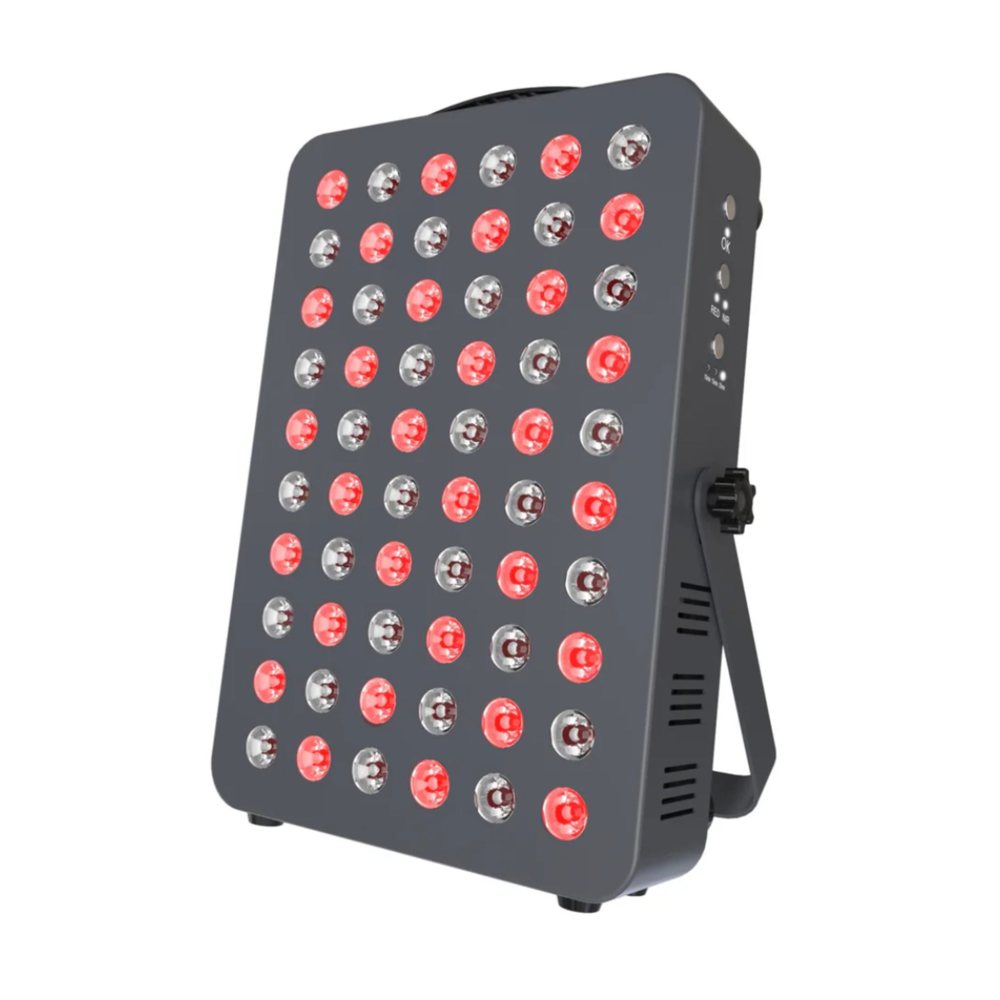
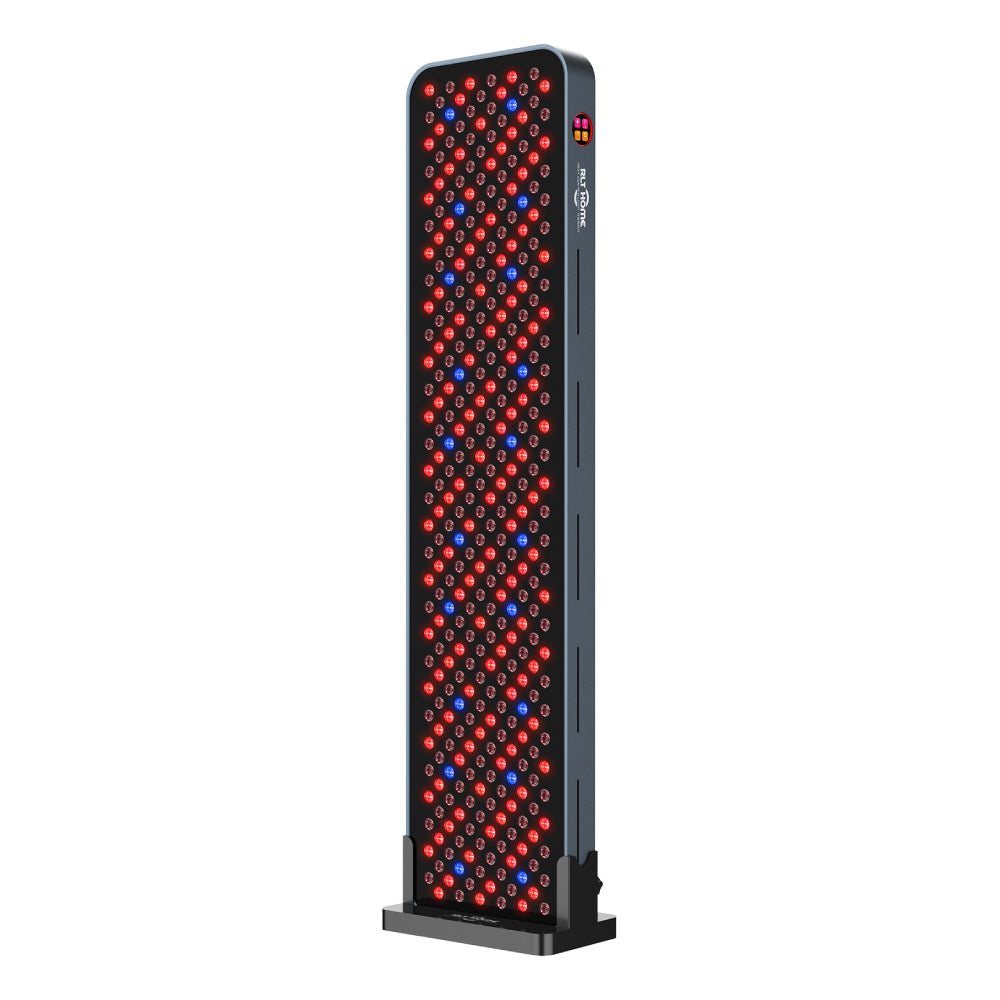
RLT Home Total Spectrum MAX
Hair mode among its nine presets; panel-based, so extrapolation applies.
Full specsWhat the evidence does not support
The strong evidence is specific to androgenetic alopecia, to roughly 650 to 655nm, and to dedicated scalp devices. It does not extend to every cause of hair loss, does not regrow hair on a fully scarred or long-dormant follicle, and the panel-versus-cap gap means a full-body panel is the weakest way to pursue this particular benefit. Gains also depend on continued use.
Safety and contraindications
Very well tolerated, with scalp warmth the main sensation. The usual cautions apply for photosensitizing medication, and hair loss with an unclear cause should be assessed by a clinician rather than self-treated, since some causes need specific medical treatment.
Frequently asked questions
How long until results?
The positive trials ran 16 weeks with multiple weekly sessions, and gains regress if treatment stops.
Can a wall panel regrow hair like a laser cap?
The trials used 650 to 655nm caps and helmets held close to the scalp. A panel can deliver that wavelength but is an extrapolation; for hair specifically, a dedicated cap matches the evidence better.
How long until results?
The positive trials ran 16 weeks of multiple weekly sessions, and gains regressed after stopping, so it is an ongoing routine.
Does it work for all hair loss?
The evidence is for androgenetic (pattern) hair loss. Other causes need a diagnosis and may need different treatment.
For the full trial design behind the male results above, n, blinding, device parameters and the exact hair-count figure, see our review of the Lanzafame 2013 male RCT. A companion 2014 trial in women used the same device and schedule and reported a similar 37% hair count increase over sham.
Both trials used a sealed 655nm helmet, a device class this site's database does not currently track; our ranking of the best red light devices for hair growth covers how the panels that are tracked compare on 660nm share and scalp-distance fit instead.
Methodology: rankings weigh measured or method-stated irradiance, wavelength coverage and published density, buyer terms (trial, restocking, stand, warranty), and value per LED. No brand pays for a position. Full methodology.