Red Light Therapy for Sleep: What the Evidence Shows
Evidence grade: Limited
How red light therapy acts on sleep
The clearest sleep-relevant property of red light is what it does not do: unlike blue-enriched light, red and near-infrared wavelengths do not meaningfully suppress melatonin, the hormone that signals the body toward sleep. So a red-only evening session avoids the circadian disruption that phone and overhead-light exposure cause. Whether red light also actively supports sleep beyond that avoidance is a separate, less settled question that early research is only beginning to probe.
Proposed active pathways run through the same photobiomodulation biology (Hamblin, PMC5523874) and, in some pilot work, through transcranial near-infrared effects on mood, which is tightly coupled to sleep. These are mechanistically plausible but not yet backed by the kind of large, replicated trials that the skin and joint applications have.
What the studies show
| Study | Design | Finding |
|---|---|---|
| PMID 23182016 (J Athl Train, 2012) | 14 nights of whole-body red light, 20 elite athletes | Improved PSQI sleep quality, serum melatonin, and endurance vs placebo |
| PMID 19995444 (Behav Brain Funct, 2009) | Single NIR forehead treatment, 10-patient open pilot | Psychological benefits reported at 2 and 4 weeks; mood and sleep are closely linked |
Whole-body red light and sleep in athletes (PMID 23182016, Journal of Athletic Training, 2012)
Twenty elite female basketball players were split into a red-light group, which received 30 minutes of whole-body irradiation every night for 14 days, and a placebo group. The treated group improved on the Pittsburgh Sleep Quality Index, raised serum melatonin, and improved 12-minute run performance versus placebo. It is a positive controlled signal, but the trial base for sleep is small and the effect needs replication before it can be called established.
Transcranial near-infrared, mood pilot (PMID 19995444, Behavioral and Brain Functions, 2009)
An open pilot gave 10 patients with major depression, nine of them with anxiety, a single near-infrared treatment to the forehead and reported psychological benefits at two and four weeks. Because mood and sleep quality move together, this is included as adjacent evidence rather than a direct sleep result.
Which wavelengths do the work
For evening use the useful property is control, not depth. What matters is the ability to switch off any blue or bright visible channel so the session does not undo its own purpose, plus flicker-free output that will not strobe in a dim room. Red at 630 to 660nm is the sensible evening band; if a panel has a blue channel, being able to turn it off independently is the feature to look for.
Dosing: distance, time, and frequency
Timing is the lever here: 30 to 90 minutes before bed, 10 to 20 minutes, in a dim room, with the panel used as the only significant light source rather than on top of overhead lighting. Keep the blue channel off. This is low-stakes experimentation; there is no evidence that longer or brighter is better for sleep, and the point is partly to reduce evening light load, not add to it.
How it compares with conventional options
Compared with sleep medication, red light carries no dependence or grogginess risk, but it is also far less proven and should not be treated as a treatment for a diagnosed sleep disorder. It sits alongside the genuinely evidence-based basics, consistent schedule, dark cool room, and reduced evening screen exposure, and its main contribution may simply be replacing blue-heavy evening light rather than any special active effect.
Which panel features matter for sleep
For evening sessions the useful feature is control: independent channel switching so any blue band can be turned off at night, plus flicker-free output. Timing 30 to 90 minutes before bed, 10 to 20 minutes, room dim.
Device picks from the database
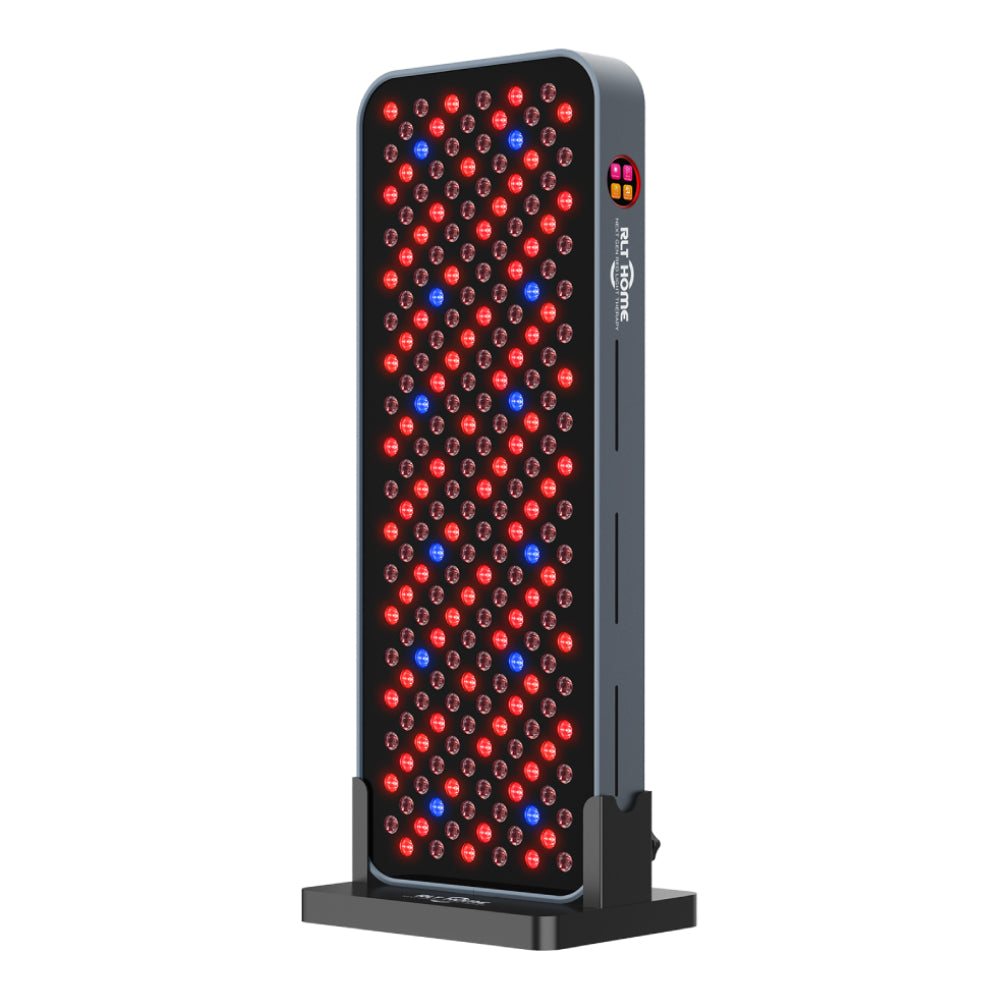
RLT Home Total Spectrum COMPACT
Independent channel control lets the blue band switch off for evening sessions.
Full specs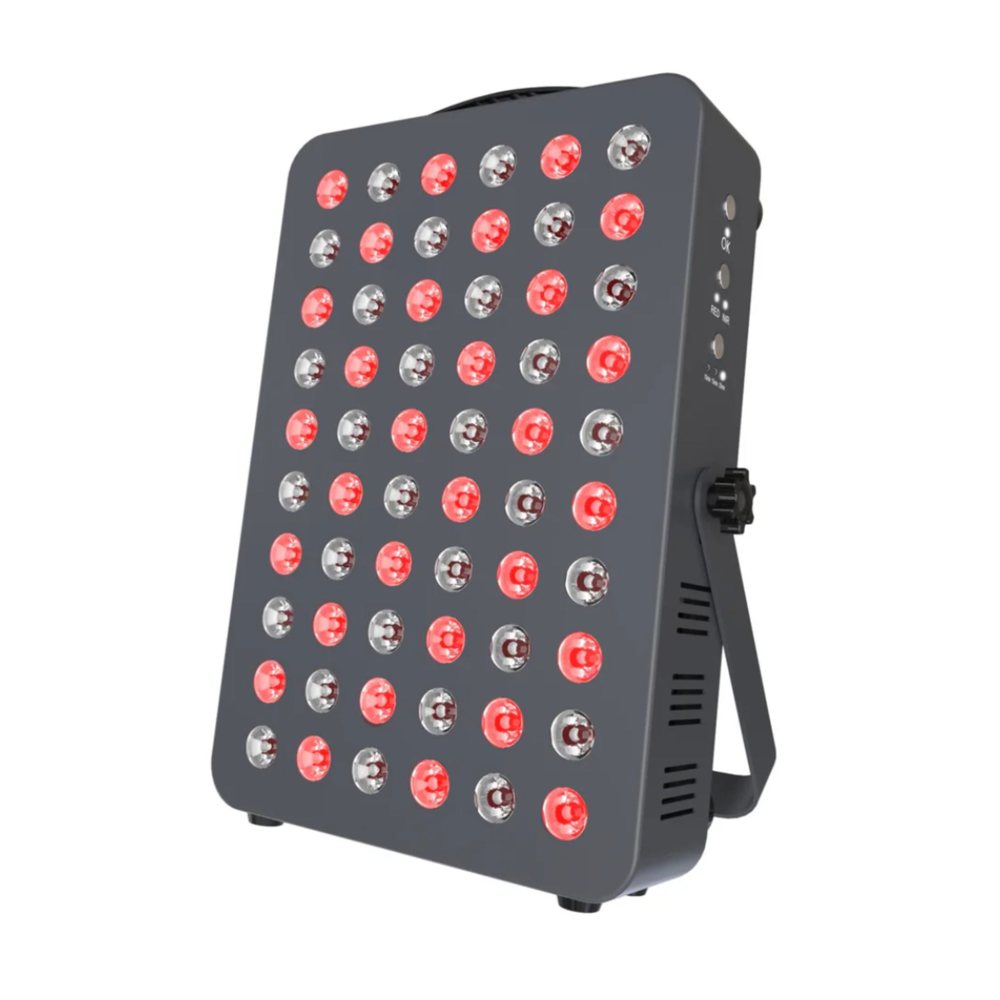
What the evidence does not support
This is the honest weak spot in the category. The trial base is small and preliminary, effect sizes are uncertain, and no light produces melatonin. Red light does not treat insomnia, sleep apnea, or any diagnosed sleep disorder, and claims of a dramatic sleep transformation go well beyond the data. Graded limited for a reason.
Safety and contraindications
Low risk for evening use. Keep sessions brief and the room dim, and avoid staring into a bright panel before bed. As with any application, photosensitizing medication warrants caution and a diagnosed sleep disorder should be managed with a clinician.
Frequently asked questions
Does red light produce melatonin?
No light produces melatonin. Red light simply avoids the melatonin suppression that blue wavelengths cause, and early research explores whether it actively supports sleep beyond that.
Does red light produce melatonin?
No. No light produces melatonin. Red light simply avoids the melatonin suppression that blue wavelengths cause.
Is red light better than blue-blocking glasses at night?
They address the same problem differently. Blue-blockers reduce blue reaching your eyes; using a red-only panel as your evening light avoids adding blue in the first place.
Can it cure insomnia?
No. The evidence is preliminary and it is not a treatment for a diagnosed sleep disorder.
For the full trial design behind the whole-body red light and melatonin result above, the sample, the nightly schedule and what the abstract does not report, see our review of the Zhao 2012 athlete trial.
Methodology: rankings weigh measured or method-stated irradiance, wavelength coverage and published density, buyer terms (trial, restocking, stand, warranty), and value per LED. No brand pays for a position. Full methodology.