Red Light Therapy for Psoriasis: What the Evidence Shows
Evidence grade: Limited
How red light therapy acts on psoriasis
Psoriasis is an immune-driven condition where skin cells proliferate too quickly, producing inflamed, scaly plaques. Red and near-infrared light appear to act on the local immune and inflammatory signaling in the skin, dampening the pro-inflammatory environment and, in the proposed mechanism, slowing the excessive keratinocyte turnover. This is distinct from the ultraviolet phototherapy dermatologists use for psoriasis, which works through a different, DNA-level mechanism.
What the studies show
| Study | Design | Finding |
|---|---|---|
| PMID 19764893 | 9-patient trial, 633 + 830nm LED, recalcitrant psoriasis | 60-100% clearance, ~92% average; illustrative, not definitive |
Recalcitrant psoriasis, small combined-wavelength trial (PMID 19764893)
A nine-patient study using 633nm and 830nm together reported roughly 90 percent average clearance in psoriasis that had resisted other treatment. The result is striking but the sample is tiny, so it is best read as a promising signal that justifies larger study rather than as established efficacy. It is included here honestly, with that caveat front and center.
Which wavelengths do the work
The trial that showed benefit paired 633nm red with 830nm near-infrared, so a panel offering both surface red and dermal-depth near-infrared is the sensible match. This is one area where visible red matters, since plaques are at the skin surface, with 830nm adding a little depth.
Dosing: distance, time, and frequency
There is no well-established home dose for psoriasis specifically; the small trial used repeated clinic sessions. A cautious home approach mirrors general skin protocols, 10 to 20 minutes at 6 to 12 inches, several times weekly, but this is a diagnosed inflammatory condition and the dose should be discussed with a dermatologist rather than self-escalated.
How it compares with conventional options
Standard psoriasis care, topical steroids and vitamin D analogues, UVB phototherapy, and systemic or biologic drugs for severe disease, is far better evidenced than red light. Red light is at most a gentle adjunct here, not a replacement, and anyone with moderate-to-severe psoriasis should be under dermatological care.
Which panel features matter for psoriasis
The studied pairing was 633nm plus 830nm together. Panels carrying both bands mirror the protocol most closely. Psoriasis is a diagnosed condition: involve the treating dermatologist before adding light therapy.
Device picks from the database
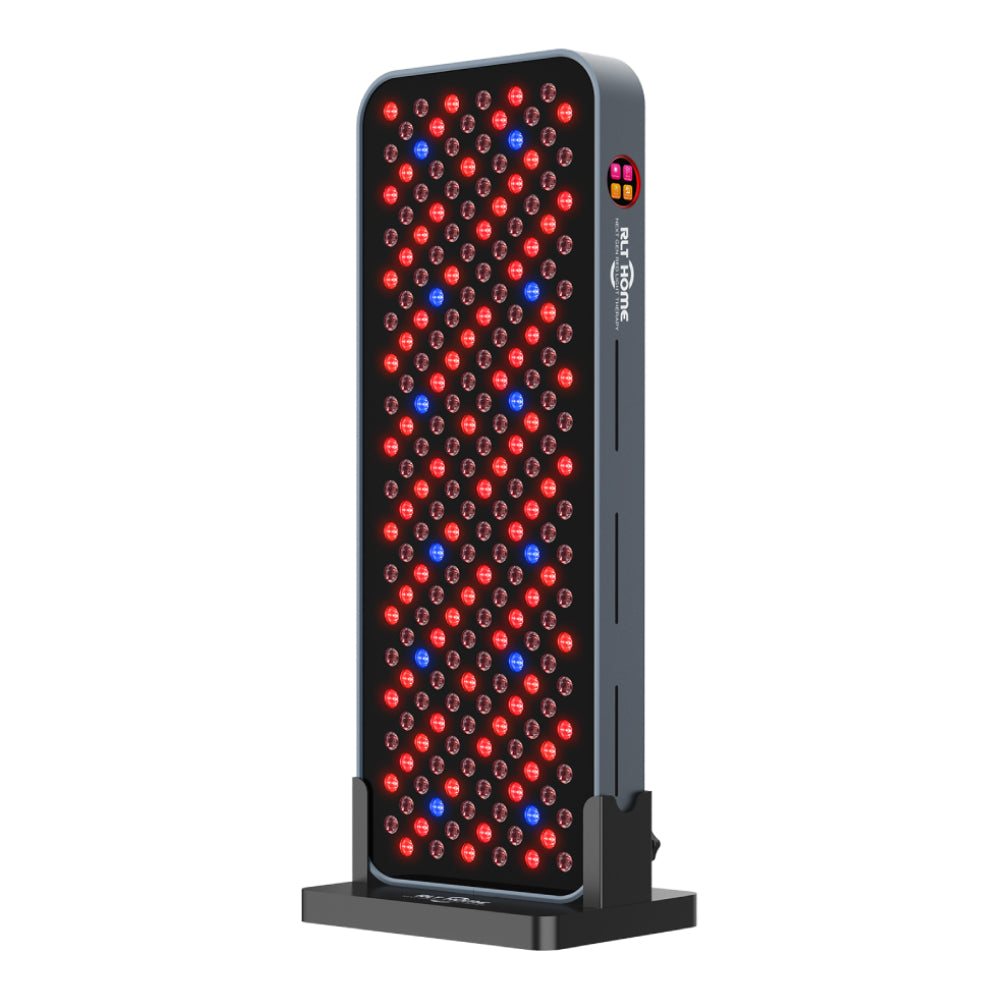
RLT Home Total Spectrum COMPACT
Carries 630/660 plus 830nm, the studied pairing, with published density.
Full specs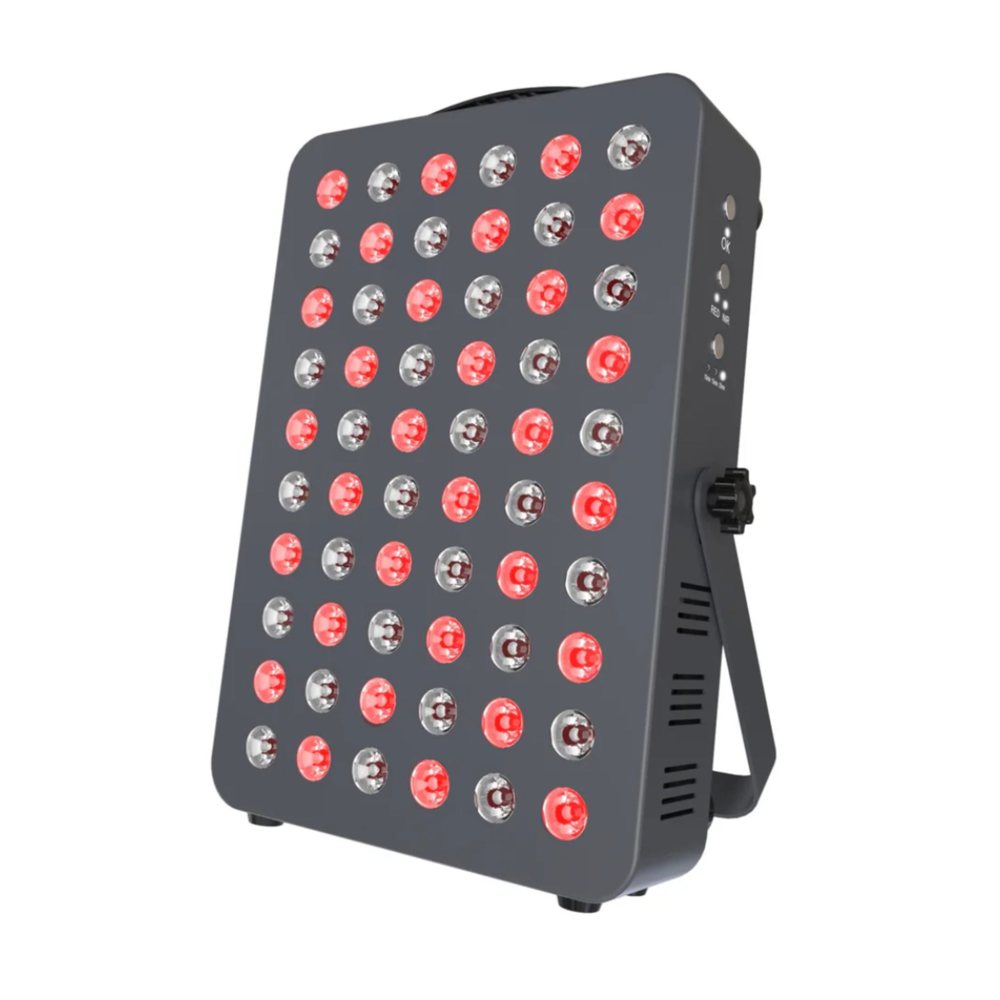
What the evidence does not support
The supportive evidence is a single very small study. Red light does not cure psoriasis, does not replace prescribed treatment, and should not be used to delay proper dermatological care. Presented honestly, this is a plausible adjunct with thin evidence, graded accordingly.
Safety and contraindications
Photosensitizing medications are common in dermatology, so check interactions with a clinician. Use eye protection with bright panels, and do not apply light over broken or actively infected skin without medical guidance.
Frequently asked questions
Is this a replacement for prescribed treatment?
No. The study population continued under clinical care; home use is adjunct territory.
Is red light the same as UV phototherapy for psoriasis?
No. Dermatological UVB phototherapy works through a different mechanism and has far stronger evidence. Red light is a gentler, much less proven adjunct.
Can red light clear psoriasis plaques?
One tiny trial reported clearance, but the evidence is thin. Treat it as a possible adjunct discussed with a dermatologist, not a cure.
Methodology: rankings weigh measured or method-stated irradiance, wavelength coverage and published density, buyer terms (trial, restocking, stand, warranty), and value per LED. No brand pays for a position. Full methodology.