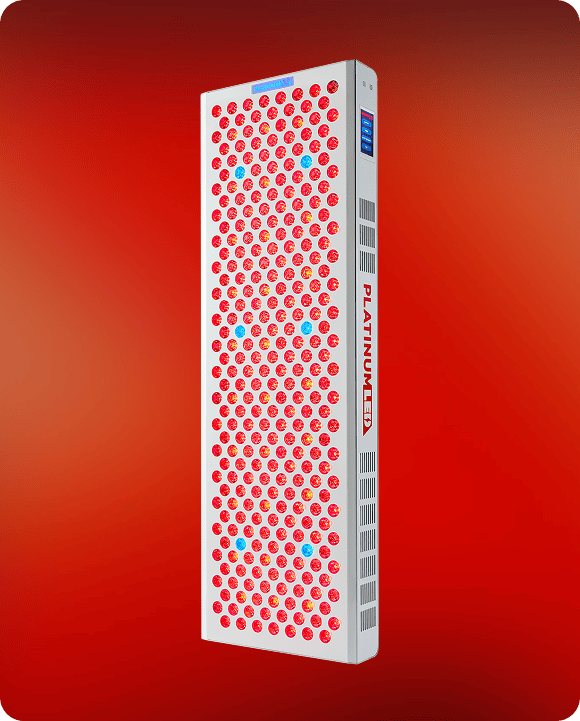
The best PlatinumLED alternatives are panels that match a BioMax's size and price while either publishing a spectrometer-measured irradiance figure or carrying easier return terms, because PlatinumLED publishes no irradiance figure of its own for the BioMax models and charges a 20 percent restocking fee on elective returns. Below are six panels from three other brands, lined up against three BioMax sizes and checked against this site's database.
Choosing a panel? Our ranking of the best red light therapy panels is computed from published, method-labeled specs across 188 devices. For a PlatinumLED alternative, the spec that matters is whether the irradiance number has a named measuring instrument behind it, since PlatinumLED's own catalog has none.
Where PlatinumLED sits
The PlatinumLED database page lists eight models, all with the same seven-wavelength blend (480, 630, 660, 810, 830, 850 and 1060nm), a 3-year warranty and a 60-day trial. Prices run from $659 for the BioMax 300, a 19 x 9 x 3 inch panel, to $1,299 for the BioMax 900, a 36 x 12 x 3 inch panel, and $1,599 for the BioMax Pro Ultra (all verified August 2026). None of the eight has a brand-published irradiance figure. The evidence comes from outside testing: Light Therapy Insiders measured the BioMax 900 at a 90.3 mW/cm2 average (113 peak) at 6 inches with a spectrometer, against the 185 mW/cm2 the database records as claimed, and measured the Pro Ultra at roughly 101 average (120 peak) at 6 inches. Stands are not included, and returns carry a 20 percent restocking fee plus customer-paid return shipping.
Those measured numbers are good news for the BioMax line as far as disclosure goes, because they are checkable. The catch is that the brand has not put its name to them, which is why this guide compares the alternatives on the same footing: what is measured, by whom, and what the buyer risks if the panel is wrong for them. The site's claimed versus measured analysis explains why a solar-meter claim and a spectrometer reading are not interchangeable.
Six alternatives at three sizes
Small tier: Hooga ULTRA360. Against the $659 BioMax 300, the Hooga ULTRA360 is a 12.7 x 8.6 x 2.5 inch panel at $399 (verified September 12, 2026) with 630, 660, 810 and 850nm. Hooga claims 132 mW/cm2 at 6 inches with no method stated, and Light Therapy Insiders measured about 74 with a spectrometer, roughly half. It is smaller than the BioMax 300 and lacks 480nm and 1060nm, but it costs $260 less, includes a tabletop stand, and lists no restocking fee (return shipping cost is deducted from the refund, and open-box items are non-refundable).
Mid tier against the BioMax 900: RLT Home Total Spectrum COMPACT. The RLT Home Total Spectrum COMPACT is a 30.3 x 11.8 inch panel at $1,095 (verified September 12, 2026), $204 under the BioMax 900. Its 99.0 mW/cm2 at 6 inches was measured by an outside lab, Electropossible Ltd, with an HP350IR spectrometer. Its seven bands come with published shares (480nm 6%, 630nm 19%, 660nm 19%, 810nm 19%, 830nm 14%, 850nm 9%, 1064nm 14%), and it includes a stand and lists no restocking fee. It is a little smaller than the BioMax 900 and mounts vertically only.
Mid tier against the BioMax 900: MitoPRO 1500X. The MitoPRO 1500X matches the BioMax 900's price at $1,299 (verified August 13, 2026) in a 10 x 43 inch format with six bands (590 through 850nm) and no restocking fee. Mito publishes a 160 mW/cm2 figure at 6 inches, but the database records an independent spectrometer reading of about 76.5 against a claim above 170, and the brand's labeling is inconsistent, so treat the working number as the measured one. Return shipping is the customer's cost unless the optional protection add-on is bought, and the stand is sold separately.
Large tier against the Pro Ultra: Hooga ULTRA1500. The Hooga ULTRA1500 is a 39.5 x 8.6 x 2.5 inch panel at $1,399 (verified September 12, 2026), $200 under the Pro Ultra. Hooga claims 165 mW/cm2 at 6 inches with no method; the spectrometer reading is 104 peak and 81.7 average. Its four bands are fewer than the Pro Ultra's seven, but a tabletop stand is included and no restocking fee is stated.
Large tier against the Pro Ultra: RLT Home Total Spectrum MAX. The RLT Home Total Spectrum MAX is 49.2 x 11.8 inches at $1,795 (verified September 12, 2026), which is $196 more than the Pro Ultra and the only alternative here that costs more than its BioMax counterpart. It reads 100.53 mW/cm2 at 6 inches by the same independent lab method as the COMPACT, has the same published seven-band mix, includes a stand and lists no restocking fee. The extra cost buys length and the published band shares.
Side by side
| Alternative | Against | Size (in) | Bands | Irradiance at 6 in and method | Price | Restocking |
|---|---|---|---|---|---|---|
| Hooga ULTRA360 | BioMax 300 ($659) | 12.7 x 8.6 x 2.5 | 4 | 74 measured (LTI spectrometer); 132 claimed | $399 | None stated |
| RLT Home COMPACT | BioMax 900 ($1,299) | 30.3 x 11.8 | 7, shares published | 99.0 (lab spectrometer) | $1,095 | None |
| MitoPRO 1500X | BioMax 900 ($1,299) | 10 x 43 | 6 | ~76.5 measured; 160 claimed | $1,299 | None |
| Hooga ULTRA1500 | Pro Ultra ($1,599) | 39.5 x 8.6 x 2.5 | 4 | 81.7 avg measured (LTI); 165 claimed | $1,399 | None stated |
| RLT Home MAX | Pro Ultra ($1,599) | 49.2 x 11.8 | 7, shares published | 100.53 (lab spectrometer) | $1,795 | None |
The two reference points are the BioMax 900 at 90.3 average (LTI spectrometer) and the Pro Ultra at about 101 average. The measurements come from different labs and different test dates, so differences of a few mW/cm2 are not a ranking. Prices carry the verification dates above and change; check the linked pages. For how the site weighs these fields, see how rankings work.
What the measured numbers mean for session time
A dose is irradiance multiplied by time, so a lower measured irradiance means a longer session for the same target. Using a 20 J/cm2 reference dose and the dose calculator's formula at 6 inches, the BioMax 900's 90.3 mW/cm2 needs about 3.7 minutes. The COMPACT at 99.0 needs about 3.4 minutes, the MAX at 100.53 about 3.3 minutes, the ULTRA1500 at 81.7 about 4.1 minutes, the MitoPRO 1500X at 76.5 about 4.4 minutes and the ULTRA360 at 74 about 4.5 minutes. The spread is roughly a minute, which is small next to the gap between claimed and measured figures: planning a session around Hooga's claimed 132 mW/cm2 for the ULTRA360 would give about 2.5 minutes, nearly half the time the measured figure requires. Distance matters more than any of this, as the inverse square law explainer shows, so keep the measuring distance the same when comparing.
What PlatinumLED still does better
PlatinumLED keeps two advantages here. It offers a ladder of eight sizes with the same seven-band blend at every step, which makes it easy to buy a size that fits one body area or a full standing session without changing the spectrum. And its seven bands, including 1060nm near-infrared, are matched among the panels in this guide only by the two RLT Home panels; the Hooga and MitoPRO panels above offer four to six. The BioMax 900's measured 90.3 mW/cm2 also sits within about 10 percent of the RLT Home panels' 99 to 100. The trade-offs are the 20 percent restocking fee, customer-paid return shipping, a stand that costs extra and no brand-published irradiance. For a buyer who wants to test a panel at home with the lowest risk, the alternatives' return terms are easier; for a buyer who just wants a specific size, the BioMax line is defensible. For head-to-head detail, read the Hooga versus PlatinumLED comparison and the RLT Home versus PlatinumLED comparison, and for the same exercise on another brand see the Joovv alternatives guide or the wider brand landscape. RLT Home is one of 41 brands in this database and gets the same criteria and cautions as every other brand.