Mito Red Light vs Infraredi: the Spec-Sheet Comparison


Brand vs brand on the facts
| Policy | Mito Red Light | Infraredi |
|---|---|---|
| Warranty | 3 | 3 |
| Trial window | 60 | 60 |
| Restocking fee | No restocking fee. Return shipping is the customer's cost unless the optional paid 'Free Returns & Package Protection' add-on was bought at checkout. | None stated; return shipping is the customer's cost and is deducted from the refund. |
| Shipping | Free standard shipping on US orders. | Free express-courier shipping from local warehouses (no shipping fees at checkout); orders dispatch from regional warehouses incl. Melbourne AU |
| Stand included | Sold separately. Single-panel stand ~$139; universal multi-panel stand ~$349 (supports vertical or horizontal, fits 2-panel arrays). Manual, not motorized/electric. | Door hook included as the default mount on most panels (it is the base variant); Pro Elite, Elite Plus and Studio ship with a vertical stand variant. Stands otherwise sold separately: Mini Stand $99, Base Stand $149-199, Vertical $399, Horizontal $949. |
| Eye protection | MitoPRO X and MitoADAPT 4.0 include opaque protective goggles plus Mito Red IR3 glasses in the box (per in-the-box FAQ); not stated for MitoPRO+ and 2.0 series | No goggles-in-box statement found; the brand's own blog advises wearing protective goggles if you have sensitive eyes or want to reduce brightness, and says you can alternatively simply shut your eyes |
| Irradiance method | Publishes dual figures but labeling is internally inconsistent; independent spectrometer measured 1500+ at ~76.5 vs >170 claimed | Solar meter (the brand explicitly labels its table Solar Meter), NO distance stated - treat as inflated vs spectrometer |
| LED type | n/p | 5W dual-chip ('medical-grade' marketing) |
| Preset modes | MitoADAPT 4.0: 11 wavelength-combination modes (patent-pending multi-circuit design). MitoPRO X: touchscreen/app modes (Modes 1-3 referenced; more added via app updates). MitoPRO+ and 2.0 series: timer operation, no published preset modes. | Pre-set treatment programs (incl. Wind Down mode) plus adjustable pulsing and 1-100% dimming; Bluetooth app control |
| Personalized usage plan | none | n/p |
| FDA status | FDA-registered Class II - NOT cleared (only the MitoGLOW mask is cleared, not the panels) | No device-specific FDA claim; the Australian device is TGA-listed |
Flagship vs flagship
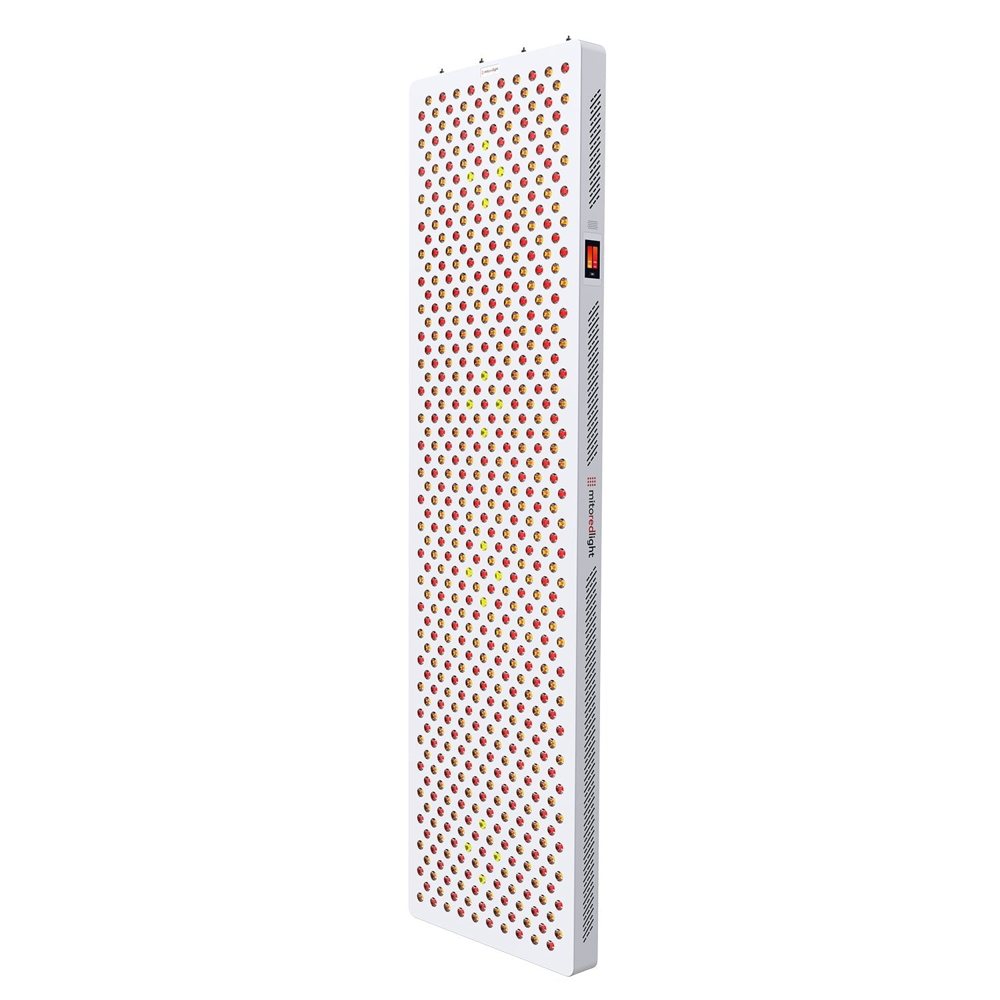
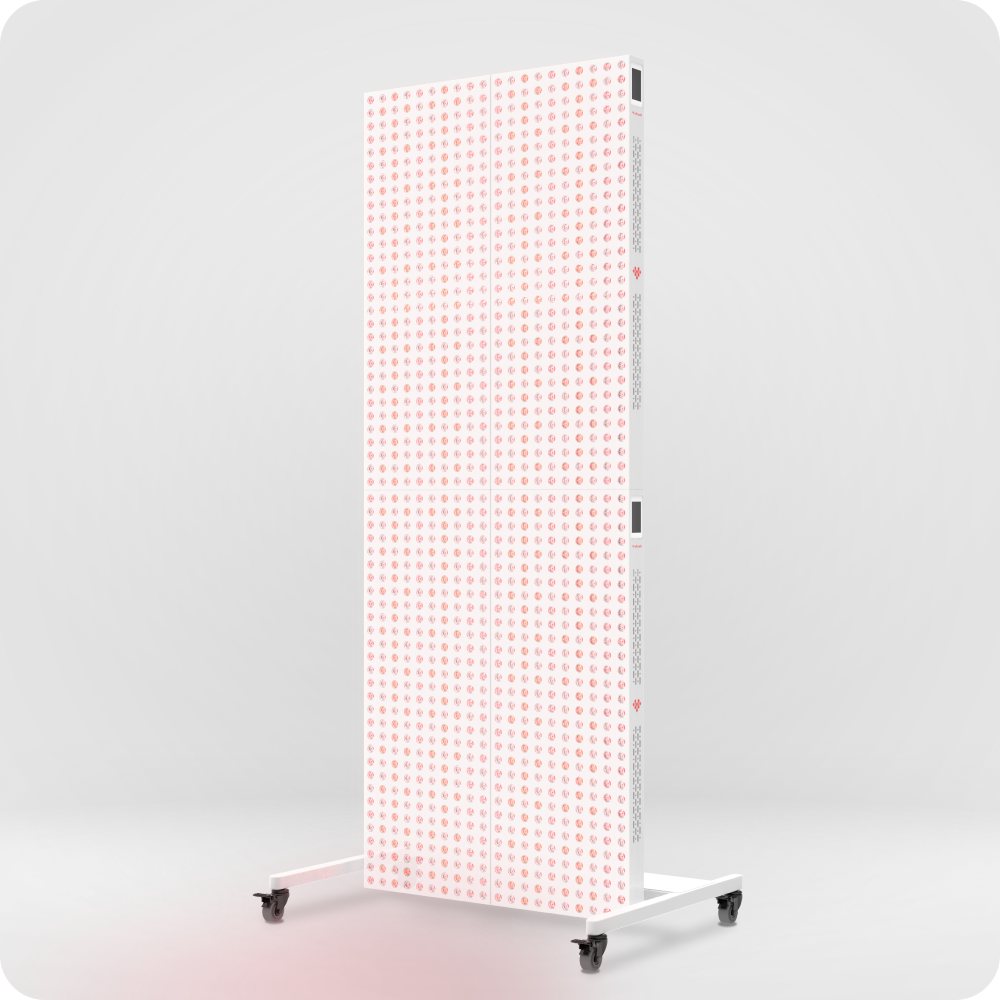
| Spec | MitoPRO MegaX | Infraredi Pro Elite Plus 2.0 |
|---|---|---|
| Wavelengths | 590nm, 630nm, 660nm, 810nm, 830nm, 850nm | 630nm, 660nm, 810nm, 830nm, 850nm |
| Wavelength allocation | 6/22/22/17/17/17 | Not published by the brand |
| LEDs | 600 | 1200 |
| Irradiance (brand) | 130 mW/cm² at 6 in (dual-disclosed: solar meter and spectrometer) | 250 mW/cm² at 6 in (solar meter) |
| Independently measured | LTI peak 63 avg 56.5 | n/p |
| Panel size | 17x64in | 181.6x70cm |
| Price | $2,649 | $6,099 |
The verdict pattern
The differences here are policy and density details rather than headline specs; check the table. As with every comparison on this index, "n/p" cells mean the brand does not publish that fact, which is itself information.
Frequently asked questions
Which is better, Mito Red Light or Infraredi?
It depends on the use case. The differences here are policy and density details rather than headline specs; check the table. The full device records linked above carry the per-model details.
Are Mito Red Light and Infraredi FDA approved?
No home red light panel is FDA approved. Both brands hold, at most, FDA registration, which is a listing rather than a clearance.
Methodology: rankings weigh measured or method-stated irradiance, wavelength coverage and published density, buyer terms (trial, restocking, stand, warranty), and value per LED. No brand pays for a position. Full methodology.